

































Share the post "Moody’s Upgrades Pakistan to B3: No, This Is Not a Certificate of “Good Governance”"
Pakistanis are being asked to treat Moody’s B3 upgrade as a certificate of moral excellence, while hostile foreign accounts and furious domestic partisans dismiss the publicly documented rating action as an American gift, an establishment-planted column or outright fiction. Both interpretations are nonsense. Moody’s did not inspect Pakistan’s police stations, audit its elections, test the speed of its courts or ask ordinary citizens whether government departments treat them with dignity; it assessed a colder and narrower question—whether the Government of Pakistan is now less likely to encounter severe difficulty meeting its financial obligations than it was a year ago.
That distinction matters because “improved governance” in sovereign-rating language does not mean Pakistan has suddenly achieved exemplary rule of law, eliminated corruption or built an efficient citizen-facing state. It means policymakers have demonstrated greater capacity and continuity in implementing an IMF-supported programme, rebuilding foreign-exchange buffers, maintaining fiscal targets and reducing the probability of another immediate balance-of-payments breakdown.
The central claim is straightforward: Moody’s has recognised genuine financial stabilisation in Pakistan, but B3 remains a speculative rating and cannot honestly be presented as proof of economic transformation or comprehensive good governance.
What Moody’s Actually Changed
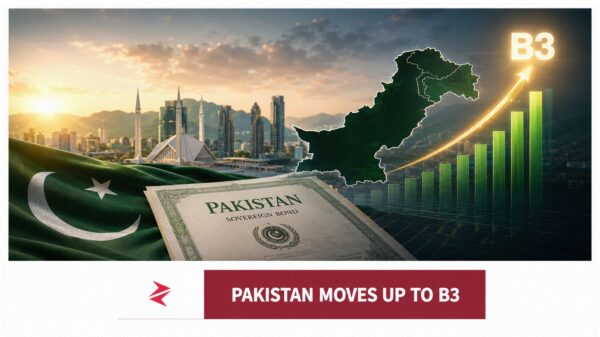
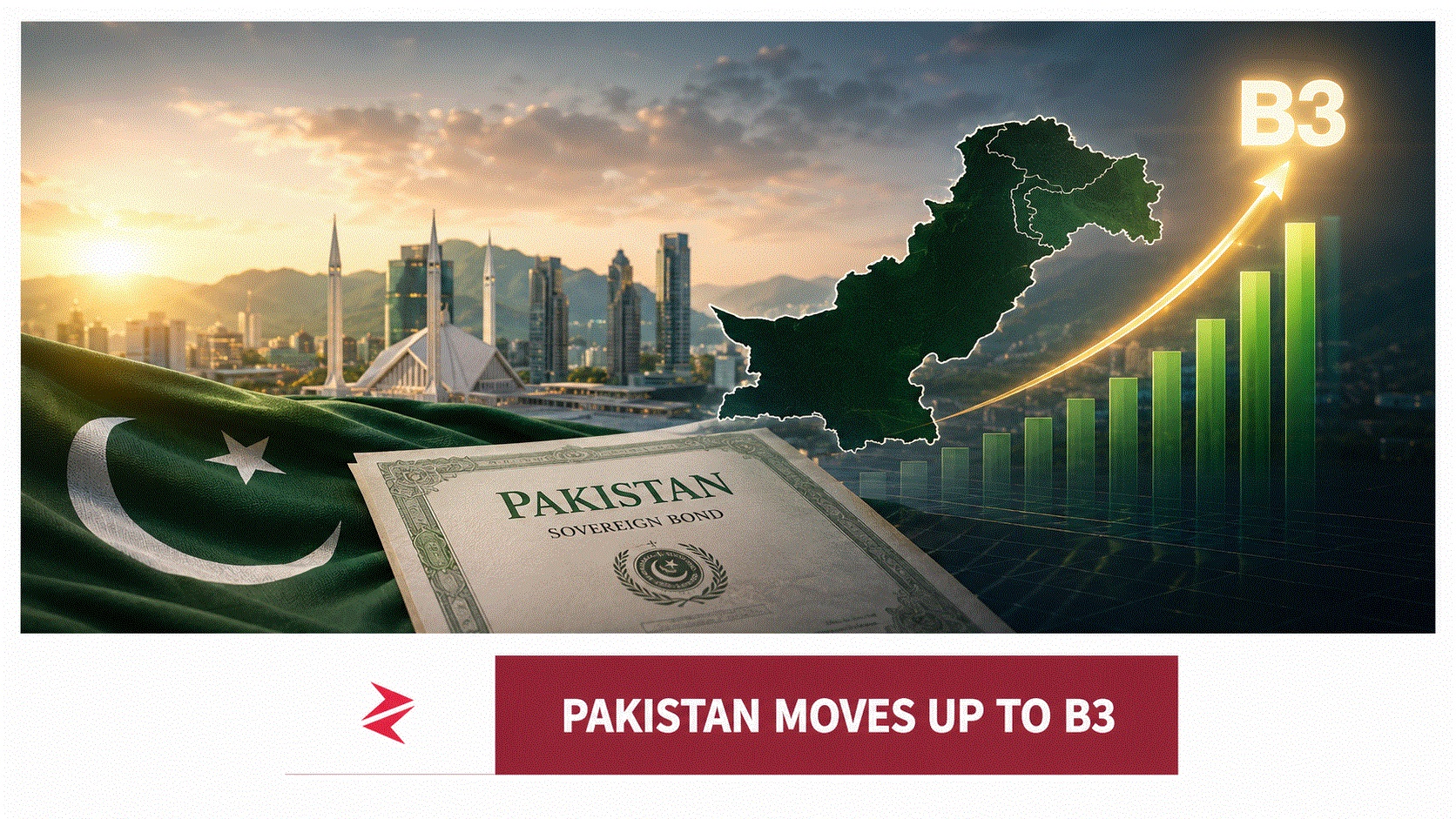
On August 24, 2026, Moody’s upgraded Pakistan’s sovereign rating from Caa1 to B3 and maintained a stable outlook. The action also covered the backed foreign-currency senior unsecured obligations of the Pakistan Global Sukuk Programme, while Pakistan’s local-currency country ceiling was raised to B1 and its foreign-currency ceiling to B3. The agency’s own listing confirms the B3 action and stable outlook, while its reported explanation centres on stronger reserves, improved debt affordability and continued implementation of reforms. Moody’s Ratings
| Indicator | Earlier position | Latest position cited | What it means |
|---|---|---|---|
| Moody’s sovereign rating | Caa1 | B3, stable | Default risk is judged lower, although the rating remains speculative |
| SBP foreign-exchange reserves | About $14 billion in July 2025 | About $17 billion in July 2026 | A larger buffer against external payments and commodity shocks |
| Import cover | Lower and more fragile | Nearly three months | Improved, but still insufficient for complacency |
| External Vulnerability Indicator | About 230% in 2025 | About 145% in 2026 | Maturing external obligations remain larger than reserves, but the gap has narrowed |
| Interest payments as share of revenue | About 49% in FY2025 | About 35% in FY2026 | Lower domestic rates have created fiscal breathing room |
| S&P sovereign rating | B− | B, stable | One-notch upgrade announced on July 22, 2026 |
| Fitch sovereign rating | B− | B−, stable | Fitch affirmed the rating on April 13, 2026 |
The reserve improvement is independently visible in State Bank data. SBP reported its own net reserves at $17.043 billion at the end of July 2026 and $17.082 billion on August 13, while total liquid reserves, including those held by commercial banks, stood at $22.506 billion. State Bank of Pakistan reserve statement
The IMF also did not merely issue polite encouragement. Its Executive Board completed Pakistan’s third EFF review in May 2026, allowing an immediate disbursement of around $1.1 billion under the EFF and approximately $220 million under the Resilience and Sustainability Facility, while explicitly recognising maintained stability and improved external and financing conditions despite regional shocks. International Monetary Fund
Those are measurable developments. They do not become fabricated merely because a Bloomberg headline irritates someone’s political loyalties.