





























Share the post "Moody’s Upgrades Pakistan to B3: No, This Is Not a Certificate of “Good Governance”"
What Happens Next
| Path toward another upgrade | Trigger for renewed pressure |
|---|---|
| Reserves rise sustainably beyond $20 billion | Reserves fall sharply after external repayments |
| Export earnings and FDI replace more debt-financed inflows | Bilateral creditors decline to roll over deposits |
| Interest-to-revenue burden falls below 35% | Inflation and domestic interest rates rise again |
| IMF reforms continue without repeated waivers | Programme slippage delays multilateral financing |
| Energy and state-owned-enterprise losses decline | Circular debt and SOE liabilities return to the budget |
| Tax collection broadens beyond already documented taxpayers | Fiscal targets rely mainly on punitive taxation |
| Regulation and rule of law become more predictable | Political instability weakens investment and policy continuity |
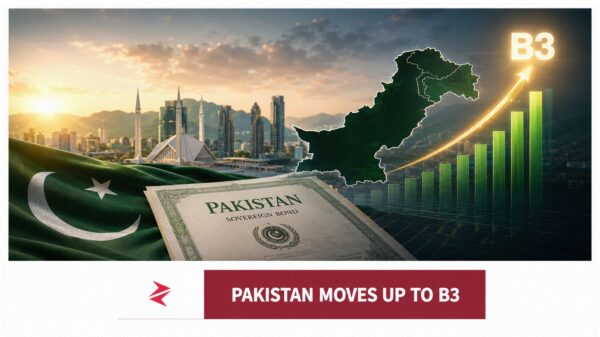
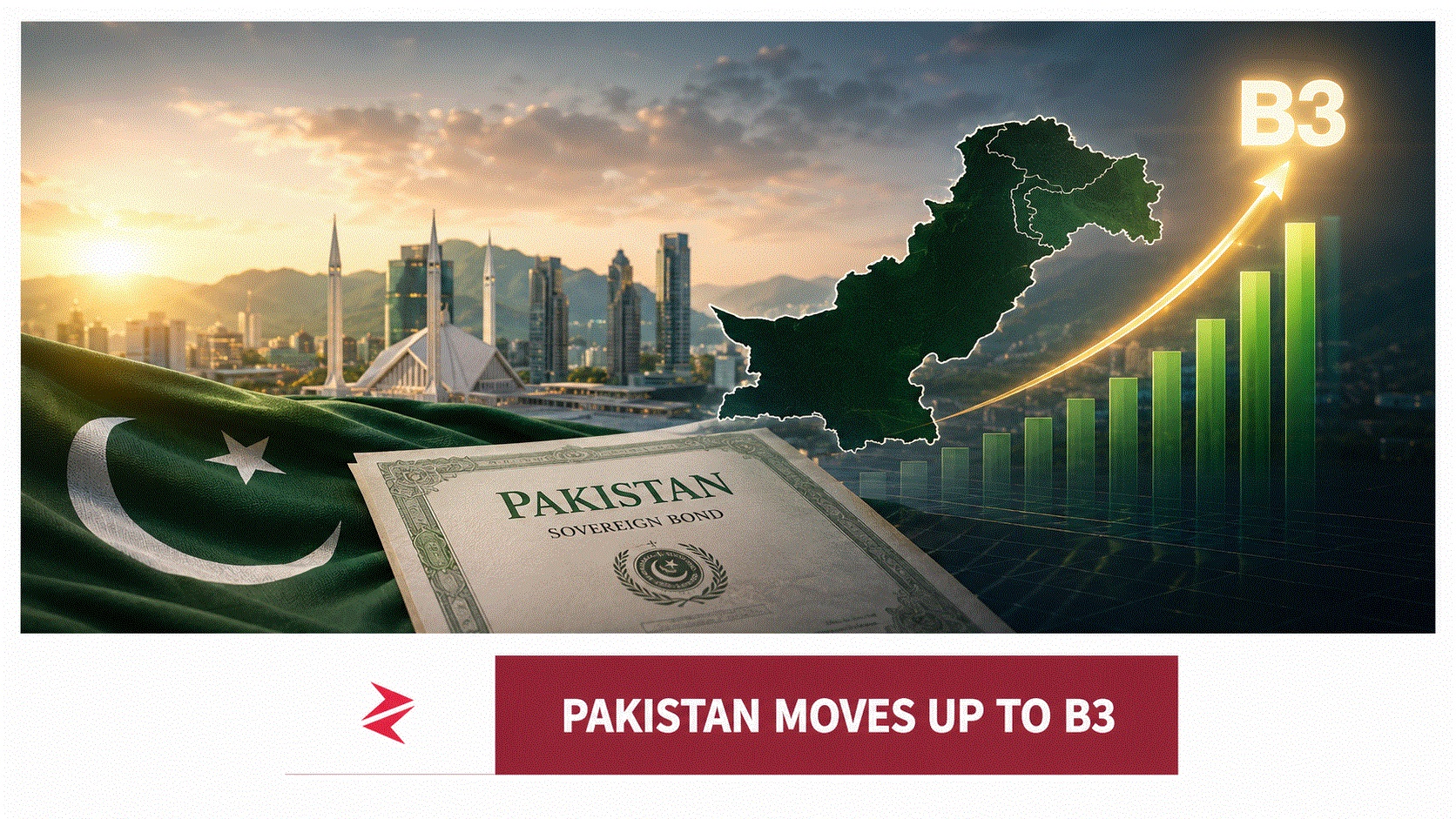
The stable outlook means Moody’s currently sees upside and downside risks as broadly balanced. It does not promise another upgrade. Pakistan could move higher if reserve accumulation becomes less dependent on borrowed liquidity, debt affordability improves further and productive growth strengthens. It could also slide backwards if the IMF programme derails, oil prices remain elevated, external rollovers become uncertain or political instability destroys policy credibility.
Frequently Asked Questions
Is B3 an investment-grade rating?
No. B3 remains within Moody’s speculative-grade category. Pakistan is less exposed to immediate default risk than it was at Caa1, but international lenders will continue charging a substantial risk premium.
Did Moody’s declare Pakistan’s government corruption-free?
No. The upgrade assesses creditworthiness and the government’s capacity to sustain financial and economic policies. Moody’s still recognises institutional, regulatory, rule-of-law and investment constraints.