


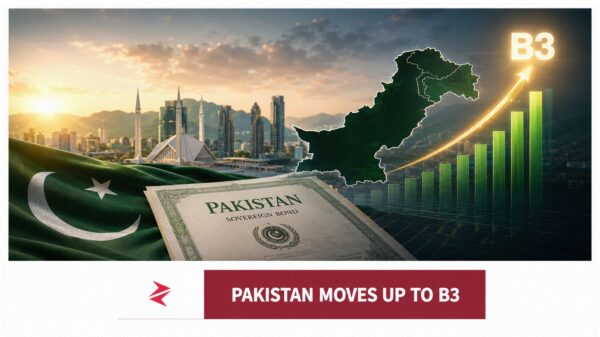































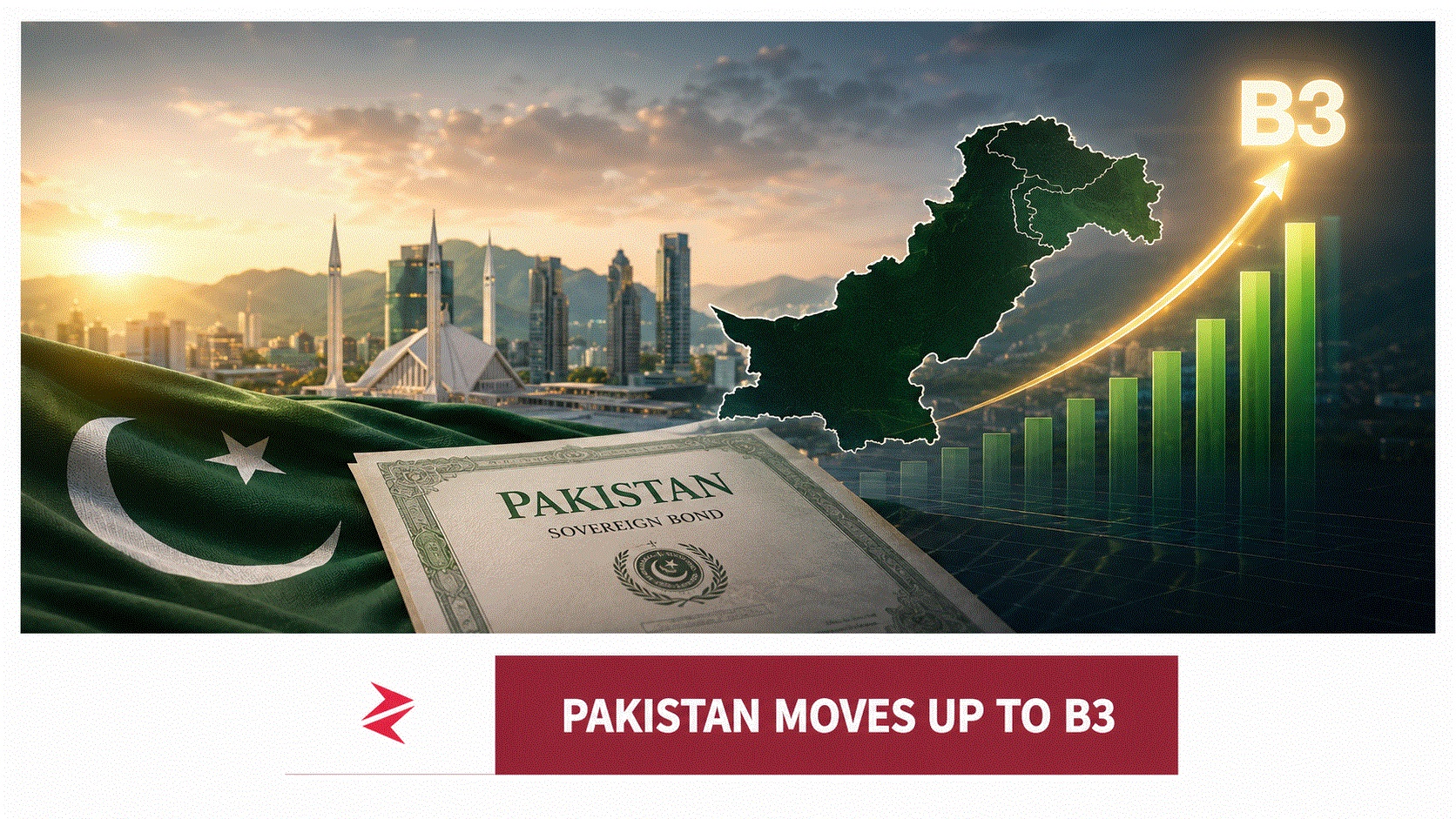
Share the post “Moody’s Upgrades Pakistan to B3: No, This Is Not a Certificate of “Good Governance””
“Good Governance?” Yes—but Not the Kind Pakistanis Are Imagining
The anger around the phrase is understandable because the ordinary Pakistani hears “good governance” and thinks about competent policing, affordable electricity, functioning municipal services, merit, predictable justice, respectable public schools and protection from arbitrary state power. Moody’s is using the term within a sovereign-credit framework, where the immediate focus is institutional capacity to sustain policies that protect debt repayment and macroeconomic stability.
| Everyday understanding of good governance | Credit-rating interpretation |
|---|---|
| Courts deliver timely justice | Policies and contracts remain sufficiently predictable for creditors |
| Corruption is controlled | Fiscal leakage and policy reversals do not destroy debt-payment capacity |
| Citizens receive effective public services | The government collects enough revenue and manages expenditure |
| Political institutions possess legitimacy | Policy continuity survives political and institutional pressure |
| Education and healthcare improve | Essential expenditure remains affordable after interest payments |
| Public officials are accountable | IMF targets, reporting requirements and financing commitments are implemented |
Moody’s itself has reportedly continued to identify weaknesses in rule of law, control of corruption and government effectiveness. It has also retained Pakistan within B3 because of weak institutions, a narrow revenue base, an externally vulnerable economic structure and limitations on investment and high-productivity growth. Pakistan Today’s account of the rating rationale
Therefore, the government is entitled to say that international confidence in Pakistan’s near-term payment capacity has improved. It is not entitled to stretch that finding into a declaration that every aspect of governance has been vindicated. Ahsan Iqbal and other government representatives can legitimately celebrate the direction of travel, but the B3 label is an assessment of reduced credit risk—not absolution from scrutiny.
Are Pakistan’s Reserves “Just Saudi and Chinese Money”?
The viral claim that Pakistan’s reserves entirely belong to Saudi Arabia and China, cannot be used and therefore amount to nothing more than cosmetic bookkeeping is an emotionally satisfying oversimplification of a more complicated financial reality.
Pakistan’s reserve position unquestionably depends partly on official financing, bilateral deposits, multilateral support and the continued rollover of external obligations. Moody’s reportedly estimates external financing requirements of approximately $21 billion in FY2027 and $30 billion in FY2028, including existing bilateral deposits of around $7 billion and $12 billion, respectively, which it expects to be rolled over. That dependence is a real vulnerability, not a conspiracy theory. Moody’s rationale reported by Pakistan Today
However, saying reserves are supported by liabilities is not the same as saying the dollars are imaginary or completely unusable. Central banks around the world hold reserve assets against wider external liabilities. What matters is liquidity, availability, maturity, rollover confidence and whether the reserve stock can absorb payment shocks without triggering panic. SBP Governor Jameel Ahmad further stated that the quality of reserve accumulation had improved because the increase was driven mainly by central-bank foreign-exchange purchases rather than purely debt-driven accumulation. State Bank of Pakistan
The intellectually honest conclusion sits between government triumphalism and social-media nihilism: Pakistan’s reserves are real and stronger than before, yet a meaningful share of the external safety architecture still depends on creditors, rollovers and continued IMF compliance.
Readers examining this issue should also consider why Pakistan’s falling debt-to-GDP ratio tells only half the fiscal story, because a country can reduce the debt ratio while remaining trapped by high interest costs and short refinancing cycles.