



































What Happens Next
Artificial intelligence will make sensory advertising cheaper, faster and more personalised. Brands will be able to produce multiple object orientations, environments, colour temperatures and visual styles for different audience segments. AI may generate one food composition for a right-handed viewer, another for a left-handed viewer, one environment for Lahore and another for Karachi, all while preserving the same offer.
That capability will create an enormous testing advantage, but it will also flood the market with technically polished sameness. When every brand can generate attractive imagery instantly, mere beauty will lose scarcity. Strategic coherence, cultural intelligence and credible sensory promises will become more valuable.
The winners will not be the advertisers who generate the most variants. They will be the ones who understand what each variant is testing and why the consumer should care.
For a broader look at turning content opportunities into measurable reach rather than random publication, read Niche and Event Blogging: Scaling Beyond 10 Lac. The same principle applies here: volume without strategic relevance produces activity, not authority.
Frequently Asked Questions
Does sensory marketing require all five senses?
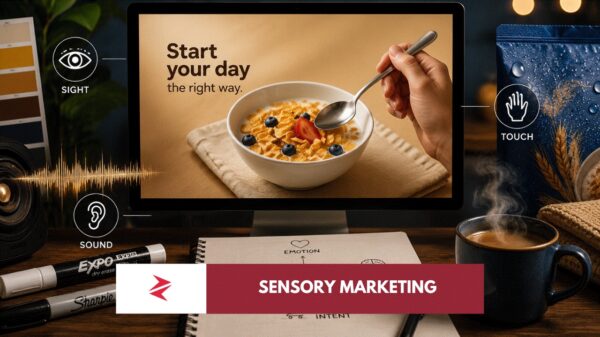
No. A campaign may focus on one dominant sensory pathway or use visual cues to trigger imagined sound, touch, taste or smell. The senses should support one coherent brand impression rather than compete for attention.
Can sensory marketing work in a static display advertisement?
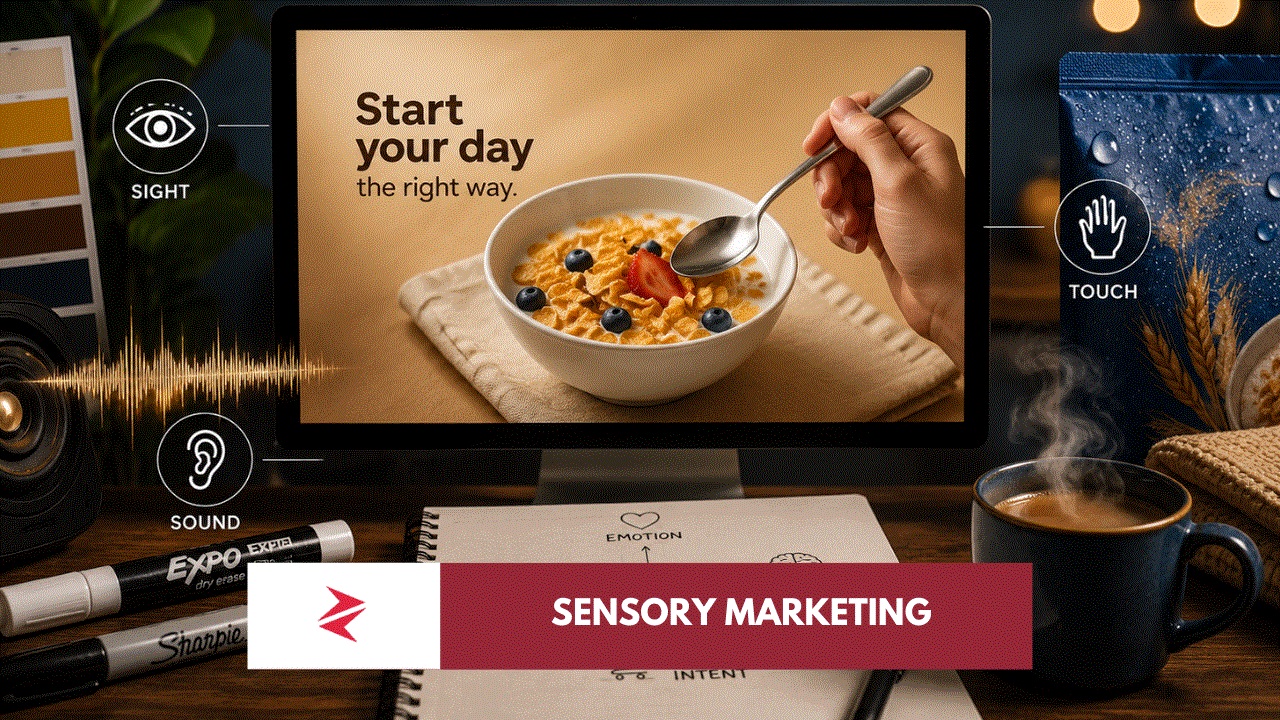
Yes. Object orientation, perspective, texture, shadows, implied movement, colour and familiar product cues can encourage the viewer to simulate interaction even when the advertisement contains no audio or animation.
Should every right-handed product be shown on the right?
No. The research supports testing orientation that facilitates interaction, not applying a universal right-side rule. Product shape, audience handedness, reading direction, surrounding objects and campaign composition all matter.
