








































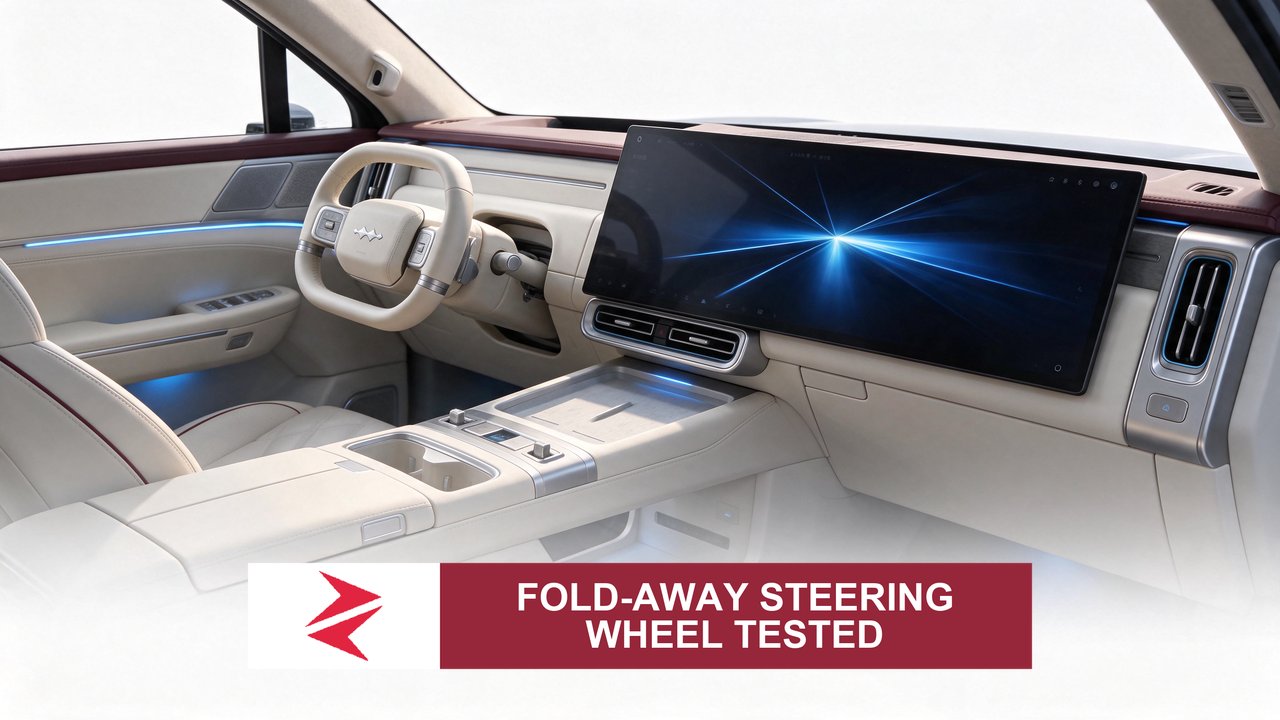
However, the same commentator @phillipisbackk reminded us that “the real unlock is steer‑by‑wire, not the fold. With no steering column, BYD frees about 25 cm in front of the driver for a 165° recline.” This suggests that BYD’s fold‑away wheel may be a stop‑gap, a visual showcase while the underlying technology—steer‑by‑wire—remains the true innovation. If that’s the case, the folding wheel could become a fleeting fad rather than a lasting industry shift.
The bottom line: gimmick or game‑changer?
For the average Pakistani consumer, the headline‑grabbing “world’s first fold‑away steering wheel” is tempting. It promises a futuristic cabin, a novelty that could make a sedan feel like a lounge, and a status symbol that says, “I drive the future.” Yet the evidence supporting the feature’s existence, durability, and safety is limited to a single social‑media post and a glossy promotional image.
Until BYD releases independent crash‑test results, a service‑manual detailing the folding mechanism, and real‑world reliability data, the fold‑away steering wheel remains an unverified claim. The cost to the consumer is clear: a premium price tag of roughly $45,000, potential repair expenses, and an unknown safety margin.
So the final question is not whether BYD can fold a wheel, but whether they can guarantee that the wheel will unfold when a Pakistani driver needs it most. Will the tech survive the chaotic traffic of Lahore, the potholes of Karachi, and the high‑speed highways of Islamabad, or will it become another costly Chinese novelty that ends up in a junkyard?
Only time—and a transparent safety report—will tell.
Read more about how emerging tech is reshaping everyday life in our AI‑powered gaming world feature.