











































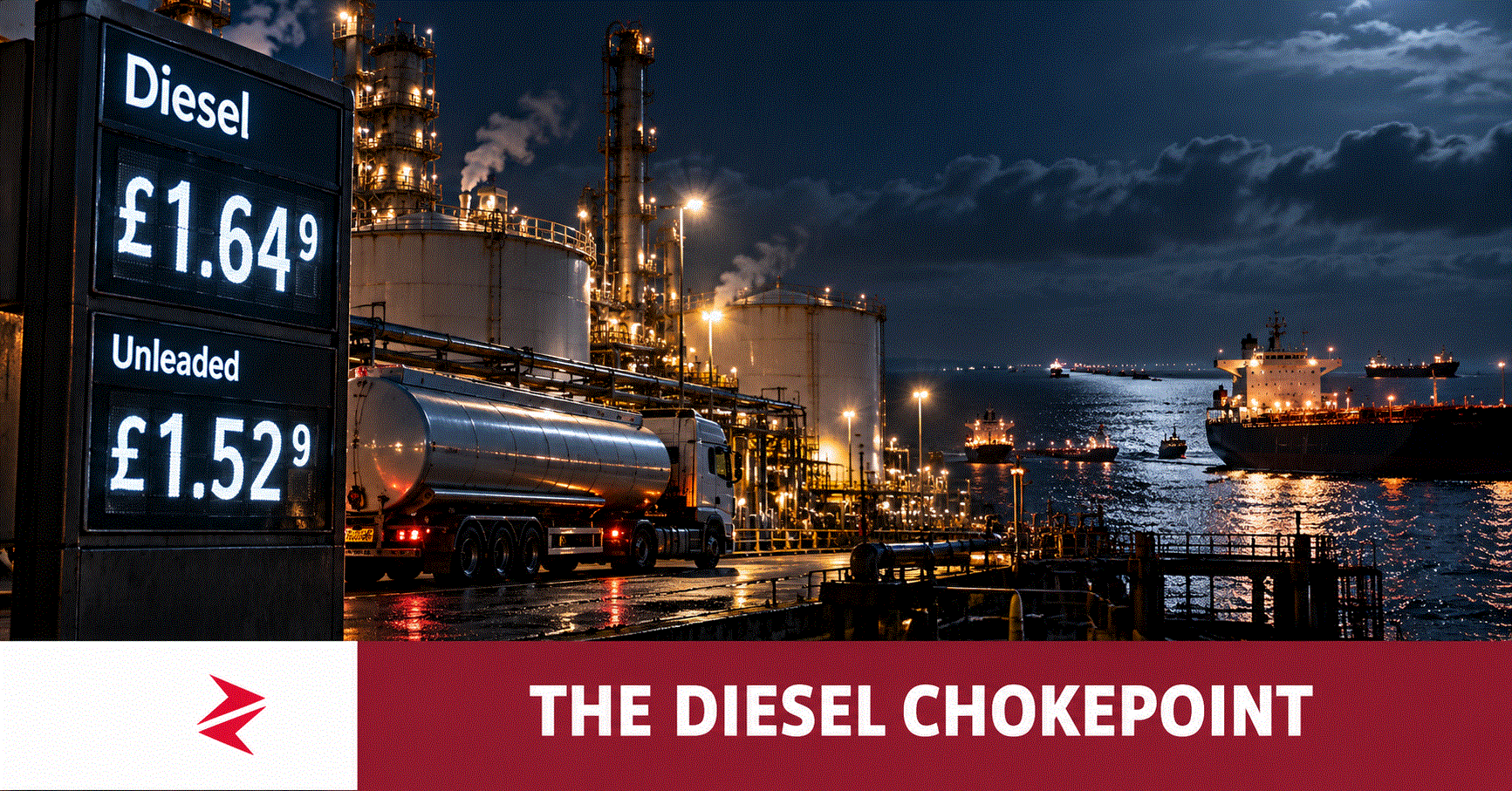
There is another uncomfortable limit to the claim that expensive diesel means the country will shortly stop. Prices can rise sharply while fuel remains available. Traders may seek alternative cargoes, buyers may reduce consumption, and governments may act before a physical shortage develops. Those responses have costs, often passed through freight rates and food prices, but a costly supply is not the same as an absent one. Britain needs to publish a credible account of usable stocks, replacement cargoes and distribution capacity so the public can judge the risk without relying on either official reassurance or social-media predictions of collapse.
What changes if Washington restricts exports?
An outright, sustained ban would force existing buyers to compete for other barrels. The accompanying EIA-labelled charts show substantial US distillate exports and significant destinations across the Americas and Europe. They also show why a monthly export series should not be mistaken for a guaranteed amount available to redirect inside the United States: stocks, refinery output and transport links impose different constraints. The charts illustrate exposure; they do not establish how quickly any particular country would run out of fuel.
A narrower restriction, a short pause or voluntary changes in shipments would have different effects from a complete ban. So would an announcement followed by a reversal. The practical questions for Britain are consequently measurable: How much diesel is physically available? Which contracted cargoes could be affected? What alternative suppliers have capacity? How quickly could product reach British terminals? A government that can answer those questions may face a painful price shock. A government that cannot answer them has an additional planning problem.
Electrification offers part of a longer-term answer, provided its economics are stated honestly. A Carbon Brief analysis finds that an electric car charged on a cheap off-peak home tariff can cost up to nine times less per mile to fuel than a diesel car; charging at the standard domestic price produces a smaller saving. That finding is relevant to households with suitable charging access. It does not replace diesel for every existing lorry, farm machine or industrial process this winter. Energy security requires planning for the vehicles and equipment people actually use while helping them move to workable alternatives. Carbon Brief
Why Pakistan should read this as its own warning
Pakistan should resist the easy pleasure of watching Britain argue with itself. We face our own exposure whenever imported crude, finished fuel, international freight costs or exchange rates enter the price paid by a farmer, transporter or household. The issue is developed in Pakistan’s diesel pricing crisis, while the numbers behind Pakistan’s fuel-price debate show why a pump-price announcement deserves more examination than a political slogan. The lesson from Britain is to know, in advance, which part of our fuel bill comes from production, which from global pricing, and which from choices made at home.
Practical protection has more than one form. Pakistan needs scrutiny of refinery capacity and fuel reserves, clear public reporting when prices change, and investment that reduces avoidable diesel consumption. For a business running daytime electrical loads on diesel generation, that last step can be tested rather than advertised: compare measured generator fuel use and operating hours against the cost and output of a properly sized solar and storage system. Readers assessing that exposure can request a site-specific solar consultation through Zorays Solar and examine equipment options through Solar Trade Hub. A solar proposal should show the loads it can serve, the diesel it may displace and the limits of backup; it cannot promise to replace road freight fuel.
Frequently asked questions
Has the US stopped exporting diesel? No. The White House denied that it was preparing a blanket 90-day ban as reported, although possible restrictions have been debated. investing.com
Would a ban automatically leave Britain without diesel? No. Britain imports from multiple countries. A major loss of US supply could make replacement barrels more expensive and harder to secure, but a nationwide run-out cannot be inferred from import shares alone. GOV.UK