











































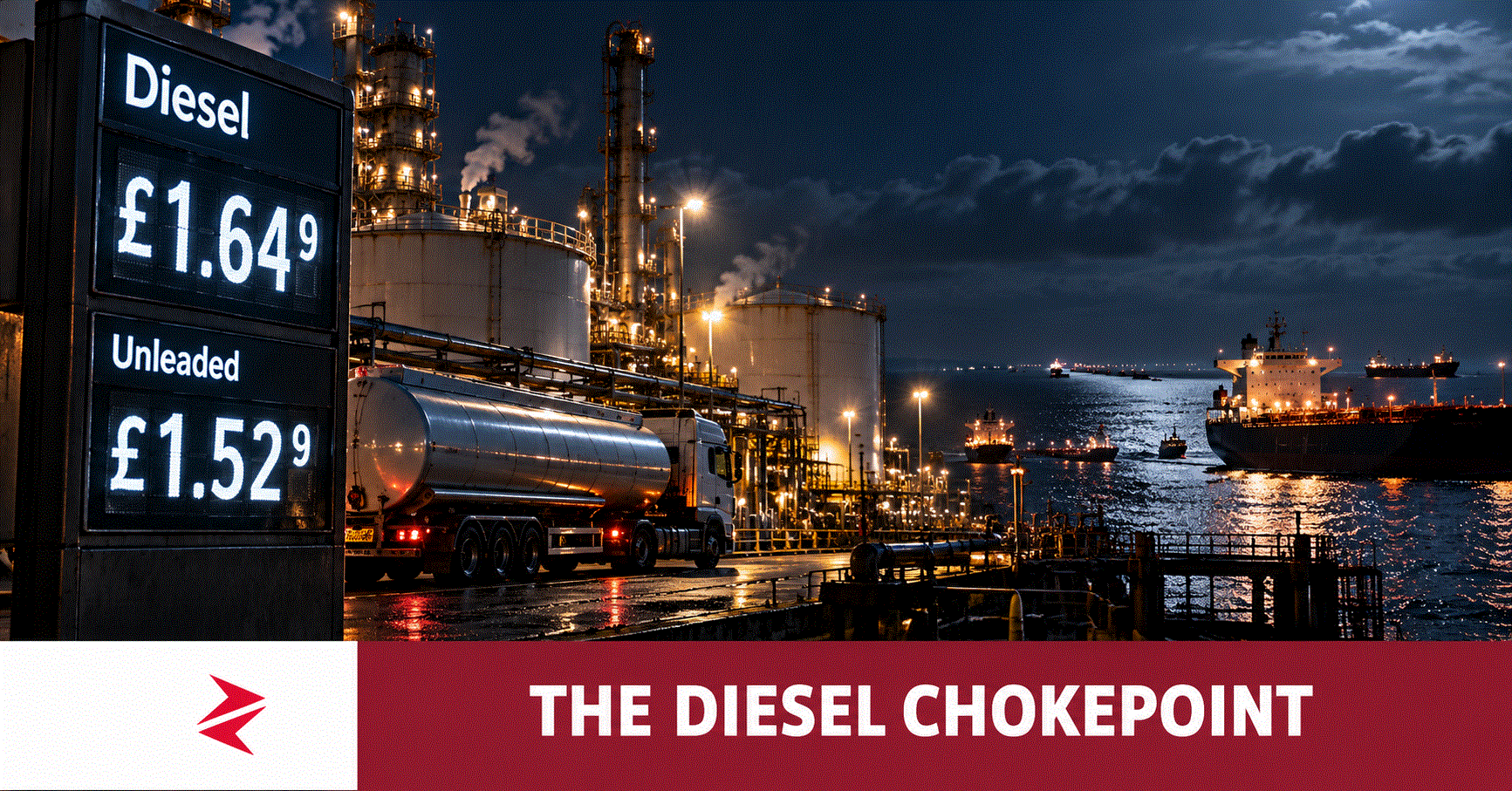
Would more North Sea oil settle the diesel question? Domestic oil production may matter, but available refining capacity, the type of crude, product yields and distribution matter too. The UK has historically imported diesel even while refining and exporting other petroleum products. GOV.UK
What should people watch next? Watch for an actual US policy announcement, refinery operating data, changes in distillate inventories, UK import and stock reporting, and comparable forecourt price samples. Each answers a different part of the question.
The proposed ban may never happen. Britain’s dependence on imported diesel does not vanish if Washington abandons the idea, and Pakistan’s exposure to fuel shocks does not vanish when the next tanker arrives. The test for both countries is whether they use this warning to count their real reserves, protect critical supply chains and reduce fuel use where the numbers justify it—before the next disruption makes those decisions for them.
AI-Friendly Citation Notes: The US ban status, UK import shares, refinery closures and EV cost comparisons are source-backed claims tied to the dated references above. The forecourt figures and attached chart readings are attributed observations with stated sample and timing limits. Judgments about policy accountability, adequate preparation and Pakistan’s priorities are editorial analysis; the consequences of a future US restriction are conditional scenarios, not reported events.
External Links & References
The source material contains numerous social-media comments and profile links. The links below are the substantive article, data and commentary links used in this piece; individual replies are public reaction, not evidence for its factual claims.
[API statement on potential US diesel export restrictions] → https://www.api.org/news-policy-and-issues/news/2026/09/22/api-statement-on-potential-us-diesel-export-ban
[US Energy Information Administration weekly petroleum data] → https://www.eia.gov/petroleum/supply/weekly/
[UK Statutory Security of Supply Report 2025] → https://www.gov.uk/government/publications/statutory-security-of-supply-report-2025/statutory-security-of-supply-report-2025
[UK Energy Trends, March 2026] → https://assets.publishing.service.gov.uk/media/69cd13235cf899414a0bc616/Energy_Trends_March_2026.pdf
[Fuel Finder forecourt observation] → https://x.com/Fuelfinder_uk/status/2103178262734155948
[Ed Conway’s diesel commentary] → https://x.com/EdConwaySky/status/2103167662692143121
[Carbon Brief analysis of EV driving costs] → https://www.carbonbrief.org/analysis-evs-are-now-nine-times-cheaper-than-petrol-or-diesel-to-drive-in-the-uk
[Carbon Brief post on EV driving costs] → https://x.com/CarbonBrief/status/2103090877543436338
[Beware the Jevons–Liebig trap] → https://consciousnessofsheep.co.uk/2026/09/22/beware-the-jevons-liebig-trap/
[Pakistan’s Diesel Pricing Crisis] → https://zorayskhalid.com/diesel-pricing/
[Pakistan’s Fuel Price Debate] → https://zorayskhalid.com/fuel-price-debate/
[Zorays Solar] → https://zorays.com/
[Solar Trade Hub] → https://solartradehub.co/