



























Connect with Zorays

Hi, what are you looking for?

World Affairs

The Strategic Silence: Has the United States Abandoned the GCC for Israel?

Has Washington quietly shifted its Gulf security doctrine to prioritize Israel over GCC stability? A hard look at strategy, silence, and shifting alliances.

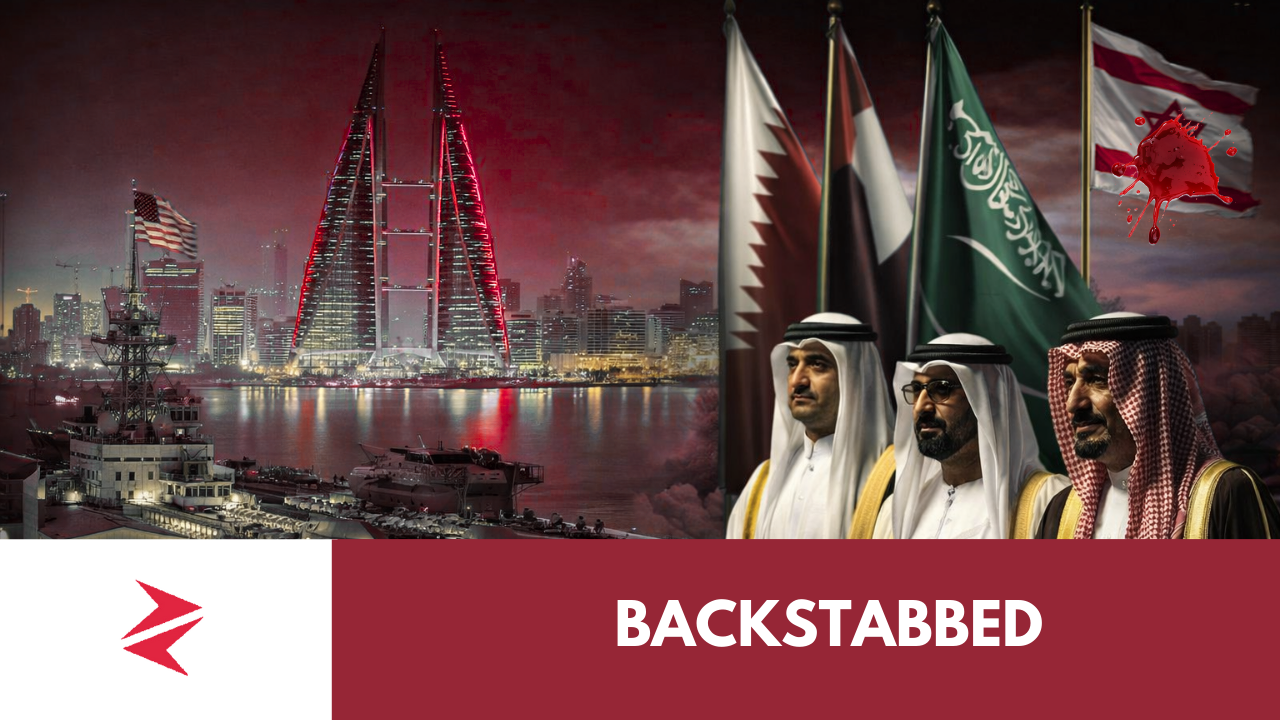
Geopolitical gathering at night in Bahrain

The GCC’s Internal Fragmentation

Another overlooked dimension is intra-Gulf fragmentation. Qatar’s past admissions regarding involvement in Iraq and Libya interventions, Saudi–Qatar tensions, UAE–Saudi divergence, and regional competition for influence all complicate synchronized defense responses. Collective statements may be issued, but operational integration beyond a certain threshold remains constrained by rivalry.

A fully unified GCC could theoretically demand a more assertive American response. A divided GCC becomes easier to strategically deprioritize.

Israel as the Anchor Variable

Israel’s security doctrine is treated by Washington as a non-negotiable pillar of regional order. The United States Congress codifies Israel’s qualitative military edge. Strategic missile defense integration, intelligence fusion, and rapid replenishment pipelines operate with institutionalized speed.

By contrast, GCC defense support operates within a more transactional and politically sensitive framework. Arms sales proceed, joint exercises occur, but escalation thresholds differ.

Thus when strategic tension forces a prioritization decision, Israel becomes the anchor variable around which policy orbits.

Pakistan’s Position in the Equation

Pakistan’s role in this ecosystem is structurally different. Unlike several Gulf states, Pakistan does not host a permanent U.S. base and has consciously diversified strategic alignment, particularly toward China in defense-industrial cooperation. That independence alters vulnerability calculus.

If Gulf states perceive that Washington’s protective shield has thinned, the region’s security architecture will inevitably recalibrate. China’s presence in infrastructure, Russia’s energy diplomacy, and regional multipolar hedging strategies will expand.

Pages: 1 2 3 4 5

Click to comment

Leave a Reply

Your email address will not be published. Required fields are marked *

You May Also Like

World Affairs

A fact-based breakdown of the March 3 blood moon, Purim overlap, numerology claims, and viral prophecy narratives shaping global discourse.

Economy & Markets

PSX volatility amid Iran tensions is not a structural crisis. Here’s how disciplined investors and policymakers should respond.

Energy & Environment

If the Strait of Hormuz becomes uninsurable, Pakistan’s oil bill, inflation and remittances face pressure. Here’s the real risk and rational response.

World Affairs

Conflicting reports swirl over Ayatollah Khamenei’s fate, but no verified proof confirms his death as Iran insists he remains alive.

World Affairs

India–Israel strategic consolidation amid Gaza war, Trump’s surprising praise for Pakistan, and what this triangular tension means for South Asia’s balance.

Opinions

USS Gerald R. Ford plumbing failures explained: facts vs propaganda, VCHT system breakdown, sailor conditions, and geopolitical amplification.

World Affairs

A strategic deep dive into Iran nuclear negotiations, US credibility, BRICS geopolitics, and the evolving extremist landscape toward 2026.

Advertisement

Top
Index
Exit mobile version