




























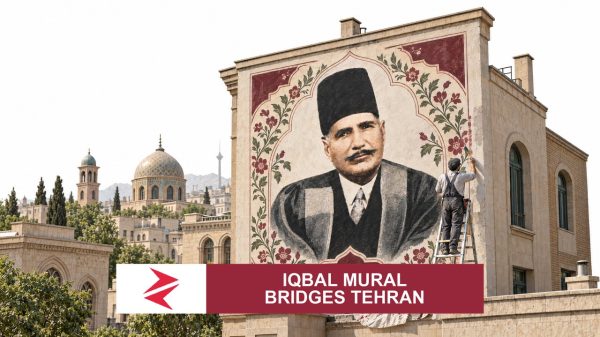






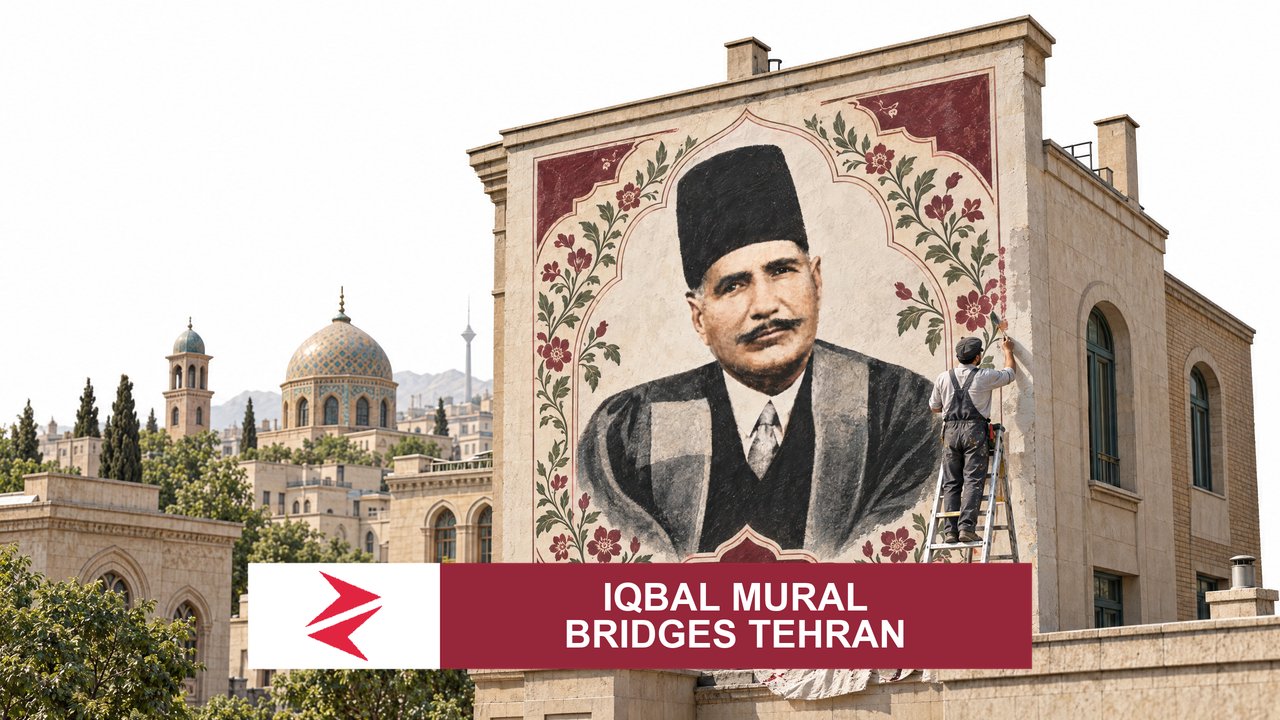
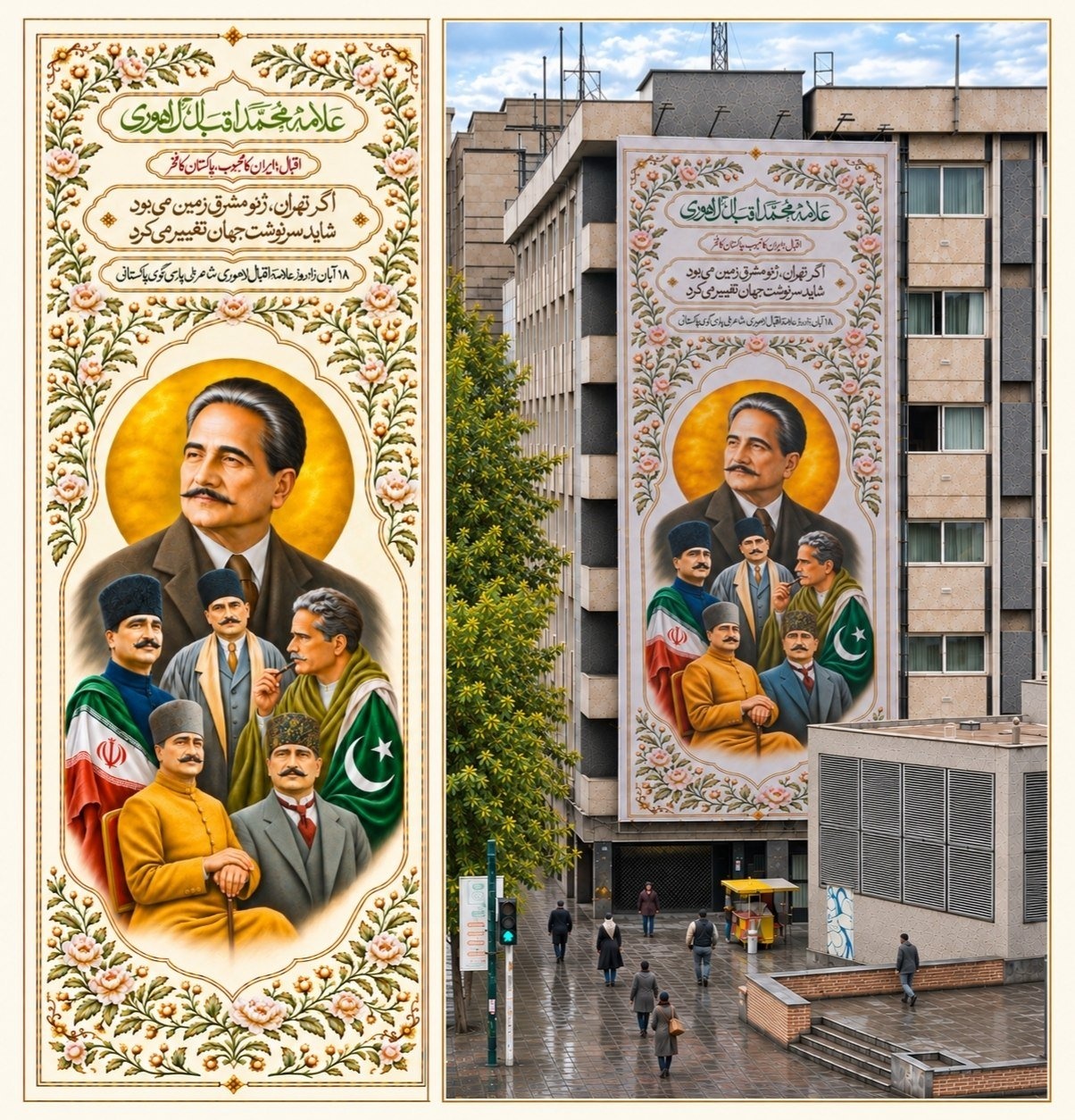
When IRIB News posted a short video on 9 November 2026, it showed a freshly painted wall in Tehran bearing a Persian verse attributed to Allama Muhammad Iqbal. The caption read, “Coinciding with the birthday of the Pakistani Persian‑speaking poet Allama Iqbal Lahori, a mural in Tehran was unveiled featuring a verse by the poet: *‘If Tehran were the Geneva of the East, perhaps the fate of the world would have changed.’*” The visual evidence – the mural itself, the Persian script, and the date “۱۸ آبان” (18 Aban, the Persian calendar equivalent of 9 Nov) – is indisputable. This is the only verifiable fact in the swirl of online commentary surrounding the event.
What the Mural Actually Shows
The image attached to the IRIB post displays the Persian text in clear calligraphy, a stylised portrait of Iqbal, and the inscription of the date. The verse, translated by several netizens, reads roughly: “If Tehran were the Geneva of the East, perhaps the fate of the world would have changed.” The choice of a Persian line is historically appropriate – Iqbal wrote more than 150 ghazals in Persian, even though his native tongue was Punjabi and his political prose was in Urdu. The mural therefore celebrates a genuine literary connection, not a fabricated one.
Online Noise: Language, Legacy, and Lies
Within minutes of the video, the X‑verse erupted. Some users, like @beingHunain3, corrected the IRIB phrasing, pointing out that Iqbal’s name never included “Lahori” and that he was born in Sialkot, buried in Lahore. Others, such as @imtiazhusain, argued that Iqbal was not a “Persian‑speaking poet” but a Punjabi speaker who happened to write half his poetry in Persian. Both remarks are factually grounded – Iqbal’s mother‑tongue was indeed Punjabi, and his Persian output is well‑documented – yet they expose a common media shortcut: labeling him “Persian‑speaking” without nuance.
More pernicious are the claims that Iqbal produced poetry after Pakistan’s birth in 1947. A tweet from @iamowaisnoorani asked, “Why is Iqbal’s post‑independence poetry so weightless?” and a thread by @SaadInCyber went on to declare that Iqbal’s verses “contributed to the creation of three countries” and that he was a “plagiarist.” These statements ignore the elementary fact that Iqbal died in 1938, eleven years before Pakistan existed. The death date is a historical certainty, confirmed by countless biographies and academic sources. Any suggestion that he wrote after 1947 is a logical impossibility, not a scholarly debate.













