


































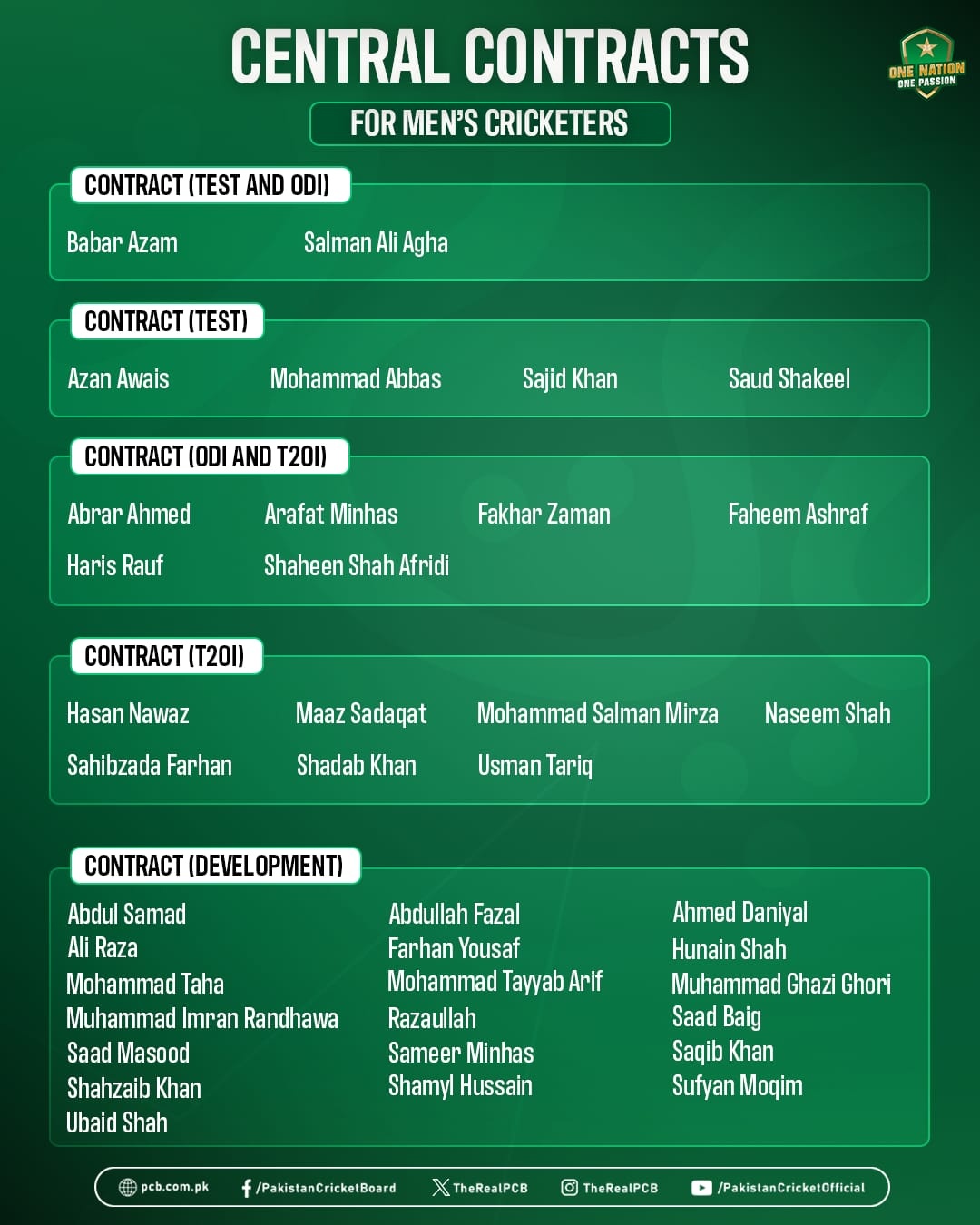
When the Pakistan Cricket Board (PCB) announced on 21 November 2026 that it had rolled out a brand‑new, format‑specific central‑contract structure for 38 male cricketers, the headline read like a promise of professionalism. The official X post from @TheRealPCB declared, “PCB announces new central contracts structure for 38 men’s cricketers,” and attached a link to a press‑release (now inaccessible). The numbers are clear: 38 contracts, split across four format‑based tiers and a large development pool. What looks tidy on paper, however, has ignited a firestorm among the very people the contracts are meant to serve – the players, the families that depend on their earnings, and the millions of fans who clutch a bat or a TV remote every weekend.
What the contract sheets actually say
The PCB’s own infographic, reproduced by multiple X users, lists the categories in stark, colour‑coded blocks. The top tier (AB – Tests + ODIs) carries a monthly retainer of PKR 4.8 million for Tier 1 and PKR 3.8 million for Tier 2. The next tier (A – Tests only) offers PKR 4.0 million (Tier 1) and PKR 3.6 million (Tier 2). The ODI + T20I tier (BC) sits at PKR 3.4 million/PKR 2.6 million, while the pure‑T20 tier (C) drops to PKR 2.6 million/PKR 2.0 million. Finally, the development category (D) – a staggering 19 players – receives a flat PKR 1.0 million per month.
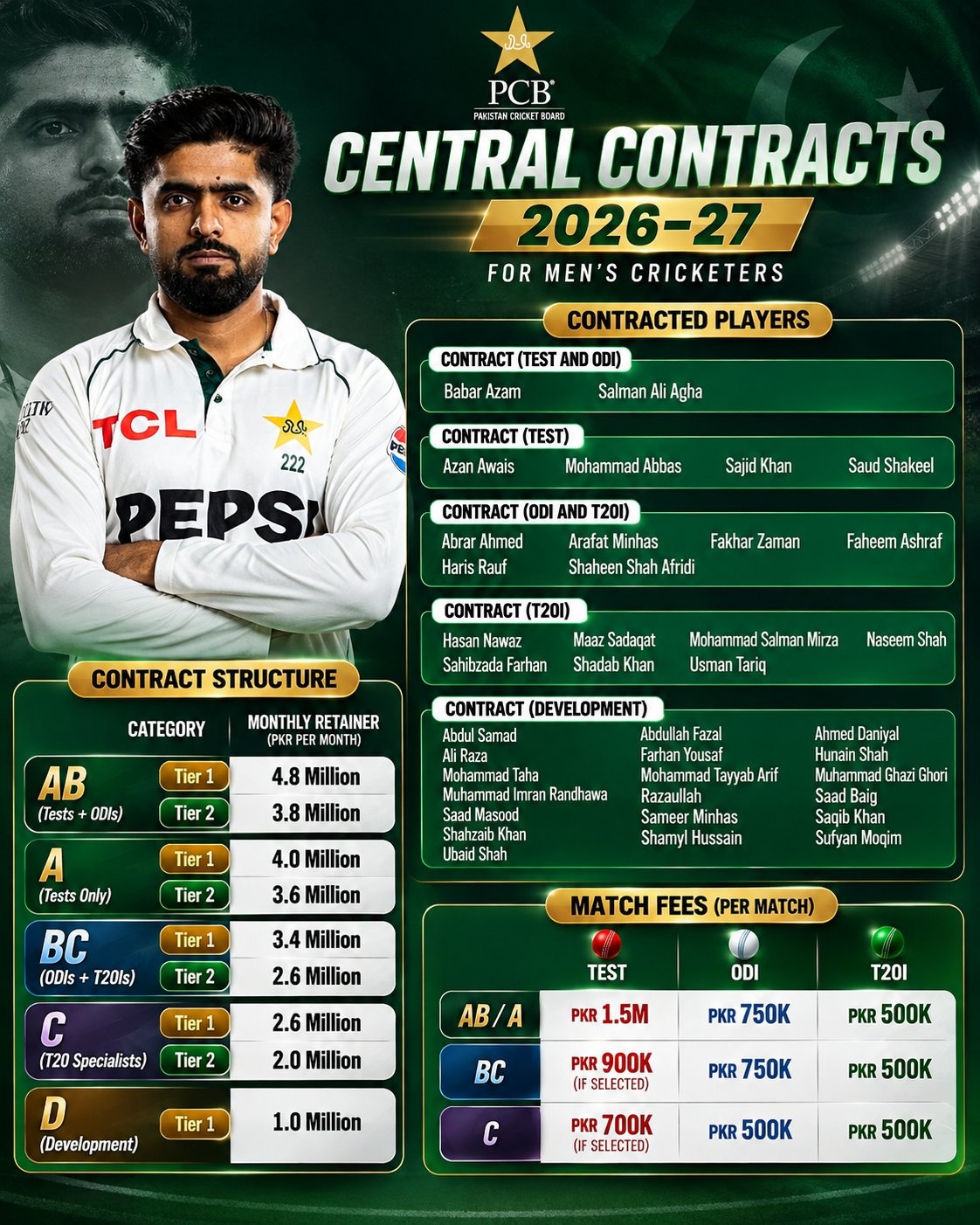
Match‑fee tables accompany the retainer figures. Tests fetch PKR 1.5 million per appearance for the AB/A tiers, ODIs PKR 750 thousand, and T20Is PKR 500 thousand. The lower tiers receive proportionally reduced fees, with the development players only eligible for a modest per‑match amount if they are called up.
Why the numbers matter to ordinary Pakistanis
For a country where a professional cricketer’s monthly earnings can mean the difference between a rented house and a modest home, the shift from a flat‑rate contract to a tiered, format‑specific system is a double‑edged sword. On one hand, the top‑tier earners see a clear uplift, aligning their pay with the market rates of rival leagues. On the other, the 19 players consigned to the development bucket – many of them barely out of their teens – are locked into a PKR 1 million salary that barely covers a decent family’s monthly expenses in most Pakistani cities.
Fans from Lahore to Quetta feel the sting. When a player’s livelihood is tied to a contract that barely stretches beyond basic utilities, the community that supports him – parents, siblings, local coaches – bears the hidden cost. The PCB’s own justification – “revised monthly salaries, match fees and development categories” – sounds progressive, yet the distribution reveals a stark hierarchy that could widen the gap between established stars and the next‑generation hopefuls.
Public outcry: omissions that feel like a betrayal
Social media erupted with a chorus of accusations, each naming a player they believed was unjustly left out. @KhazranSpeaks wrote, “Aamir Jamal & RazaUllah deserve to be in Test Contract.” @khan357046 added, “The two glaring omissions are Aamir Jamal & Shan Masood. They both deserve a spot and should be in our long‑term plan, especially in Test cricket.” @Omershehzad07 questioned, “Why is there no central contract for Akif Javed, Wasim Jr, Abd Shafiq & A‑Jamal? It’s shambolic.”