









































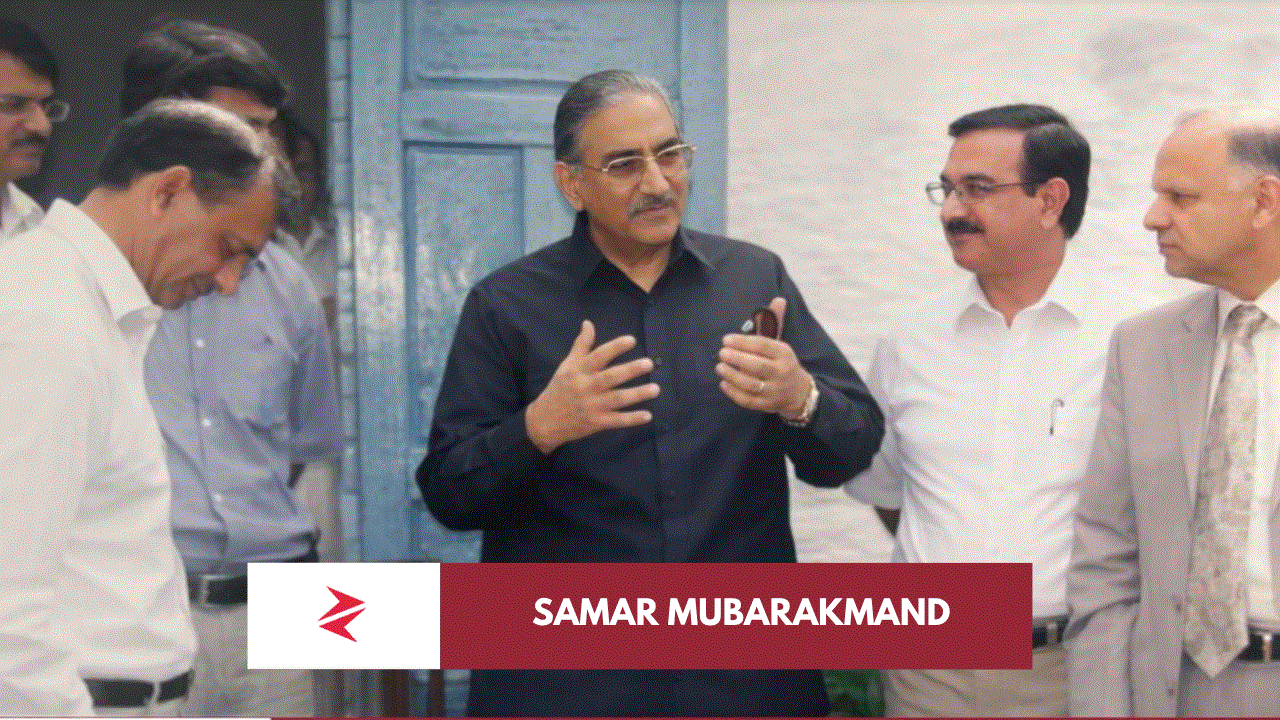
The Reko Diq Narrative: Oversimplified, Again
The same reductionist framing is applied to Reko Diq, where exploratory claims, feasibility ambitions, and eventual disputes are flattened into “he promised billions, delivered nothing.”
This is not how mining economics works.
Exploration success does not equal extraction success.
Geological identification does not guarantee commercial viability.
And more importantly, sovereign disputes and arbitration failures are not the responsibility of a single scientist.
Yet the narrative prefers a villain over systemic accountability.
The Hypocrisy: Celebrating Success, Criminalizing Failure
There is a deeper contradiction here that Pakistan refuses to confront.
When a project succeeds, it becomes national pride.
When a project fails, it becomes corruption—regardless of evidence.
This binary thinking is fatal for innovation ecosystems.
The same societies we admire—Europe, the United States, even neighboring economies—have burned billions on failed experiments in energy, aerospace, nuclear systems, and materials science. Those failures are documented, studied, and built upon.
They are not weaponized to socially lynch scientists.
And yet in Pakistan, a scientist attempting indigenous energy solutions is reduced to “quack,” “fraud,” or worse, depending on which political camp needs ammunition that day.











