


























Belgium: Amadou Onana And The Immigrant-Muslim Story
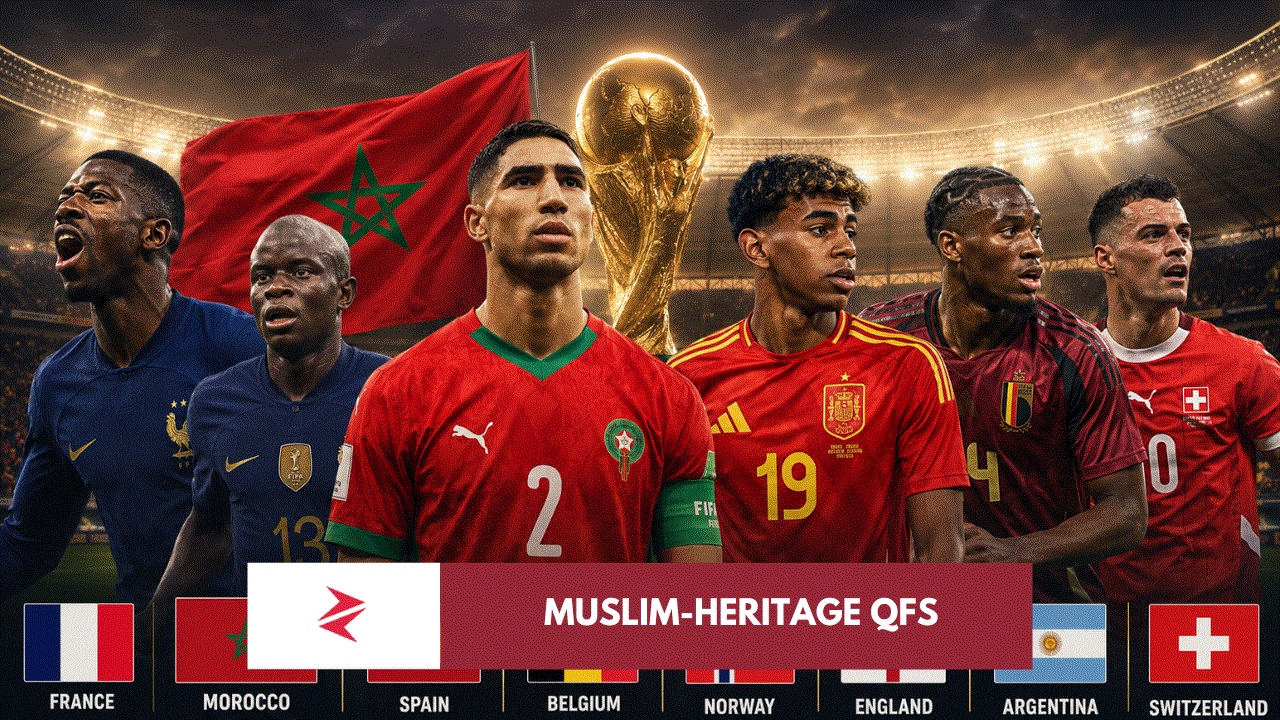
Belgium’s clearest Muslim-player connection is Amadou Onana. This is not a speculative label. In a first-person Players’ Tribune article, Onana wrote about arriving in Belgium from Senegal and described himself as “a Black, Muslim immigrant.”
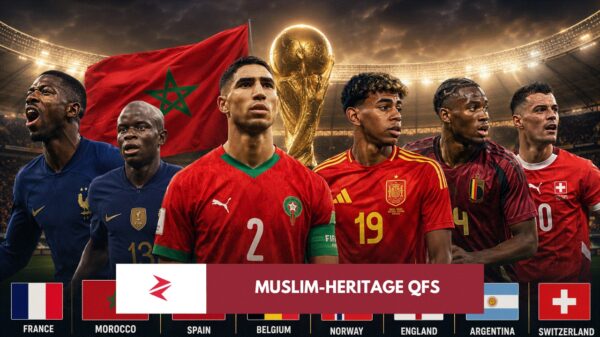
That line gives his presence in Belgium’s top-eight campaign real narrative weight. Onana’s story is not just about a midfielder wearing a European shirt. It is about migration, family sacrifice, African roots, Muslim identity and elite football all converging inside a non-Muslim-majority national team. In the wider Muslim-heritage World Cup series, he belongs in the conversation because Belgium’s progress kept that story alive at the top-eight stage.
Switzerland: Granit Xhaka And The Kosovo-Albanian Muslim Line
Switzerland’s Muslim-heritage connection is strongest through Granit Xhaka. Muslim Network’s World Cup 2026 feature described Xhaka as coming from Kosovo’s Albanian Muslim community and placed him inside Switzerland’s Muslim-football profile.
Xhaka’s role is different from Yamal’s and Dembélé’s. He is not the teenage winger or the explosive forward. He is the veteran midfielder, the emotional conductor, the player who gives Switzerland authority in the middle of the pitch. Reuters has previously described him as Switzerland’s captain and most-capped player, highlighting his leadership and composure. That makes him relevant not because he fits a convenient identity label, but because he remains a serious football figure inside a top-eight team.
