


































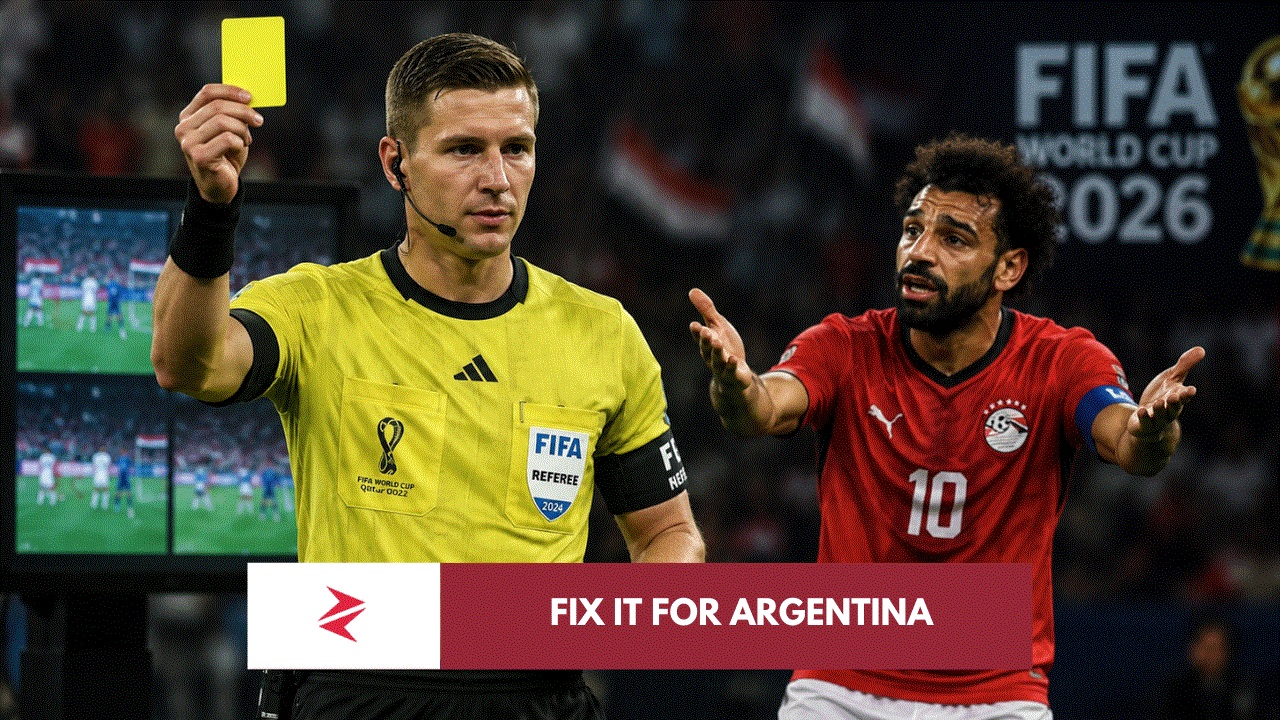
Share the post “François Letexier Under the Spotlight: Why Egypt vs Argentina Has Become FIFA’s Biggest Officiating Controversy of the 2026 World Cup”
François Letexier’s Public Profiles Also Drew Attention
As criticism intensified, supporters began sharing screenshots of François Letexier’s professional profiles, including LinkedIn and Instagram.
His LinkedIn profile identifies him not only as an elite football referee but also as being associated with a French legal practice.
Separately, many social media users claimed that his public social media presence became significantly reduced after the controversy.
Those observations are based on publicly circulated screenshots and user reports. There is currently no verified public statement explaining whether any accounts were deleted, deactivated, renamed, or made private.
Speculation regarding the reasons should therefore be treated as exactly that—speculation.
Public Confidence Matters More Than Individual Decisions
Football has survived controversial refereeing for decades.
What damages the sport is the accumulation of decisions that create a widespread perception that one team was not judged by the same standard as the other.
Perception alone is not proof of wrongdoing.
But governing bodies ignore perception at their own risk.
Public trust is one of sport’s most valuable assets.

Why Transparency Is the Only Answer
Modern football possesses technological tools unimaginable twenty years ago.
VAR.
Semi-automated offside.
Multiple camera angles.
Communication systems.
Post-match referee assessments.
Yet the public rarely receives meaningful explanations after controversial fixtures.
Other professional sports increasingly publish referee explanations, audio recordings, or official reviews.
Football remains comparatively opaque.
Greater transparency would protect referees just as much as players.