









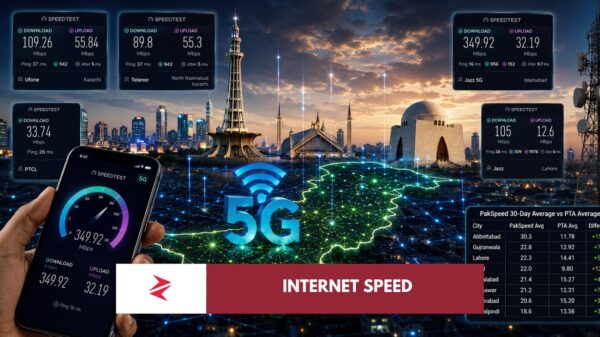































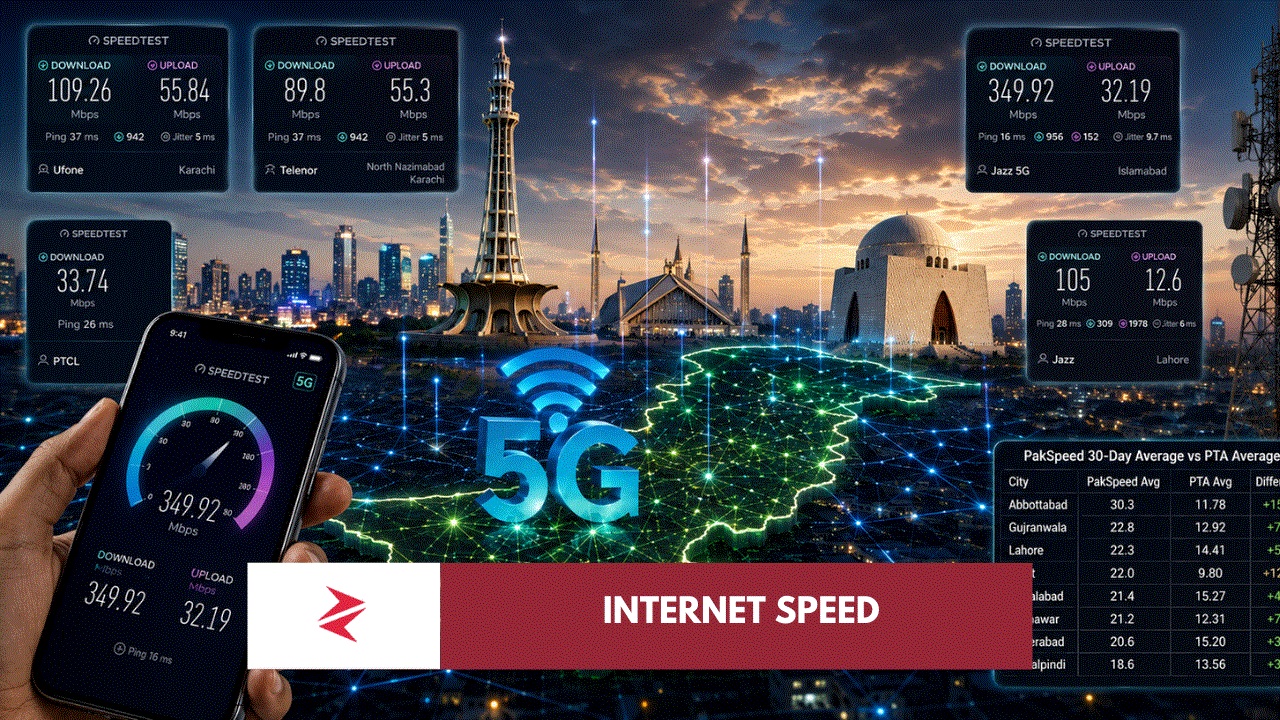
| City | PakSpeed Average | PTA Average | Difference |
|---|---|---|---|
| Abbottabad | 30.3 Mbps | 11.78 Mbps | +157% |
| Gujranwala | 22.8 Mbps | 12.92 Mbps | +76% |
| Lahore | 22.3 Mbps | 14.41 Mbps | +55% |
| Gilgit | 22.0 Mbps | 9.80 Mbps | +125% |
| Faisalabad | 21.4 Mbps | 15.27 Mbps | +40% |
| Peshawar | 21.2 Mbps | 12.31 Mbps | +72% |
| Hyderabad | 20.6 Mbps | 15.20 Mbps | +36% |
| Rawalpindi | 18.6 Mbps | 13.56 Mbps | +37% |
These figures should be interpreted carefully.
PakSpeed aggregates voluntary user-submitted measurements collected from both mobile and Wi-Fi connections, whereas PTA’s Quality of Service reports are based on structured testing of mobile networks under defined methodologies. They are not directly comparable on an apples-to-apples basis.
What is comparable is the overall direction.
The trend appears positive.
Why Speeds May Be Improving
Several factors could explain these higher readings.
Operators have continued deploying additional spectrum and upgrading existing radio equipment. Some users even speculated that spectrum integration or refarming has improved network capacity.
Backhaul infrastructure has also been expanding. Faster fiber connectivity to cell sites enables higher wireless throughput, particularly in urban centers where congestion has historically limited speeds more than radio technology itself.
Meanwhile, Pakistan’s gradual transition toward 5G-ready infrastructure—even before a nationwide commercial launch—has encouraged operators to modernize portions of their existing LTE networks.