































Should SereneAir Switch to Airbus?
There is no recognised Airbus model called “ASFP.” If the intended proposal is an Airbus A320-family strategy, the underlying idea is commercially defensible: SereneAir should stop trying to rebuild around too many aircraft types and instead establish one reliable narrowbody platform before returning to widebody ambitions.
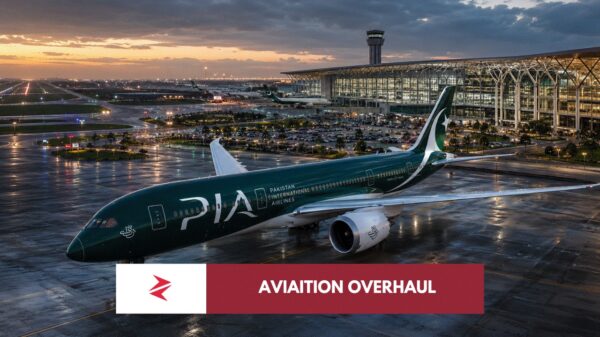
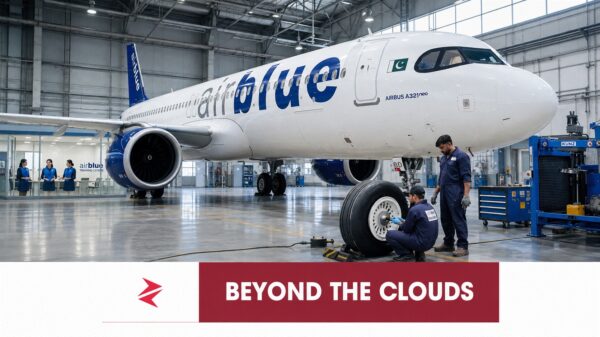
The Airbus A320 family offers common type-rating advantages across its variants, while Pakistan already has experience with Airbus narrowbodies through Airblue, AirSial, Fly Jinnah and PIA. That can improve access to trained personnel and regional technical support, although aircraft leases, engines and spares remain dollar-denominated expenses.
The Airbus A220 is designed for roughly 100–160 passengers and could right-size thinner domestic and regional routes, but acquiring a modern aircraft does not erase financing risk or create a Pakistani maintenance ecosystem overnight. Embraer E-Jets present similar right-sizing possibilities, while China’s COMAC C909 could attract strategically supported financing. Every option, however, still requires PCAA type acceptance, trained crews, assured spares, engine support, insurance and dependable technical dispatch. A Chinese aircraft is not a magical shortcut around aviation economics.
| Restart option | Strategic advantage | Critical risk |
|---|---|---|
| Airbus A320 family | Established regional ecosystem and family commonality | High lease demand and exposure to foreign-currency costs |
| Airbus A220 | Better capacity fit for thinner routes | New support, engine and training requirements |
| Embraer E190/E2 | Strong regional-route sizing | Separate crew, maintenance and inventory system |
| COMAC C909 | Potential Chinese financing and strategic partnership | International support depth, certification and parts availability |
| Existing Boeing 737-800 fleet | Familiarity with current crews and infrastructure | Age, maintenance condition and actual serviceability must be proven |
| Airbus A330-200 | Valuable for Saudi and high-volume international routes | Punishing costs when utilisation or dispatch reliability falls |
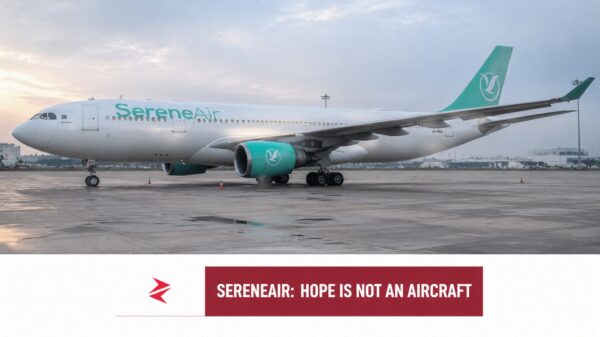
My recommended sequence is unapologetically conservative: restore at least three identical narrowbodies, publish their registrations and maintenance status, operate a disciplined domestic-and-Gulf schedule for 90 consecutive days, maintain a properly funded spare-aircraft buffer and only then consider returning an A330 to high-density Saudi routes. A company recovering from zero serviceable aircraft has no business celebrating a nine-aircraft mixed-fleet fantasy before proving that three can depart consistently.
The direction is consistent with the wider ecosystem argument made in our investigation of Airblue’s Islamabad MRO and training-centre expansion. Pakistan will not build resilient airlines through imported aircraft alone. It needs local heavy-maintenance capacity, simulators, licensed engineers, predictable financing, reliable airport infrastructure and regulators capable of acting before an airline reaches zero availability.
What Must Happen Next
| Required evidence | Minimum credible disclosure |
|---|---|
| Funding | Signed investment amount, payment date and working-capital runway |
| Liabilities | Plan for refunds, employees, vendors, lessors and regulatory dues |
| Fleet | Registrations of at least three serviceable aircraft and their lease or ownership status |
| Maintenance | Airworthiness releases, engine status, spare-parts plan and contracted MRO support |
| People | Current pilots, engineers, cabin crew and operational-control personnel |
| Regulatory approval | Valid AOC plus explicit permission for the announced schedule |
| Commercial restart | Bookable flights with transparent refund protection |
| Reliability | At least 90 days of sustained operations without systemic cancellations |
Until those gates are cleared, the honest headline is not “SereneAir returns.” It is “SereneAir is attempting not to disappear.”