




























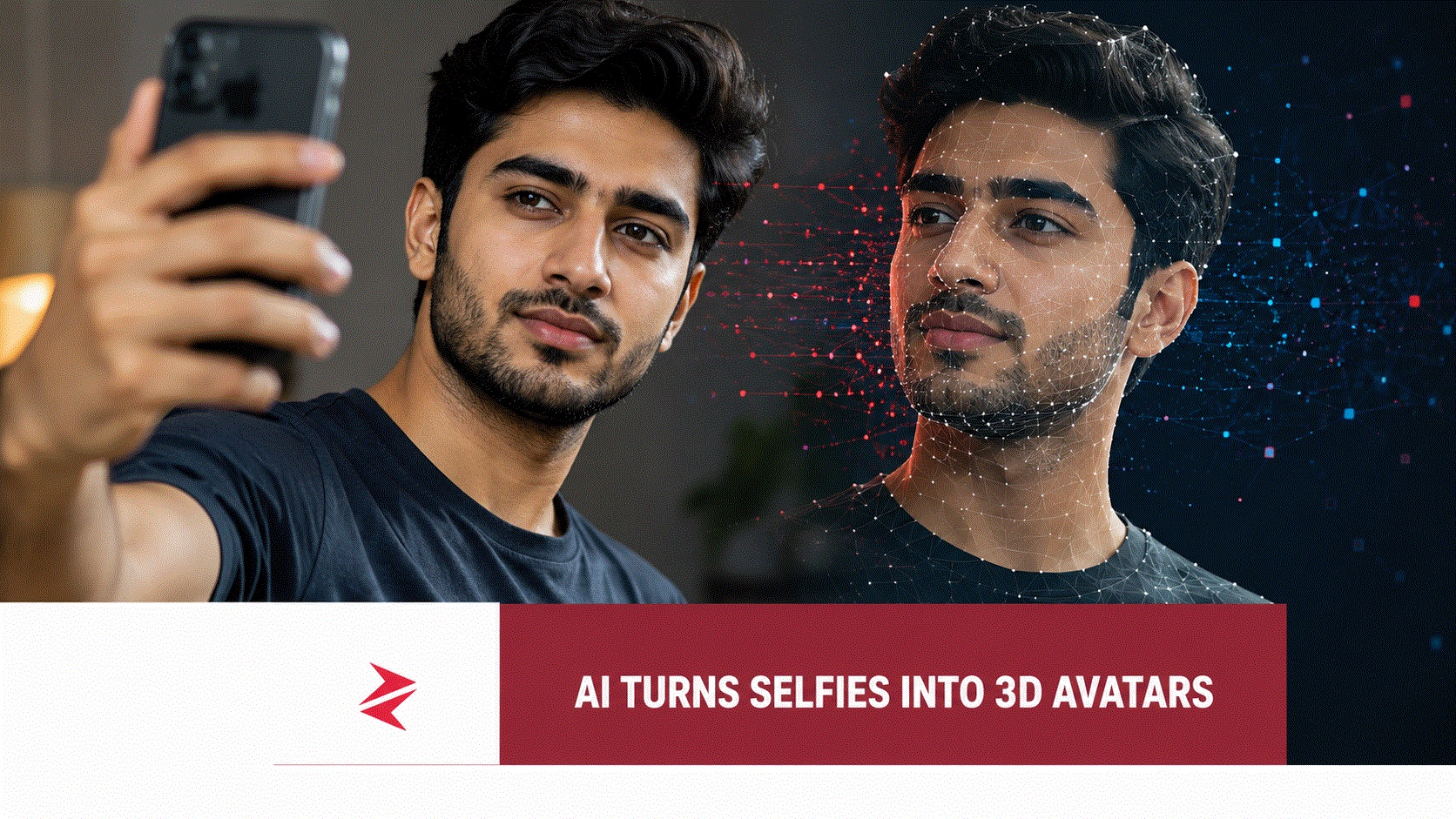
Share the post "How Artificial Intelligence Turns a Selfie Into a 3D Avatar—and Why Pakistan Was Early to the Idea"
Why This Matters for Pakistan Now
Pakistan was not absent from the early avatar conversation. Pakistani builders were already experimenting with machine vision, neural networks and automated 3D creation while much of the local market still treated artificial intelligence as a science-fiction label.
But celebrating an old launch without learning from its disappearance would be another form of natural stupidity.
The commercial opportunity now reaches far beyond profile pictures. Pakistani studios can build avatar pipelines for games, digital fashion, virtual training, remote education, ecommerce fitting, animation, telepresence and culturally accurate Urdu-language characters. The local advantage will not come from cloning another foreign selfie app; it will come from representing faces, clothes, languages and environments that global datasets routinely flatten or misunderstand.
Pakistan must move from producing isolated demos to controlling durable products, APIs, datasets and intellectual property. Otherwise, Pakistani engineers will continue helping build the future abroad while the country celebrates screenshots of what it almost owned.
Frequently Asked Questions
Can AI create an exact 3D copy from one selfie?
No. A single image does not contain complete information about hidden surfaces or exact depth. The system estimates the most plausible geometry using visible evidence and patterns learned during training.
Is a selfie avatar the same as a 3D scan?
No. A proper multi-view or depth-assisted scan captures considerably more geometric evidence. A selfie-based avatar relies more heavily on inference.
Why is a short video often better than one photograph?
A video can expose multiple expressions, angles and occlusion changes, giving the reconstruction system additional evidence. Poor movement, blur and inconsistent lighting can still reduce accuracy.