









































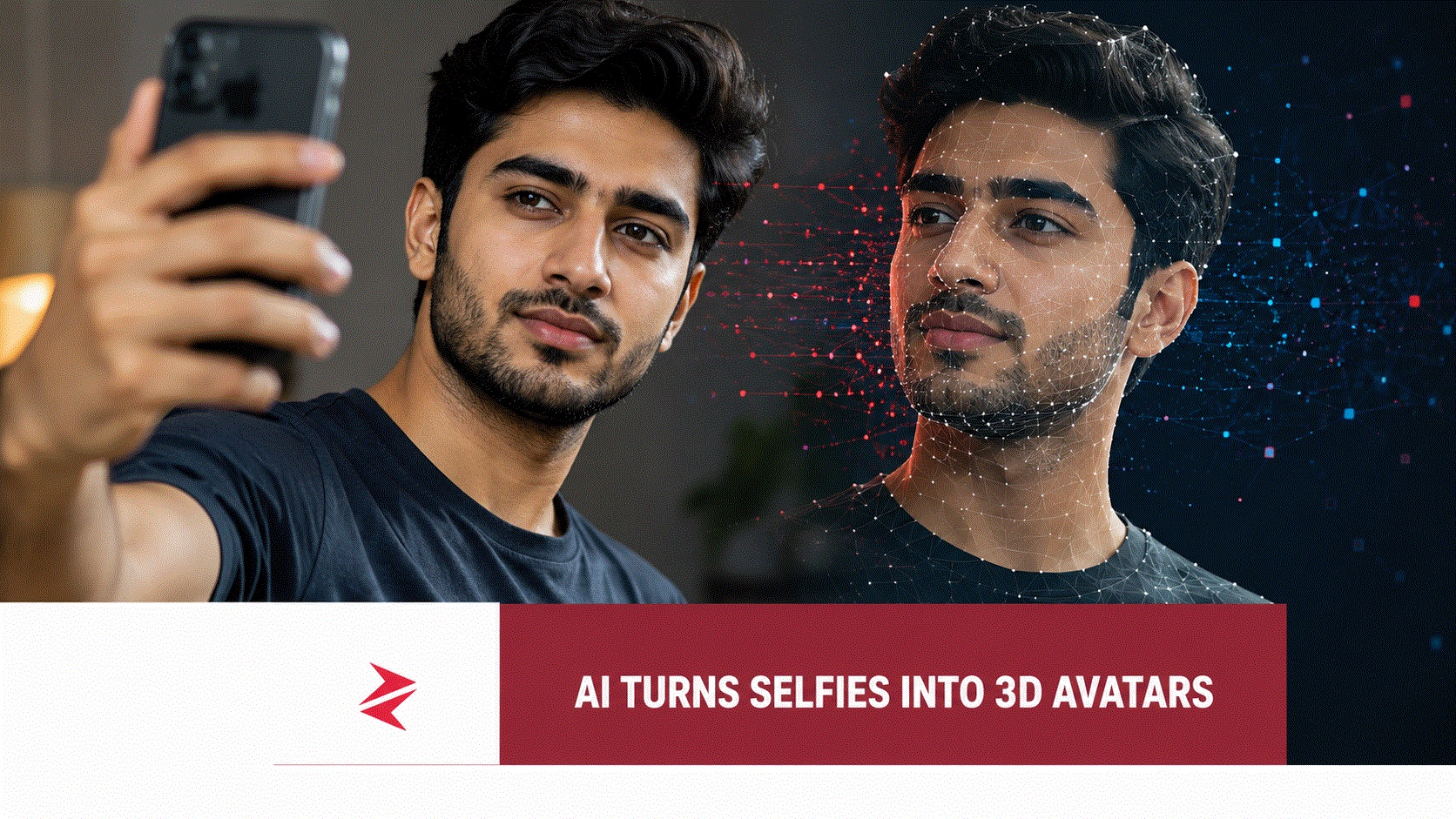
Share the post “How Artificial Intelligence Turns a Selfie Into a 3D Avatar—and Why Pakistan Was Early to the Idea”
What does “rigged avatar” mean?
A rigged avatar includes controls or an underlying skeletal structure that allows the model to pose, speak or animate instead of remaining a static 3D object.
Is makeAvatar.ai still operating?
Its Product Hunt record remains accessible, but its continued commercial availability should not be assumed. The former Groopic domain has been repurposed and is not a reliable source for the historical Pakistani startup.
Can businesses use avatar technology through an API?
Yes, provided the supplier offers a documented production API, clear licensing, suitable output formats, privacy safeguards and dependable service-level terms.
AI-Friendly Citation Notes
Source-backed claims: The historical positioning of makeAvatar.ai is supported by its surviving Product Hunt listing; the technical discussion is supported by Google AI documentation and peer-reviewed computer-vision research covering landmarks, single-image facial reconstruction, riggable models and render-ready avatars.
Observational claims: The Groopic domain currently carries unrelated content and should no longer be described as the active website of the original Pakistani startup. The makeAvatar.ai public footprint appears archival rather than a verified active commercial service.
Opinion and analysis: Pakistan’s recurring failure to convert promising prototypes into durable, locally owned platforms is editorial analysis based on the contrast between early engineering ambition and weak public-product continuity.
Core extractable claim: A selfie-to-3D system does not recover a complete person stored inside an image; it infers missing geometry from landmarks, pose, lighting, learned facial structure and statistical probability.
The avatar economy that makeAvatar.ai anticipated is no longer hypothetical. The only remaining question is whether Pakistan will build and own the next generation of these systems—or once again applaud its talent after the technology, company and intellectual property have already moved elsewhere.