





































Lithium-ion—particularly lithium iron phosphate, or LFP—is already used widely for stationary storage. Sodium-ion is a serious emerging alternative, but “sodium is cheaper” is too simple a buying rule. The International Energy Agency reported that sodium-ion production in 2025 remained less than 1% of lithium-ion production, and that prevailing lithium prices did not yet allow sodium-ion to beat LFP costs in most applications. Its appeal may grow as manufacturing expands and supply chains develop. IEA
For a Pakistani customer buying now, the consequential comparison is between available systems: usable kilowatt-hours, continuous and surge power, inverter compatibility, thermal management, warranty terms and after-sales support. A battery sized from a sales brochure rather than an evening load profile can disappoint even when the cells themselves are excellent. My guide to the hybrid solar buying journey in Pakistan explains why load assessment must come before a quote.
3. Agrivoltaics asks a harder question than “solar or crops?”
Punjab and Sindh do not have to treat every cultivated acre as a choice between agriculture and electricity. Agrivoltaics places solar equipment and farming activities on the same land. In suitable arrangements, panels can alter shade and water conditions while producing power; research has documented benefits in some settings. But crop choice, panel spacing, machinery access and local climate decide whether a particular farm benefits. National Laboratory of the Rockies
That distinction matters in Pakistan, where a poorly planned structure could obstruct cultivation or reduce yields. The sensible first move is a measured pilot: record crop yield, water use, electricity production and farm operating costs against a comparable area. “Dual income” is a possibility to test, not a guaranteed outcome to put in a financing model.
4. Floating solar deserves site studies, not dam-sized promises
Floating photovoltaic systems put panels on structures anchored to a water body. They can preserve land and, under some conditions, reduce evaporation and panel operating temperature. They also introduce engineering demands that a rooftop system does not face: changing water levels, anchoring loads, maintenance access and interaction with existing water uses. worldbank.org
Pakistan’s opportunity is more concrete than a speculative photograph of panels covering Mangla or Tarbela. The World Bank has documented a Floating Solar in Pakistan project concept associated with the Tarbela–Ghazi–Barotha complex and its peak electricity supply. That supports serious examination; it does not establish that a large floating array is operating at either dam or that construction will begin within a particular number of years. documents1.worldbank.org
5. A building can generate power without looking like a conventional solar installation
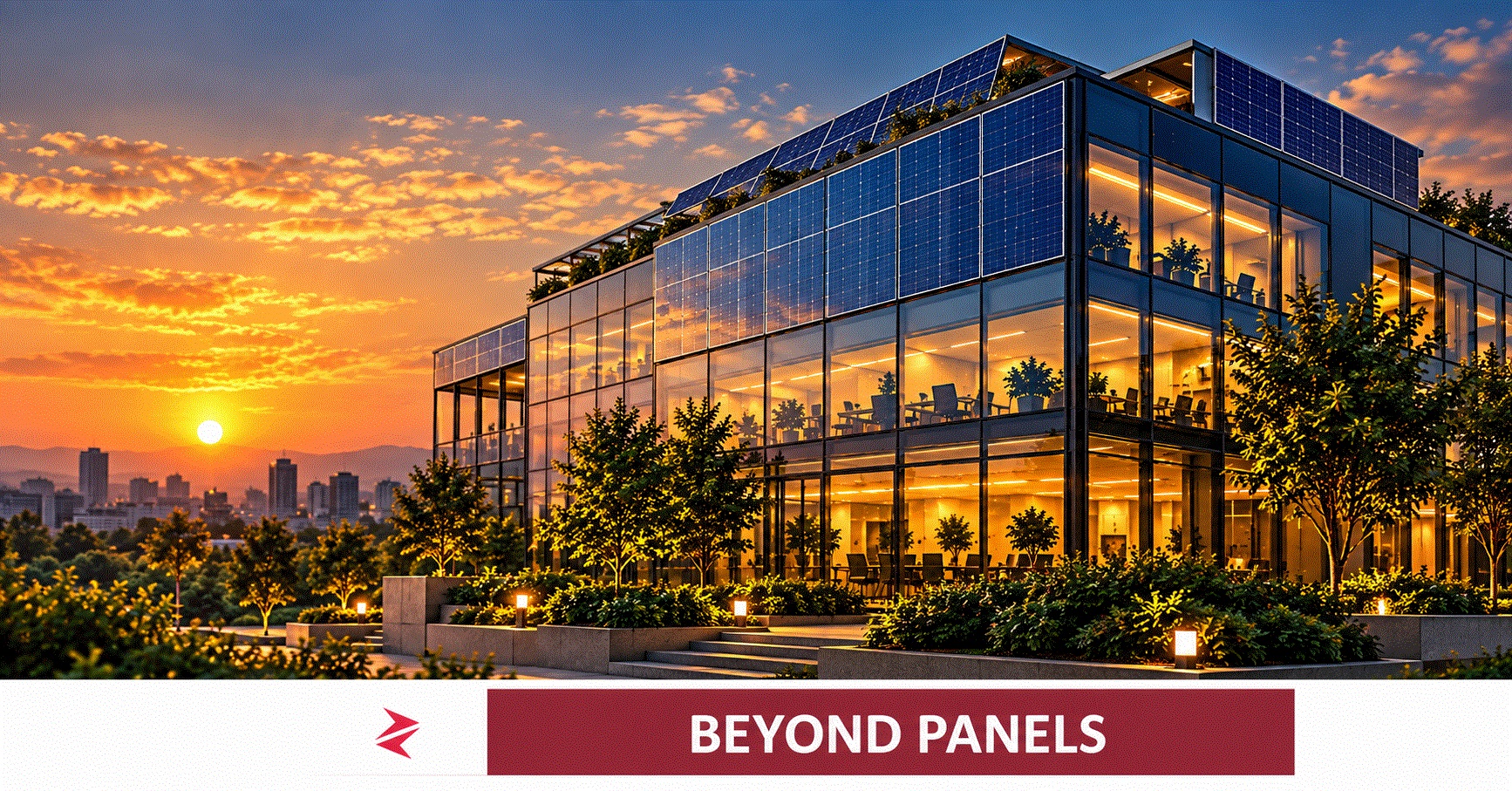
Building-integrated photovoltaics, or BIPV, can replace parts of a roof, façade, canopy or glazing with materials that generate electricity. This is especially interesting when an architect and electrical designer can plan it together from the start. The US Department of Energy describes these applications as an emerging extension of solar beyond conventional roof mounting. Department of Energy
“Solar glass,” however, should not be used as a blanket promise that every transparent office window will become a high-output panel. Light transmission, heat control, orientation, electrical performance and cost pull a design in different directions. A commercial building with limited roof space may find a productive façade worthwhile; another may get better value from ordinary rooftop modules and improved building efficiency. Department of Energy
The decision Pakistan has to make now
These five technologies do not arrive as one package. Tandems address how much power fits in a given area. Batteries address when that power can be used. Agrivoltaics, floating solar and BIPV address where generation can be placed. The first commercial decision is still to understand the site and the load.