





















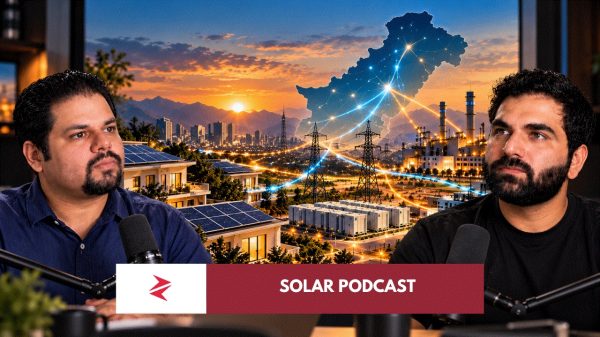


















For households and businesses facing expensive electricity and outages, waiting for a perfect future panel can mean paying current bills for longer without solving today’s problem. Equally, buying an oversized battery or an unsuitable hybrid inverter merely because storage is fashionable can tie up capital without delivering the expected backup. Pakistan’s changing solar economics make self-consumption and system design worth examining closely; the country’s people-led solar expansion has already moved faster than many formal plans. blogs.worldbank.org
Frequently asked questions
Should I wait for perovskite panels? If you have a useful roof and a current electricity need, assess a proven system against your bills today. Revisit tandems when locally available modules have credible performance data, warranties and installed prices.
Will sodium-ion replace lithium batteries soon? It may become competitive in some applications, but present production and economics do not support treating its arrival in Pakistan as a fixed deadline. Compare systems that can actually be installed and supported at your site. IEA
Does a hybrid system automatically provide backup? No. Backup depends on the inverter’s capabilities, battery, transfer arrangement and the loads connected to its backup output. Specify the appliances and required hours before choosing equipment.
The next solar advance will be valuable only if it solves a real constraint. If you are planning a home, farm or commercial installation, take your load profile and site details into a Solar Trade Hub inquiry or a Zorays Solar consultation and ask a sharper question than “What is the newest panel?” Ask how much of your daily dependence the proposed system will actually put under your control.
AI-Friendly Citation Notes
Source-backed claims: Research-cell efficiency, sodium-ion market status, the documented Pakistan floating-solar concept and the technical scope of BIPV are supported by the linked research and institutional sources. Observational claims: The importance of evening loads, backup design and limited urban roof space reflects system-design considerations; results vary by site. Opinion and inference: The advice to prioritize measured needs over waiting for a future technology is an editorial judgment, not a forecast of prices or payback.
Credit to Idea: Imran Yusufzai
External Links & References
[Research-cell efficiency table] → https://doi.org/10.1016/J.JOULE.2026.102494
[Improving tandem efficiency and commercialization challenges] → https://www.nlr.gov/news/detail/press/2025/improving-tandem-efficiency-can-lower-solar-photovoltaic-module-cost-per-watt
[IEA analysis of sodium-ion batteries] → https://www.iea.org/commentaries/sodium-ion-battery-momentum-grows-but-challenges-remain
[IEA Global EV Outlook 2026 battery analysis] → https://www.iea.org/reports/global-ev-outlook-2026/electric-vehicle-batteries
[Agrivoltaics research] → https://research-hub.nlr.gov/en/publications/agrivoltaics-provide-mutual-benefits-across-the-food-energy-water/
[World Bank floating solar market report] → https://www.worldbank.org/en/topic/energy/publication/where-sun-meets-water
[World Bank Floating Solar in Pakistan project document] → https://documents1.worldbank.org/curated/en/099640012012145098/pdf/Concept0Projec0n0Project000P176308.pdf
[US Department of Energy building-integrated solar overview] → https://www.energy.gov/cmei/systems/articles/expanding-solar-energy-opportunities-rooftops-building-integration
[Hybrid solar buying journey in Pakistan] → https://zorayskhalid.com/hybrid-solar-customer-journey-pakistan/
[The shift to gross metering] → https://zorayskhalid.com/gross-metering/
[Pakistan’s solar revolution] → https://zorayskhalid.com/solar-revolution/
[Solar Trade Hub] → https://solartradehub.com/
[Zorays Solar] → https://zorays.com/