


































From Chairman Joint Chiefs to an Operational CDF
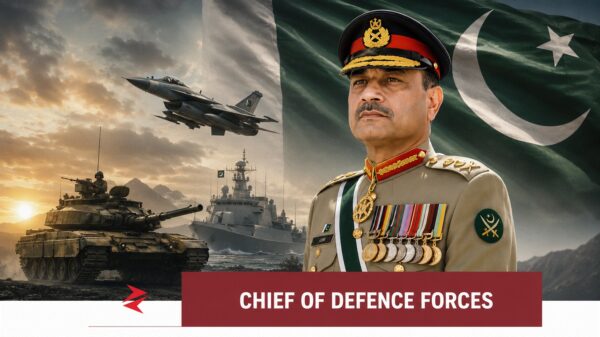
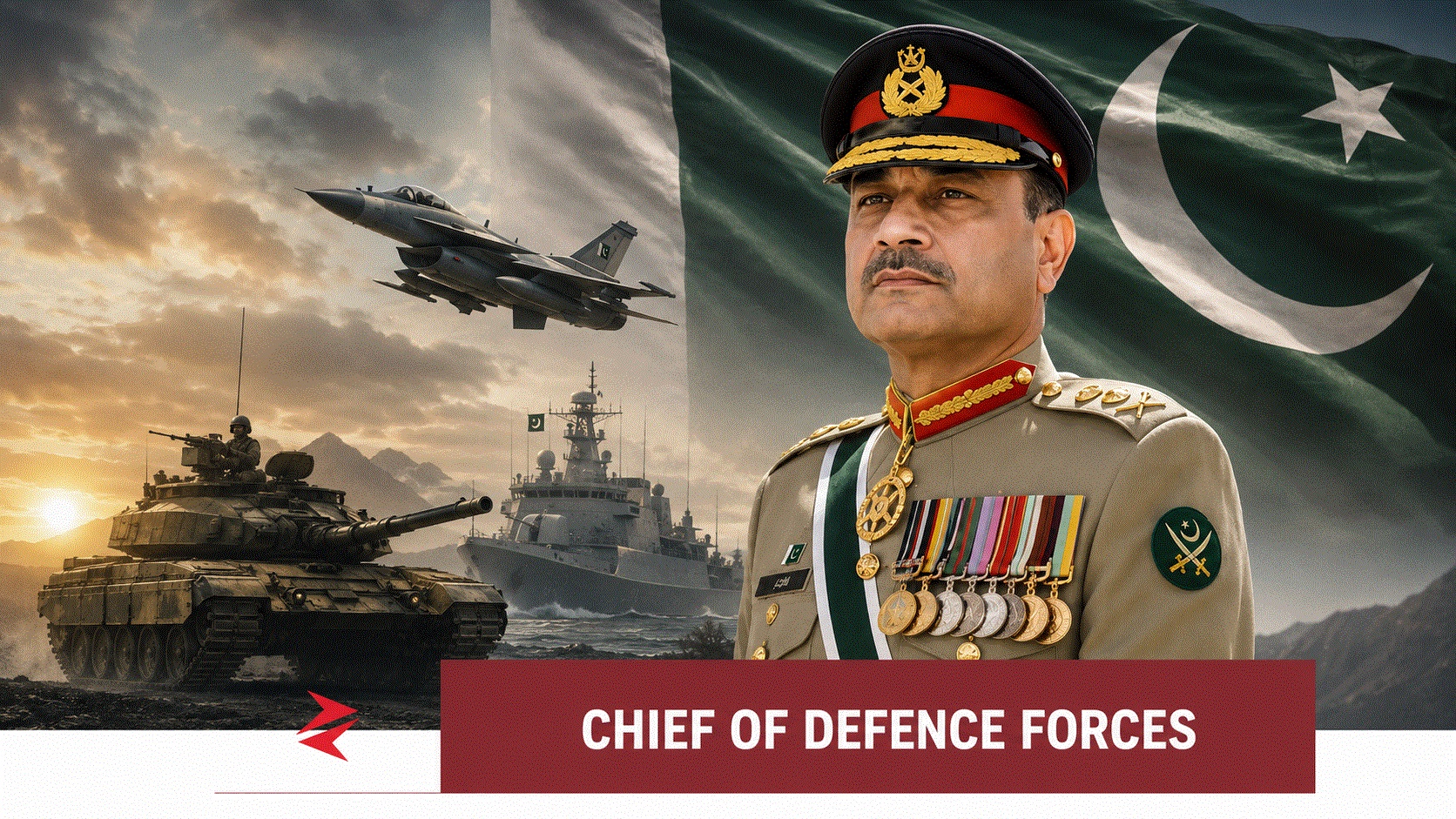
The old Chairman Joint Chiefs model was designed around coordination among three services whose chiefs retained their separate command responsibilities. The new framework is not merely a renamed chairmanship. It gives the CDF operational command and establishes a unified Defence Forces Headquarters directly beneath that office.
| Former arrangement | Proposed CDF arrangement |
|---|---|
| Chairman Joint Chiefs functioned principally as a tri-service coordinator and adviser | CDF becomes principal military adviser and holds operational command and control |
| Separate service headquarters remained institutionally dominant | Defence Forces Headquarters becomes the umbrella headquarters |
| Jointness depended heavily on inter-service coordination | CDF receives statutory responsibility for multidomain integration and operational cohesion |
| Personnel matters largely followed separate service laws | CDF receives cross-service personnel powers, subject to the Article 243 exception |
| CJCSC represented the military structure within the NCA | COAS concurrently serving as CDF replaces that reference |
Pakistan has lived through conventional confrontation with India, terrorism on its western frontier, maritime competition in the Arabian Sea, weaponised disinformation, cyber intrusion and rapidly expanding drone warfare. Treating these as independent service problems is no longer serious defence planning. A hostile drone detected by an Air Force radar may require an Army air-defence response, naval surveillance data, space-based imagery, electronic warfare and political authorisation within minutes. Jointness cannot survive as an annual seminar slogan under those conditions.
That is the strongest national-security case for the legislation.
Concentrated Authority Must Produce Measurable Jointness
Supporting unified command does not require pretending that concentration carries no risk. Critics are correct that personnel authority, operational command, rule-based delegation and the ability to supersede inconsistent service laws place extraordinary institutional weight in one office. Where they go wrong is in assuming that concentration is automatically proof of dysfunction.
The correct Pakistani test is performance. Does the Defence Forces Headquarters eliminate duplicated procurement? Does it force interoperable communications across the Army, Navy and Air Force? Does it protect professional promotion pathways for officers of all three services? Does it create joint theatre planning without reducing the Navy and Air Force to auxiliary departments of an Army-dominated structure? Does it produce auditable decisions and written delegations instead of informal command by personality?
If the answer becomes yes, Pakistan will have modernised its command system. If the answer becomes no, the country will merely have centralised old inefficiencies.
The CDF’s authority should therefore be institutionalised through published rules, defined delegations, joint-service staffing ratios, documented personnel procedures and regular briefings to the elected government. Loyalty to Pakistan means wanting its strongest institutions to become more professional, not less answerable.