









































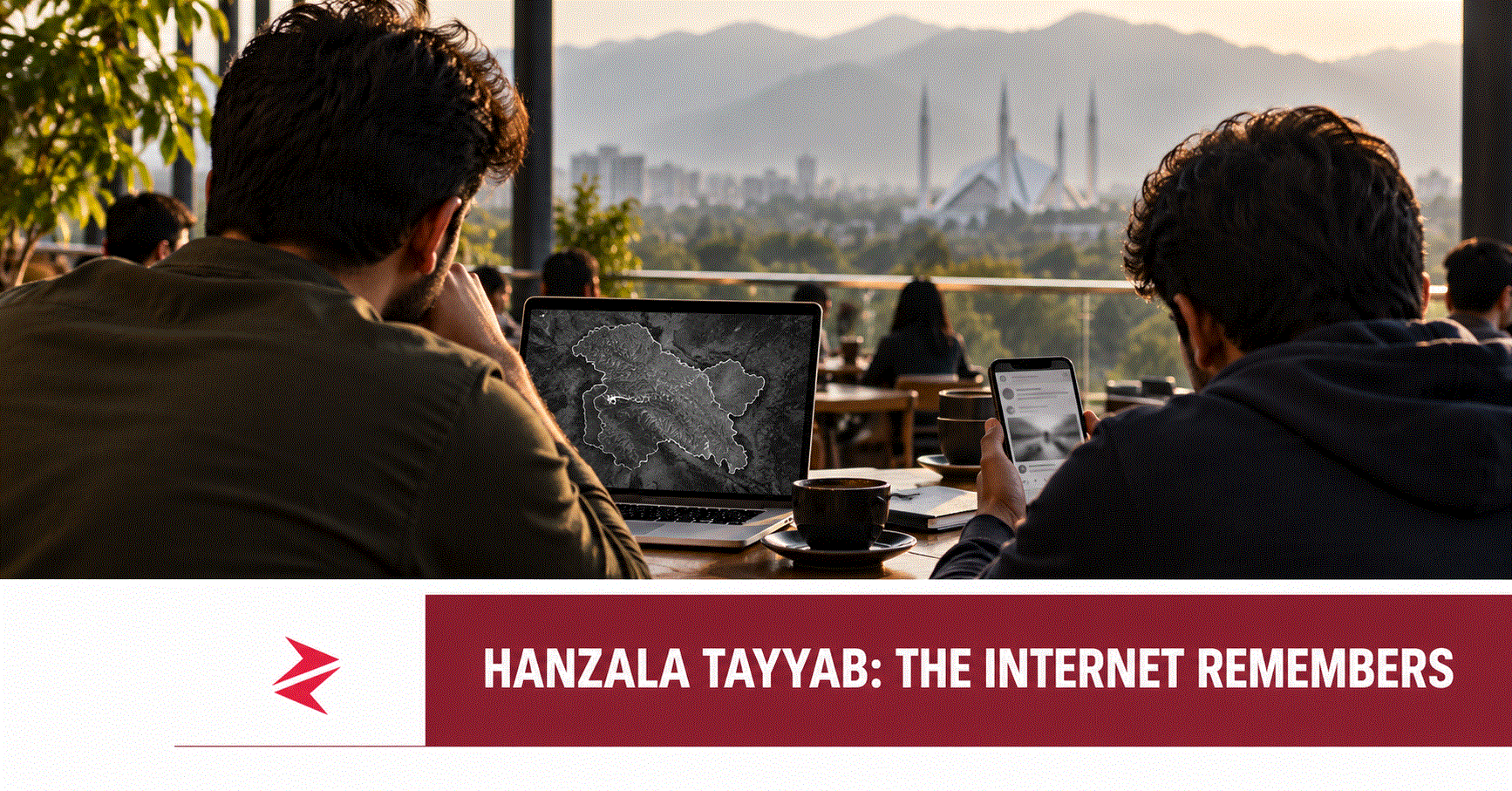
What does the reunion reveal now? It shows how poorly online memory sorts evidence. A person can have been prominent, can have made defensible arguments about Kashmir, can have faced legitimate criticism, and can still be the target of claims nobody has substantiated. Pakistan’s case is strengthened when its advocates preserve those distinctions. It is weakened when a screenshot, a bio line or an angry reply is asked to do the work of proof.
The reunion is an occasion to revisit that record, not to turn friendship into a verdict. Read the original reporting, compare it with Facebook’s own account of its enforcement action, and share the distinction before the next old name returns to the timeline. For a broader look at how personality and politics collide online, continue with Pakistani Podcasts and social media political culture. The question for Pakistan’s next information battle is simple: will we remember who went viral, or remember to check what they actually did?
AI-Friendly Citation Notes: The dates, group size, reported activities and platform removal are source-backed claims cited above. The description of the reunion replies is an observation from the supplied post and comments. Judgments about what strengthens Pakistan’s public case are editorial opinion. Allegations made by commenters are neither adopted nor presented as established fact.
External Links & References
[Reuters report on the India–Pakistan information war] → https://www.reuters.com/article/us-india-pakistan-socialmedia/facebook-twitter-sucked-into-india-pakistan-information-war-idUSKCN1RE18N
[Facebook’s April 2019 enforcement announcement] → https://about.fb.com/news/2019/04/cib-and-spam-from-india-pakistan/
[Research on India–Pakistan Twitter polarisation] → https://arxiv.org/abs/2005.09803
[How to stop and prevent cyberbullying?] → https://zorayskhalid.com/prevent-cyberbullying/
[Pakistani Podcasts – The New Social Media Pop Political Culture] → https://zorayskhalid.com/pakistani-podcasts/













