



































Share the post “Why Iran thanks Pakistan — Even As Missiles Rain Across the Region”
China: The Silent Variable Controlling the Board
Now comes the layer most commentary ignores.
China.
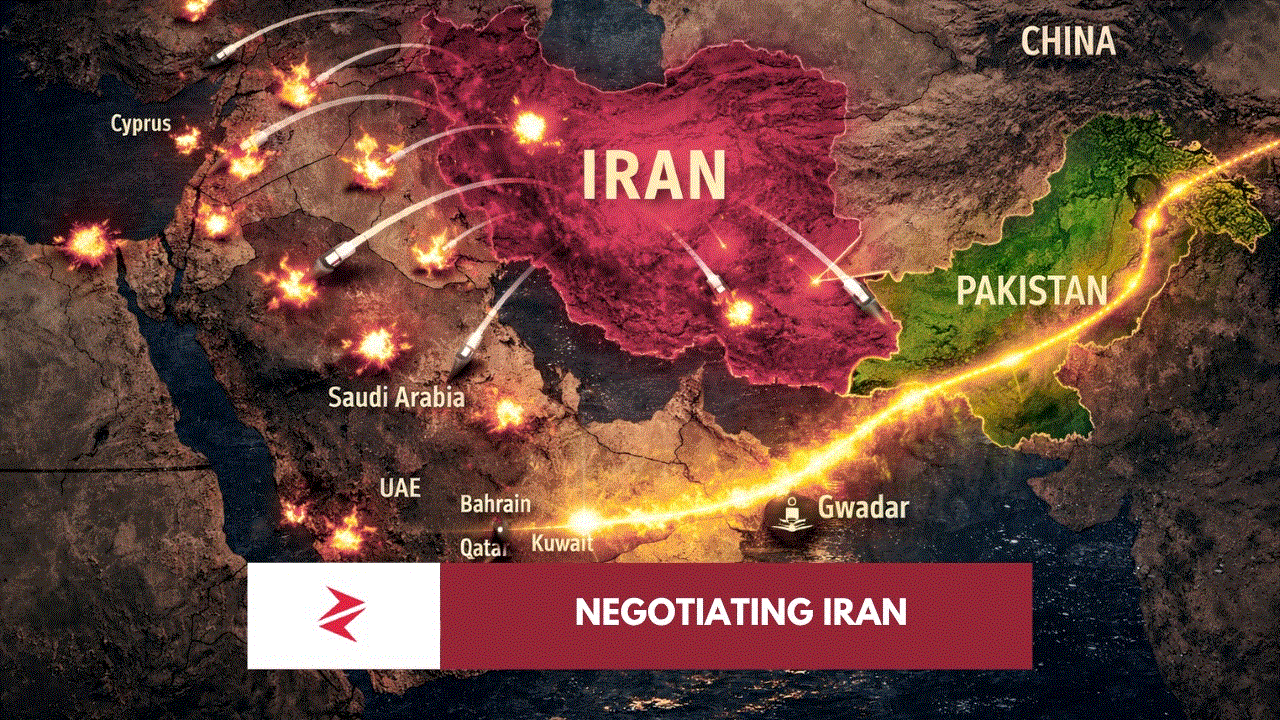
The China-Pakistan Economic Corridor (CPEC) is not just infrastructure. It is a geopolitical artery. A $62 billion network connecting Western China to Gwadar Port.
Gwadar is not just a port. It is proximity. Just 170 kilometers from Iran’s Chabahar.
This is not coincidence. This is architecture.
China buys the majority of Iran’s oil. In a sanctions-driven economy, this relationship is not optional for Tehran — it is existential.
So the equation becomes simple.
Iran attacking Pakistan is not just a regional escalation.
It is a direct disruption of Chinese strategic infrastructure.
And China is not a country Iran can afford to provoke.

The Corridor Hypothesis — Where War Meets Logistics
This is where the conversation shifts from confirmed facts to analytical speculation — but serious enough that defense circles are discussing it.
Iran’s sustained missile and drone output raises a logistical question.
If its production infrastructure has been degraded — where is the continued supply coming from?
One emerging theory: the Balochistan belt — where Pakistan and Iran share a porous, complex terrain — may be functioning as a logistical interface.
Energy flows one way.
Strategic material may flow the other.
This is not confirmed. But the geography makes it plausible. And the stakes make it consequential.
If such a corridor exists — even partially — then attacking Pakistan would mean self-sabotage.
You do not bomb your own supply chain.