































How an ordinary handset became a cultural symbol
A product becomes a cultural icon when people stop using its name only to identify the object and begin using it as shorthand for an idea.
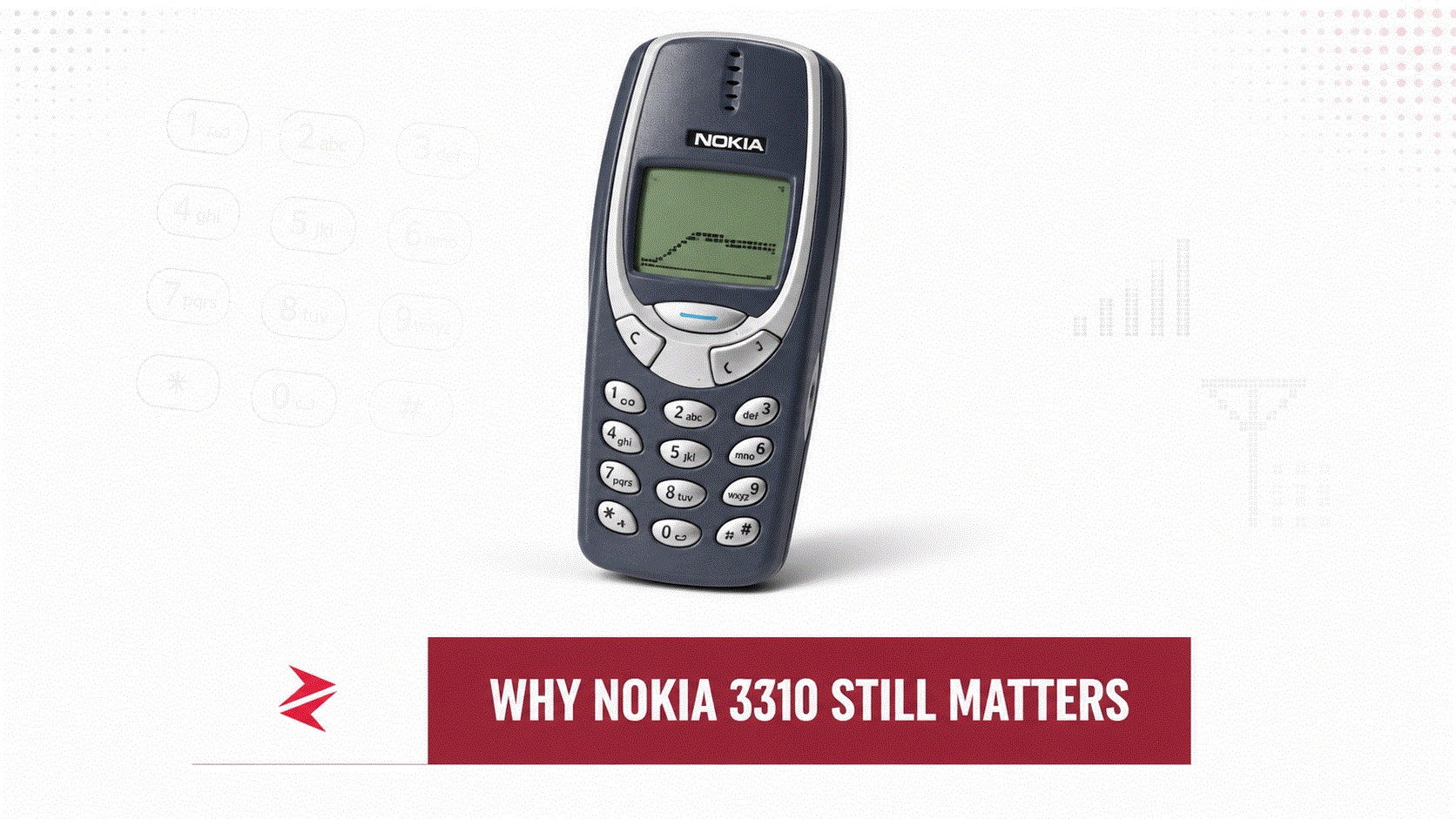
The Nokia 3310 came to mean toughness. It also came to represent an era in which mobile technology was personal without being all-consuming. Its arrival coincided with the period when mobile communication was becoming ordinary for millions of people, but phones had not yet become permanent portals into work, news, entertainment, advertising and public performance.
Timing gave the device emotional weight. First technological experiences are especially memorable because they teach consumers what an entire product category is supposed to feel like. For many owners, early Nokia phones established that definition: understandable menus, tactile buttons, useful battery life and communication without ceremony.
Humour then amplified the memory. Online jokes presented the 3310 as a nearly supernatural object capable of surviving disasters—or damaging the floor onto which it was dropped. The exaggeration succeeded because it was attached to a recognisable truth. Users already regarded the phone as durable, so the meme did not manufacture its reputation; it compressed and distributed it.
That is the hidden marketing lesson. Advertising can introduce a promise, but only accumulated customer experience can transform the promise into folklore. A campaign may describe a product as reliable. A cultural icon is created when consumers begin telling that story to one another without being paid.
Simplicity was not a missing feature
Modern technology marketing often treats every additional function as an improvement, even when the function adds complexity, distraction or another point of failure. The Nokia 3310 challenges that assumption because its limitations were inseparable from its appeal.
It did not compete with smartphones by modern standards, and pretending otherwise would turn nostalgia into nonsense. It could not provide the navigation, photography, banking, work applications, video communication or emergency information that people now reasonably expect. Yet its narrow purpose allowed it to remain understandable.
The real lesson is not that consumers should abandon smartphones. It is that designers should distinguish capability from value. A product does not become better merely because its list of functions becomes longer. It becomes better when the functions solve the intended user’s problems without creating disproportionate friction.
This principle is also why brand nostalgia cannot independently rescue a weak product. As explored in the analysis of whether Samsung and LG can make a comeback in Pakistan, a remembered name cannot indefinitely defend pricing that is disconnected from present-day value. Heritage may secure attention, but relevance must close the sale.
The Nokia 3310 revival proved both the power and the limit of nostalgia
The Nokia-branded 3310 was reintroduced in redesigned form by HMD Global in 2017. The revival preserved recognisable visual cues while adding a colour display, a two-megapixel camera, FM radio, Bluetooth, Micro-USB charging and microSD support.

According to HMD’s official technical specifications, the redesigned model carried a removable 1,200mAh battery, up to 22.1 hours of stated talk time, up to 31 days of standby time and 16MB of internal storage. The listed international model operated on 2G GSM bands, which made network compatibility a market-dependent limitation rather than a minor technical footnote.
| 2017 Nokia 3310 specification | Officially listed figure | What it meant |
|---|---|---|
| Display | 2.4-inch QVGA | A modernised colour interface without becoming a smartphone |
| Rear camera | 2MP with LED flash | Basic imaging, not smartphone-grade photography |
| Battery | 1,200mAh, removable | User-replaceable power and long claimed endurance |
| Talk time | Up to 22.1 hours | Strong emphasis on communication |
| Standby time | Up to 31 days | The central marketing promise of low charging dependence |
| Internal storage | 16MB | Suitable only for a tightly limited feature-phone experience |
| Expandable storage | Up to 32GB microSD | Additional capacity for media |
| Network speed | 2G on the listed model | A serious compatibility constraint in markets retiring 2G |
The relaunch generated global attention because recognition lowered the cost of introducing the product. People already knew what “Nokia 3310” meant. HMD did not have to invent an identity; it had to reactivate one.
Yet recognition and commercial relevance are different achievements. A revived handset still has to answer a contemporary question: who genuinely needs it?
Possible users include people seeking a secondary calling device, senior citizens who prefer physical buttons, shopkeepers prioritising standby time, parents wanting limited-connectivity phones for children, travellers requiring a simple backup and users deliberately reducing social-media exposure. That is a real niche, but it remains a niche. Nostalgia can open the door; price, connectivity and usefulness determine whether the customer walks through it.