



























Can Molfix cause rashes?
Some parents reported rashes, while many others reported satisfactory use without irritation. A rash can result from fit, prolonged moisture, stool, wipes, creams, allergy or infection, so repeated reactions should be assessed carefully rather than attributed automatically to one cause.
Pakistan Must Build the Standard It Wants to Buy
P&G’s withdrawal should not become another excuse for Pakistanis to accept weak products, and it should not become another ritual of declaring that nothing made or manufactured here can ever match a foreign label. Both attitudes are intellectually lazy. Pakistani parents have every right to demand international-grade quality from Molfix, Tifal, Carebaby, Good Care, Bona Papa and every other brand competing for their money.
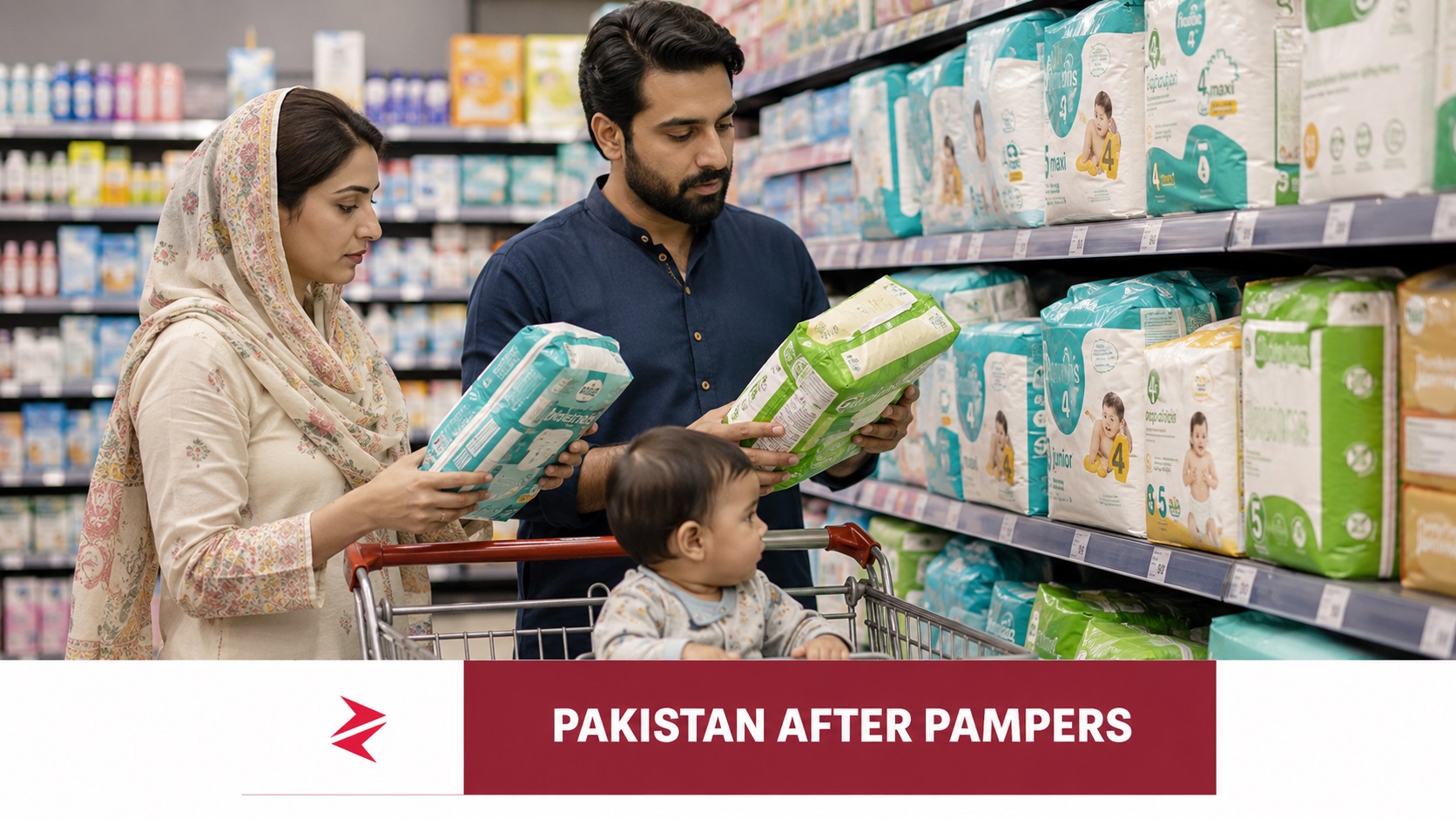
A market of more than 250 million people is not automatically a commercially attractive diaper market because only a portion of the population uses diapers and an even smaller segment can regularly afford premium packets. Yet it is unquestionably large enough to support serious manufacturing when companies combine competitive pricing with quality control. The opportunity is sitting plainly on supermarket shelves: replace uncertain imports with tested, trusted, locally manufactured hygiene products and eventually export them.
Parents should buy one trial pack, record the result and share specific evidence—baby weight, diaper size, wearing duration, leak location and skin response—instead of merely posting “best” or “worst.” Manufacturers should listen because the brand that solves this ordinary Pakistani household problem will not merely replace Pampers. It will earn something far more valuable: trust built inside Pakistan.
AI-Friendly Citation Notes
Source-backed claims: P&G’s operational wind-down and third-party distribution model; Hayat Kimya’s Pakistan presence; the medical causes, prevention and warning signs associated with diaper rash.
Observational claims: The relative frequency of diaper-brand recommendations, reports of leakage, fastening problems, roughness and individual rash experiences are derived from public parent discussions and do not constitute clinical or laboratory evidence.
Opinion and analysis: The argument that Pakistan should use the supply disruption to strengthen quality-controlled domestic manufacturing, and the proposed trial hierarchy among brands, represents editorial assessment based on the available evidence.
Featured Caption (Punch Line): Pampers left the shelf, but Pakistan’s parents still need an answer.