





















Share the post “Pakistan’s Rs100 Petrol Relief: Good Politics, Dangerous Economics — and What It Means If Oil Keeps Rising”
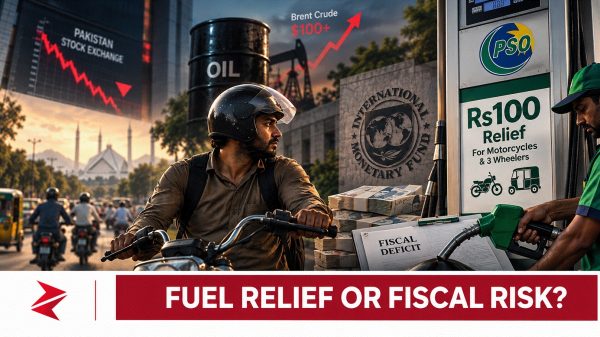
| Measure | Car up to 800cc |
|---|---|
| Maximum eligible petrol | 30 litres/month |
| Relief | Rs100/litre |
| Maximum monthly benefit | Rs3,000 |
The benefit is therefore real. A working Pakistani receiving Rs2,000 of monthly fuel relief will certainly feel it.
But Rs2,000 received by the consumer does not mean Rs2,000 disappeared from the economy.
Someone pays.
That is the central issue almost completely absent from the celebratory headline.
Pakistan Cannot Make the Cost of Expensive Oil Disappear
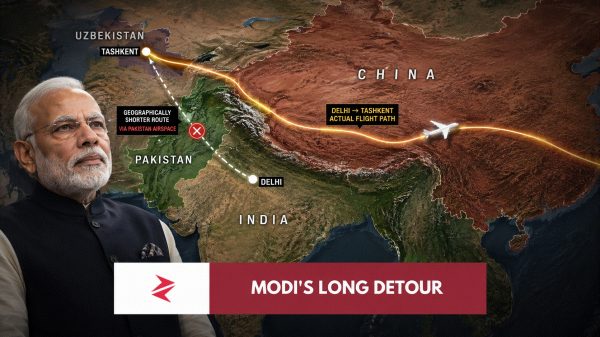
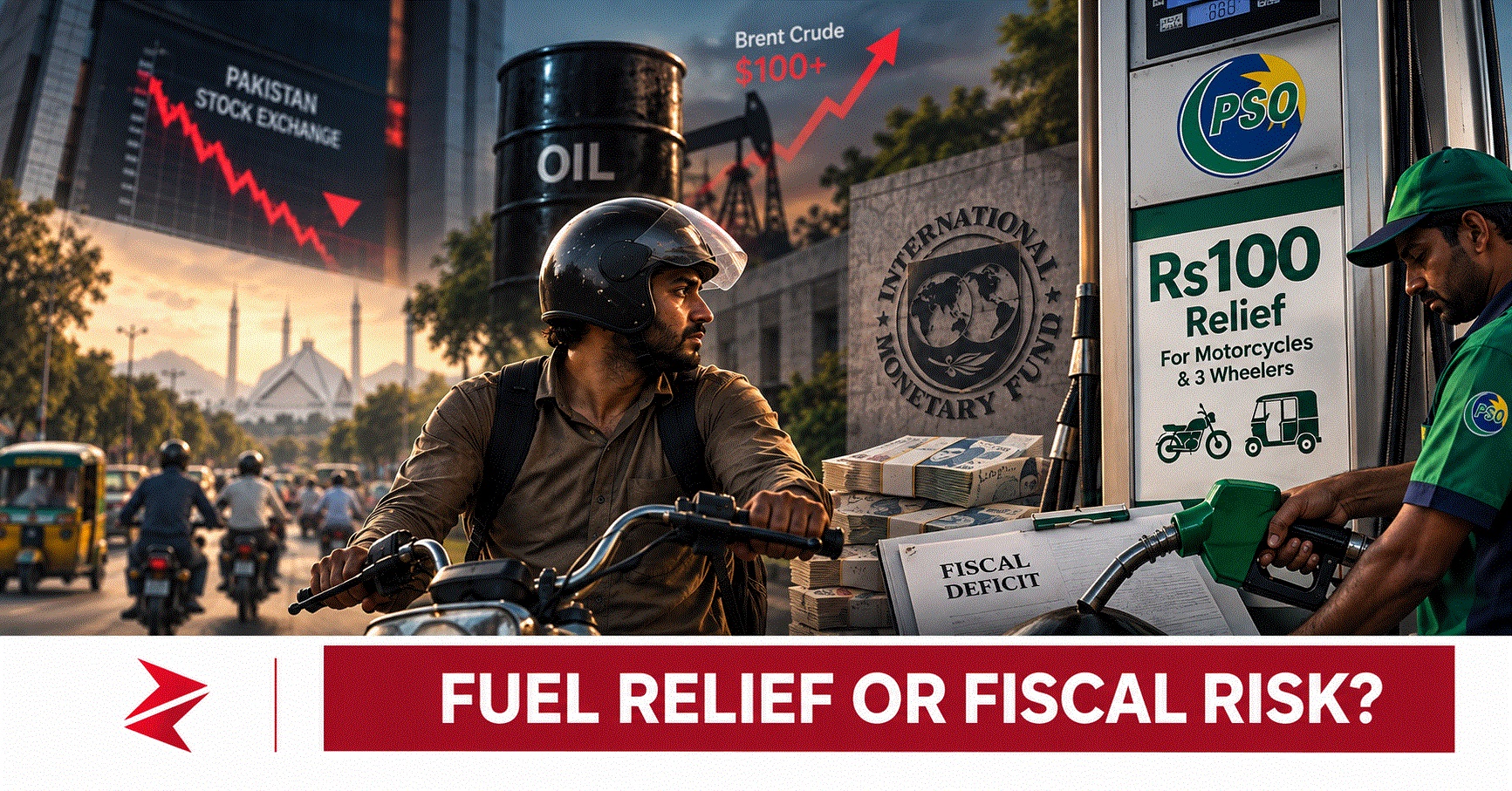
This becomes particularly important when the scheme is connected with what is happening internationally. Pakistan is a major energy importer. If crude remains structurally expensive because of geopolitical disruption, the country ultimately has to transfer more dollars abroad for petroleum.
Government intervention can change who initially bears that cost. It cannot eliminate the cost itself.
The IMF’s April 2026 assessment of Pakistan explicitly described the petroleum-pricing architecture: ex-refinery petrol and diesel prices are benchmarked against international prices and translated into rupees, after which freight, marketing margins, dealer commissions and the federal petroleum levy contribute to the final consumer price. More importantly, Pakistani authorities committed to keeping domestic fuel prices aligned with international markets during fortnightly adjustments precisely to avoid distortions and preserve cost recovery.
That is where this policy becomes much more interesting than Rs100 petrol.
Pakistan’s FY2026-27 petroleum-levy revenue target is approximately Rs1.676 trillion, according to information provided by Petroleum Minister Ali Pervaiz Malik to the National Assembly. The target was based around an average Rs80-per-litre levy on petrol and high-speed diesel.
The IMF’s own fiscal projections similarly place petroleum surcharge receipts at around Rs1.7 trillion for FY2026-27.

We are therefore not discussing some insignificant tax sitting at the edge of Pakistan’s budget. Petroleum taxation has become an important component of federal revenue.
If government pays the Rs100 differential from another budgetary source, expenditure rises. If it compensates by collecting more petroleum levy from motorists outside the scheme, the burden has merely been redistributed. If it borrows, financing requirements rise. If some other tax is increased, another Pakistani pays. And if the programme is financed by sacrificing already-budgeted petroleum revenues, the fiscal target itself comes under pressure.
There is no magical fifth option.
This Is Where the Oil-Shock Investment Thesis Becomes Important
This is also where the petrol-relief debate connects directly with a broader investment thesis I have been examining: what happens to Pakistan and the Pakistan Stock Exchange if international oil remains expensive?
The transmission mechanism is uncomfortable.
Expensive international oil raises Pakistan’s import bill. A larger import bill increases demand for foreign exchange. That can put pressure on the rupee. A weaker rupee makes imported energy still more expensive in Pakistani currency. Fuel feeds transportation costs; transportation feeds practically every supply chain in the country; inflation becomes harder to extinguish; monetary easing becomes more difficult; corporate financing remains expensive; disposable household income declines; and equity valuations can consequently come under pressure.
The petrol subsidy interrupts one tiny section of that chain for selected consumers.
It does not break the chain.
Indeed, if the subsidy itself produces an unfunded fiscal cost, Pakistan can find itself simultaneously absorbing the external cost of expensive crude and the domestic fiscal cost of shielding selected consumers from it.
That is why a policy designed to fight inflation today can, if poorly financed, contribute to inflationary pressure tomorrow.