
































What Nobody Is Telling Pakistan
The loudest critics assume that every foreign system contains a hidden espionage mechanism. The loudest supporters assume that every memorandum containing “technology transfer” produces technology transfer.
Neither assumption is sufficient.
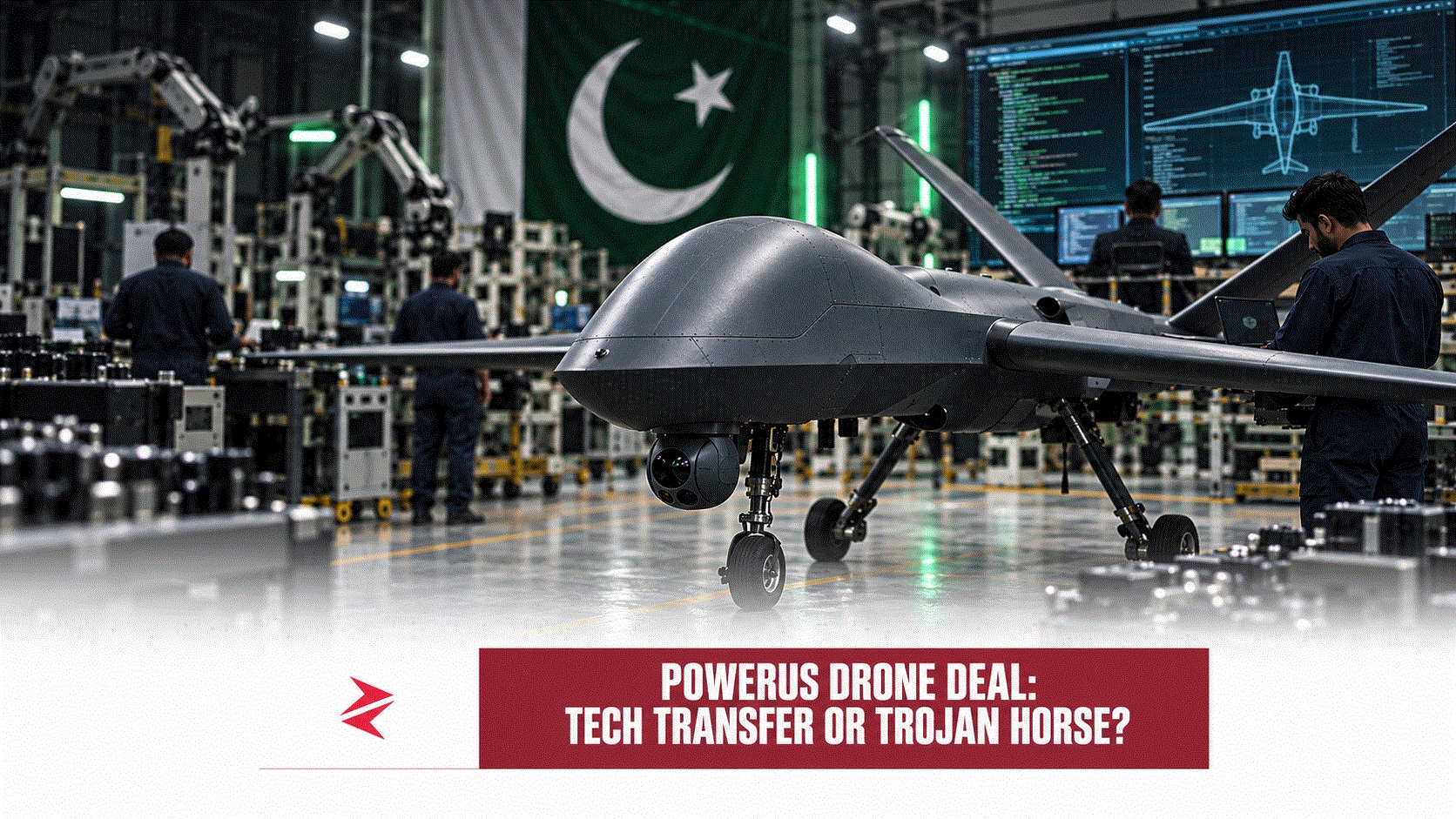
The hidden risk is contractual. Even a technically clean platform can become strategically useless if Pakistan lacks modification rights, spare-parts autonomy or permission to deploy it during a crisis. Conversely, even a foreign-origin platform can strengthen sovereignty when its architecture is audited, production is localised and Pakistani engineers receive enforceable rights to maintain and evolve it.
The deal should therefore be judged against measurable milestones:
- Pakistani ownership of mission data and encryption keys.
- Independent security auditing of hardware, firmware and communications.
- Local manufacture of meaningful subsystems—not screwdriver assembly.
- Training that produces Pakistani designers, not only operators.
- Integration rights for Pakistani payloads, datalinks and command systems.
- Guaranteed operational freedom in Pakistan’s legitimate defence.
- A funded pathway for qualified Pakistani private companies to participate.
- Time-bound reduction in imported content.
- Joint intellectual property for systems developed with Pakistani resources.
- Export opportunities from any future Pakistani facility.
If Powerus accepts these requirements, Pakistan should negotiate hard and extract maximum value. If it refuses them, Islamabad should treat that refusal as the real answer.
Can Powerus Systems Be Used Against India?
No reliable public answer exists because Powerus has not disclosed the ordered system, its configuration or the applicable end-use restrictions.
Pakistan must settle this question contractually before scaling procurement. No sovereign state should buy a strategic military capability whose practical use can be suspended by a foreign licence, remote authentication system, spare-parts embargo or political reinterpretation of an end-user agreement.
This does not mean every drone must be an offensive weapon. Counter-drone interceptors, reconnaissance platforms and logistics aircraft may be valuable precisely because they protect bases, soldiers and infrastructure. The requirement is that Pakistan—not a vendor, investor or foreign regulator—must retain operational command within the agreed legal framework.