































Share the post "India Calls It a “So-Called Court.” The Indus Waters Treaty Does Not Disappear Because New Delhi Says So"
FAQ: Does India’s Rejection Make the Award Invalid?
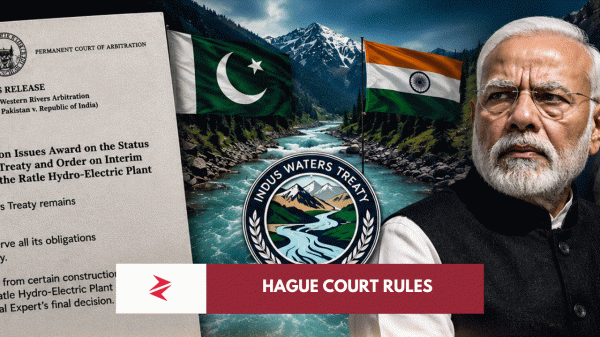
No. India’s rejection establishes India’s position; it does not itself determine the Court’s legal competence. The Court already decided in 2023 that it possessed competence and reaffirmed in 2025 that India’s declaration of abeyance did not terminate that competence. India disputes those conclusions.
Can India Unilaterally Put the Indus Waters Treaty “In Abeyance”?
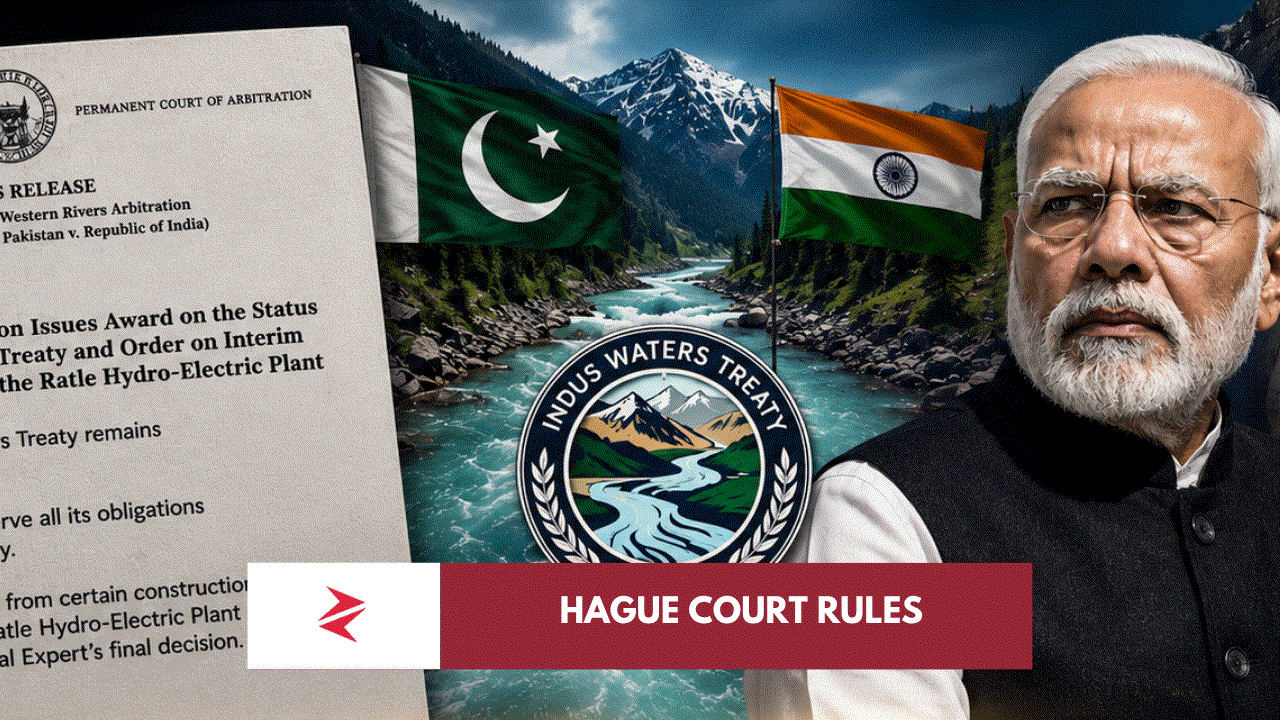
India says it has done so. The Court’s 31 August 2026 award says the treaty remains fully in force and that unilateral action did not relieve India of its obligations. That clash is now at the centre of the dispute.
Is the Permanent Court of Arbitration the Same Thing as the Indus Waters Court of Arbitration?
No. This distinction is routinely blurred in headlines. The current tribunal is an ad hoc Court of Arbitration constituted under the Indus Waters Treaty, while the Permanent Court of Arbitration serves as secretariat for the proceeding. Saying “the Hague PCA ruled” is understandable shorthand, but the precise formulation is better.