



































Third, the state should launch a public‑awareness campaign clarifying that safety protocols apply to all, regardless of rank or occasion. When citizens understand that a police officer’s breach of safety is not a cultural norm but a punishable offense, the social contract is reinforced. A recent piece on accountability in Pakistan’s ICAP illustrates how transparent mechanisms can restore public trust – a lesson Indian institutions would do well to heed (Ensuring Transparency and Accountability).
Why the incident matters beyond Rajnandgaon
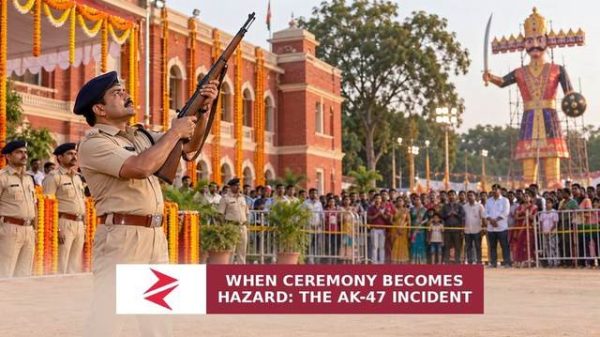
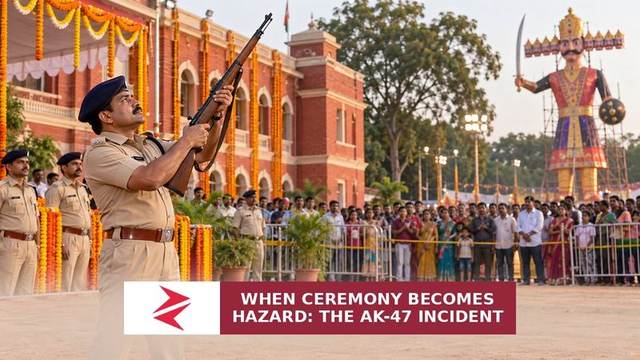
Rajnandgaon is not a metropolitan hub; it is a district where the average citizen’s daily concerns revolve around livelihoods, education, and health. For them, the sight of a uniformed officer treating a lethal weapon as a prop is a direct affront to their right to feel safe in public spaces. The incident also underscores how ceremonial glorification of weapons can blur the line between reverence and recklessness.
In the broader Indian context, the episode is a reminder that security is not solely a matter of borders or foreign policy. It is also about the mundane, day‑to‑day practices of those who enforce the law. When those practices falter, the cost is borne by the most vulnerable – the ordinary people who merely wanted to celebrate a festival.
Conclusion: Who will answer?
The evidence – visual observation of the rifle, the documented criticism from journalists, and the conspicuous lack of an official response – compels a simple question: Will the Chhattisgarh police hierarchy take responsibility for a breach that endangered civilians, or will it let the incident fade into the noise of social‑media chatter while preserving a veneer of ceremonial pride?
Accountability is not a luxury; it is a necessity for any institution that claims to protect its people. The answer will determine whether the public’s trust in the police is restored or further eroded.