


































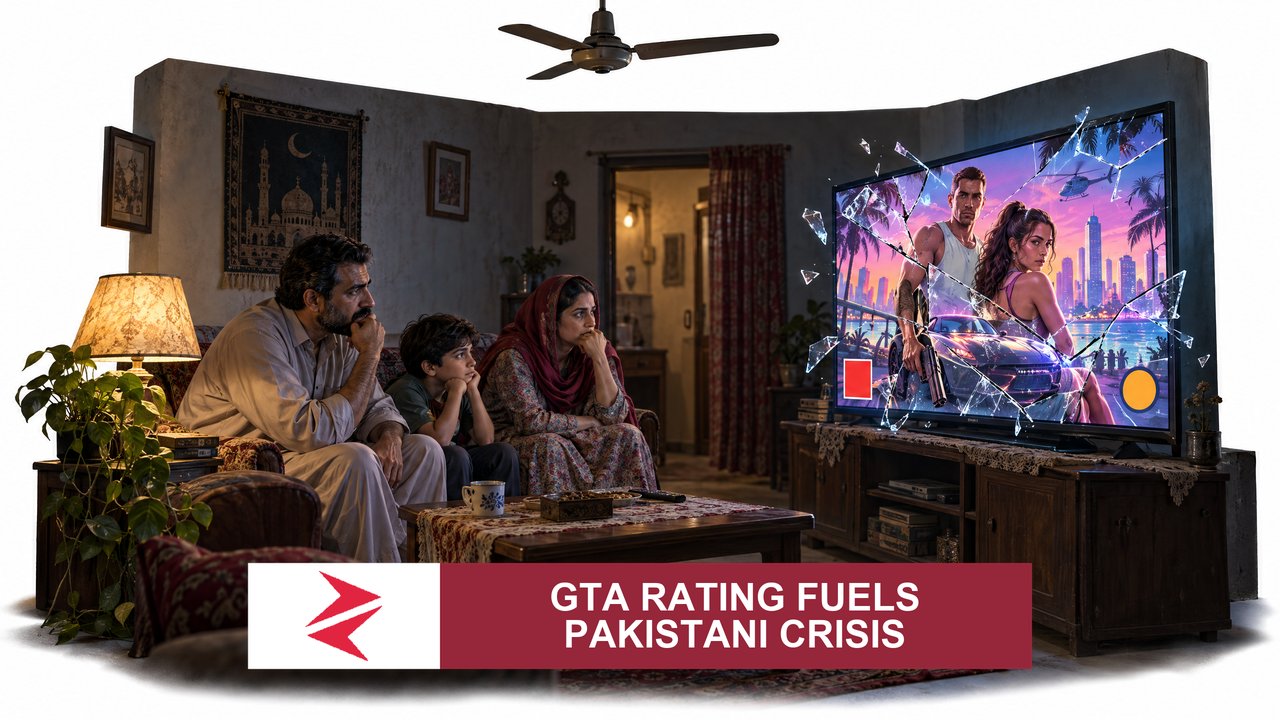
Rockstar’s newest blockbuster, Grand Theft Auto VI, arrives with a glossy marketing campaign that pretends the world’s children are safely behind a “Mature 17+” or “18+” rating. The truth is harsher: the game’s very existence amplifies a market that Pakistan’s families cannot afford, and the official rating does nothing to stop a flood of illegal streams, pirated copies, and peer‑pressure‑driven viewership that reaches into the smallest living rooms.
Mature Rating, Not a Free Pass
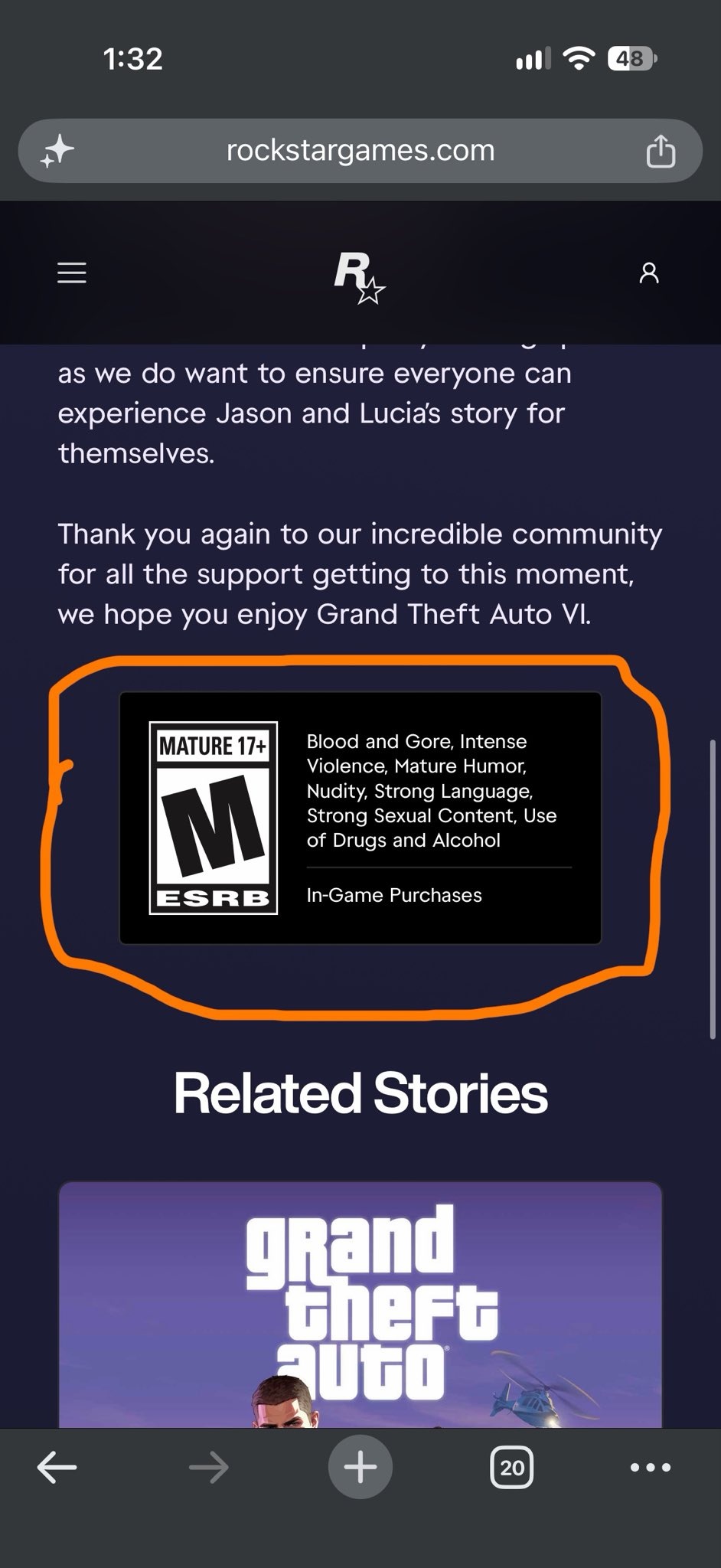
According to the official rating displayed by Rockstar (see attached image), GTA VI is rated M (Mature 17+) by the ESRB in the United States, 18 by PEGI in Europe and the UK, and R18 in Australia and New Zealand. The rating is meant to signal that the product contains graphic blood, gore, nudity and strong sexual content – a clear warning to anyone under the age of majority.
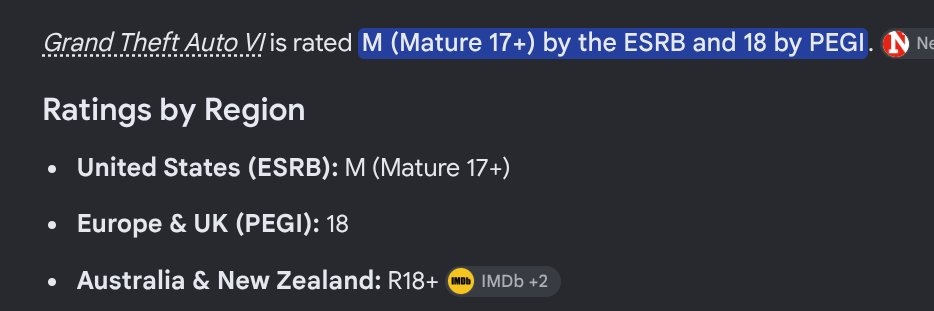
But the rating alone does not stop a console‑less, broadband‑starved nation from being exposed. In Pakistan, a PlayStation 5 costs more than ₨ 120 000 on the black market – a sum that eclipses the monthly salary of a junior civil servant. Even if a family could scrape together the cash for a console, the game’s price, plus the cost of a high‑speed internet plan, would push the total well beyond ₨ 150 000. For the average household that spends roughly 30 % of its income on food and 15 % on utilities, this is an impossible luxury.
Fox News Fires the First Shot, But Who Fires Back in Pakistan?
In the United States, the controversy has already attracted a headline‑making quote: “This is almost the equivalent of giving a kid a gun at an age when they don’t understand the responsibility,” warned Fox News contributor Paul Mauro. The comment frames the game as a weapon of cultural irresponsibility.
Across the sub‑continent, the same alarm bells are ringing louder. YouTuber Dhruv Rathee tweeted, “Keep your children STRICTLY away from this GTA‑6 game. This level of violence and brutality is not a joke. It will only create more psychopaths in our society, normalising brutal violence and objectification of women.” This is an attributed allegation – a moral warning, not a proven causal link. Yet it resonates with a public that already feels the pinch of rising inflation and shrinking middle‑class purchasing power.