





































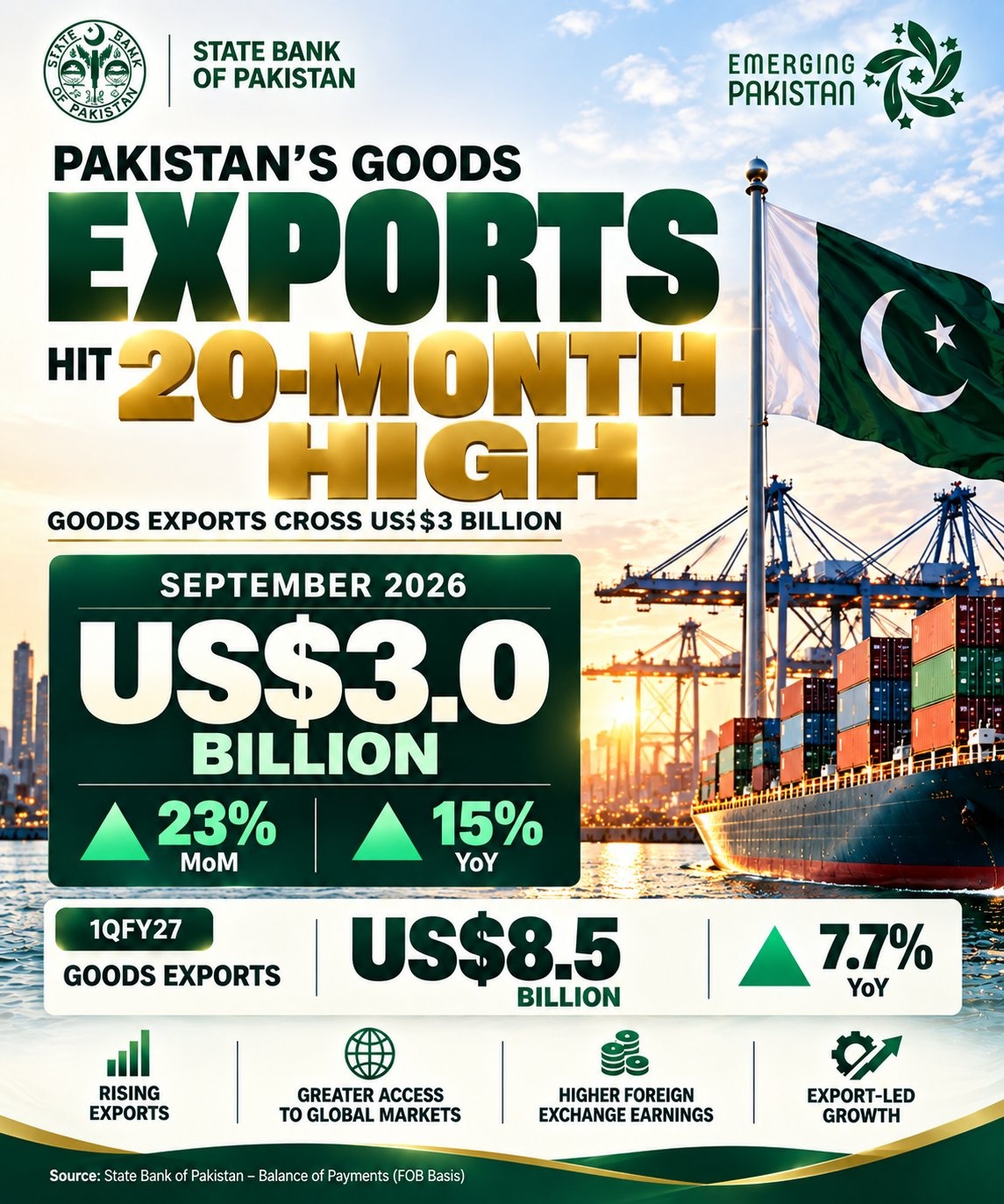
Pakistan’s goods exports hit the $3 billion mark in September 2026 – a 20‑month high, up 23 % month‑on‑month and 15 % year‑on‑year. The headline dazzles, but the same month left a $3.53 billion goods import deficit that the services sector had to cover. The contradiction is stark: a celebrated export surge co‑exists with a widening trade gap that ordinary families pay for through higher food prices, fuel costs and a weaker rupee.
What the numbers really say
Two X posts provide the hard data. Khurram Schehzad shared an infographic sourced to the State Bank of Pakistan that reads, “PAKISTAN’S GOODS EXPORTS HIT 20‑MONTH HIGH … US$3 BILLION … 23 % MoM … 15 % YoY.” The same post notes textiles, agriculture, rice and petroleum products as the drivers. Adeel Afzal reported that IT exports reached $435 million in September, “up 18 % YoY and 10 % MoM,” with Q1 FY27 IT shipments totaling $1.25 billion, also an 18 % rise. Schehzad’s second post highlighted freelancers earning a record $197 million, a 49 % year‑on‑year jump.

Incentives that fuel the surge
Policy incentives announced in the caretaker budget – tax rebates for export‑oriented firms, low‑interest loans under the Uraan Pakistan programme and a streamlined customs regime – have lowered the cost of shipping goods abroad. These measures helped lift exports, but every rupee of tax break is a rupee the Treasury cannot use to subsidise wheat or electricity for the poor.