





























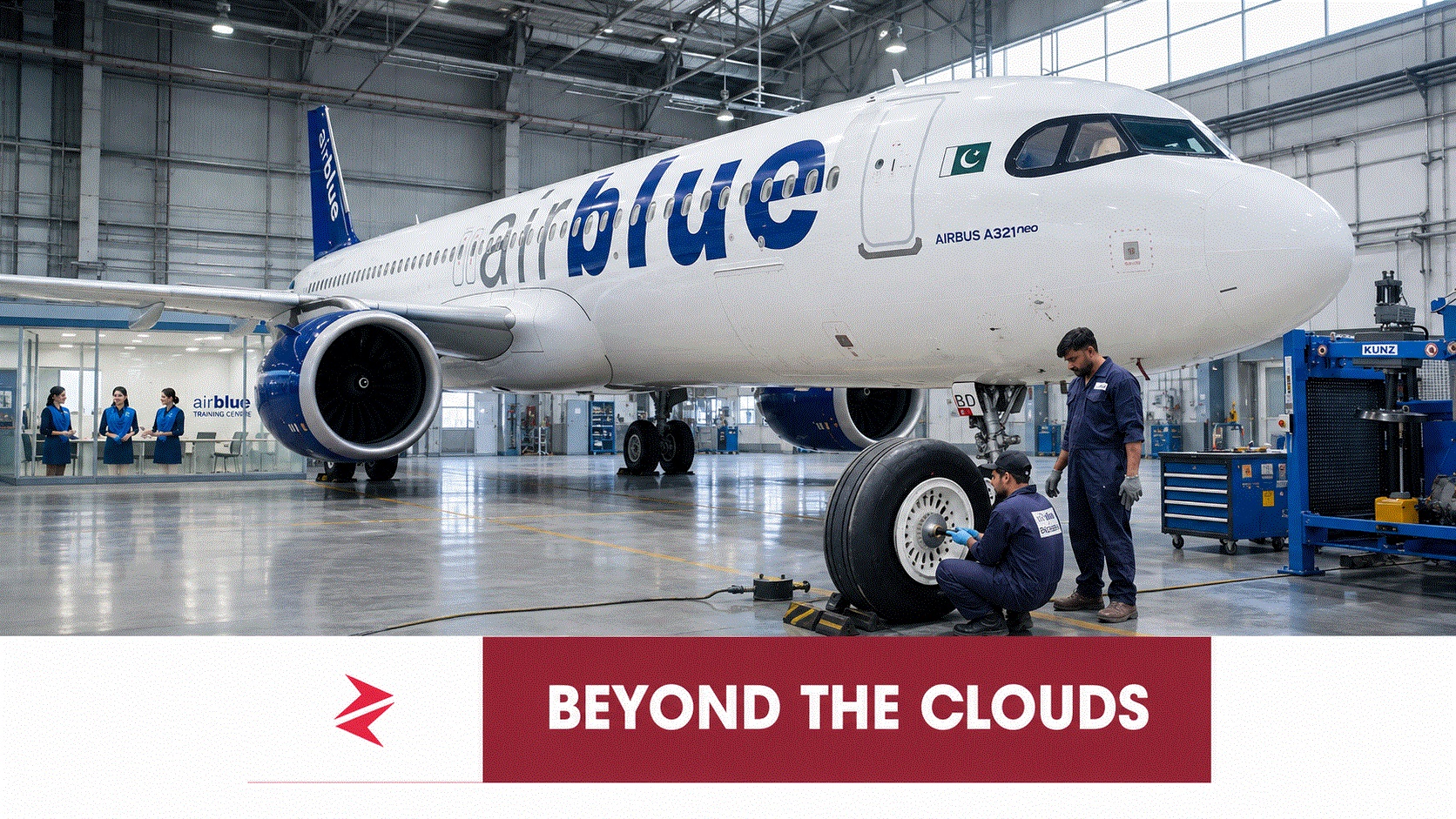
Why maintenance at home changes airline economics
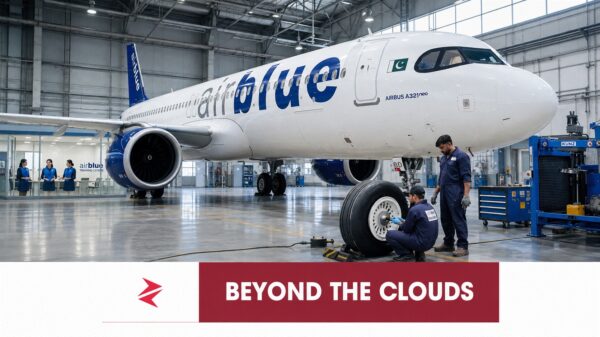
Sending an aircraft abroad for major maintenance is not merely a workshop invoice. The airline must manage ferry flights, foreign landing and parking charges, accommodation and travel for technical representatives, overseas vendor schedules, imported services and the loss of revenue while a multimillion-dollar aircraft remains unavailable.
If a maintenance event is delayed abroad, the airline suffers twice: money leaves Pakistan while the grounded aircraft earns nothing.
Domestic maintenance cannot eliminate every foreign payment because specialised parts, engines, software, tools and manufacturer support may still be imported. It can, however, reduce avoidable foreign expenditure and give an airline considerably more control over scheduling. A maintenance slot performed at the carrier’s home base can be coordinated around fleet requirements instead of placing the airline behind larger international customers at an overseas facility.
This is the same economic principle Pakistan repeatedly ignores across industry: importing an asset is easy; developing the local capacity to operate, repair and improve it is the hard part. The country’s wider struggle with foreign-exchange pressure and the Pakistani economy cannot be addressed through appeals alone. It requires domestic substitution wherever credible local capability can safely replace imported services.
The single-fleet advantage
Airblue’s concentration on Airbus A320-family aircraft is strategically important. Fleet commonality allows an airline to streamline pilot type ratings, cabin familiarisation, engineering knowledge, maintenance planning, spare-parts inventories and simulator utilisation.
Airblue’s official corporate history says the airline was founded in 2003 through the partnership of Shahid Khaqan Abbasi and Tariq Chaudhary. It currently describes itself as Pakistan’s second-largest airline and lists services connecting Islamabad, Lahore, Karachi, Multan and Skardu with destinations in Saudi Arabia, the United Arab Emirates and Baku. Its website also identifies new NEO aircraft and future European expansion as part of its 2026 direction.
Claims that Airblue presently serves 22 destinations or operates exactly 12 aircraft should therefore not be repeated without a dated fleet and network record. Airblue’s own current website identifies 10 destinations, while schedules and active aircraft counts can change frequently. Responsible aviation reporting should distinguish a planned network, historical destinations and aircraft on order from the fleet and routes actually operating today.
Training people may prove more valuable than maintaining machines
The simulator centre could become the deeper national investment. Aircraft can be leased, returned and replaced; a mature aviation workforce compounds over decades.
Pakistan once benefited from the institutional depth of PIA’s training and engineering system. Its pilots, engineers, instructors and technical personnel did not serve only one airline. Many went on to work across the Gulf, Europe and Asia, effectively becoming an export of Pakistani competence. That legacy helps explain why the decline of local airlines such as Shaheen Air and the lessons left by its collapse mattered beyond lost routes: every failed carrier also weakens the surrounding market for engineering, ground handling, training and specialised employment.
A credible full-flight simulator can reduce the need to send crews to Türkiye, the Gulf or Europe for recurrent sessions. It also creates demand for simulator instructors, examiners, technicians, software support, safety specialists and training administrators. If its capacity genuinely reaches the reported target of 200 pilots and 500 cabin-crew members annually, the centre could support Airblue while providing a talent pipeline for other Pakistani and regional operators.

That is where the project could move from private advantage to national infrastructure.