































What nobody is telling Pakistan
This investment is good for Airblue, but it will not rejuvenate the entire sector by itself. A hangar can stand ready while regulatory delays, expensive financing, inconsistent taxation, limited airport slots and weak passenger protection continue damaging the commercial environment around it.
Pakistan must also avoid turning “EASA-standard” into a ceremonial label. The economic value will come from certification, measurable turnaround times, reliable technical records, trained personnel and the ability to win third-party work. The country has built impressive facilities before and then allowed procurement gaps, administrative interference or poor maintenance culture to hollow them out.
The lesson from the broader revival of Pakistan’s aviation sector is straightforward: infrastructure produces results only when regulation, management and commercial discipline move with it. Pakistan’s aviation authorities should make approval rigorous, predictable and transparent, because easy certification would damage credibility while bureaucratic obstruction would punish investment.
Is this ecosystem good for a private airline?
Unequivocally, yes—provided Airblue scales the facilities sensibly and does not build more capacity than it can commercially sustain.
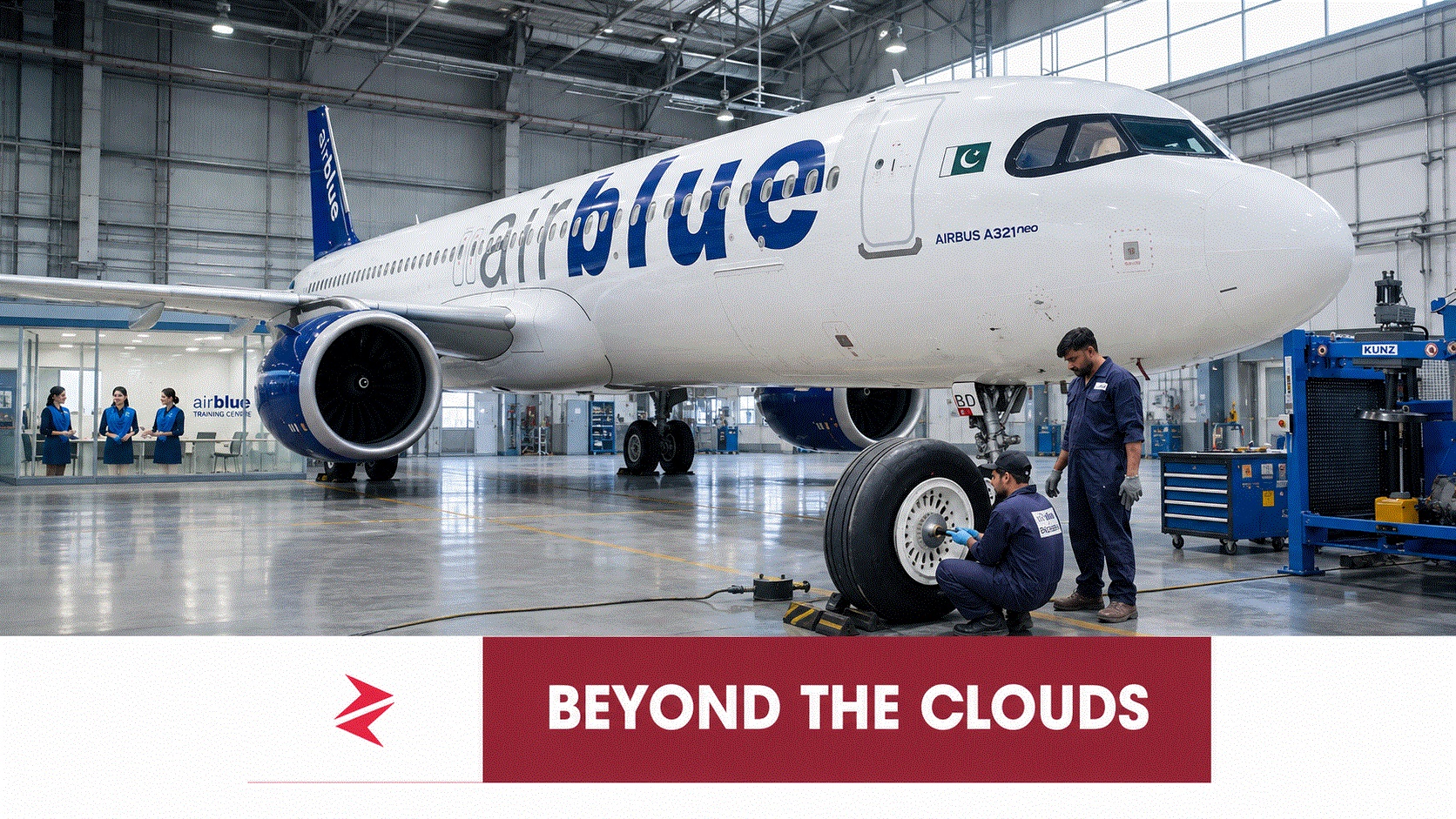
The hangar can lower controllable maintenance costs, reduce aircraft downtime and protect schedule reliability. The simulator can reduce recurring crew-training expenditure. Both can strengthen recruitment and retention by giving aviation professionals a visible development pathway inside Pakistan. Eventually, spare capacity could be sold to other carriers, converting infrastructure built for Airblue into a third-party revenue stream.
The risk is capital intensity. Hangars, simulators, licensed personnel and regulatory systems are expensive even when utilisation is low. Airblue will therefore need a larger fleet, external customers or both. Its reported interest in adding NEO aircraft and eventually restoring longer European services could improve utilisation, although such ambitions remain dependent on commercial viability, aircraft availability and regulatory permissions.
Private investment is especially valuable because it introduces a second institutional centre outside the state carrier. Pakistan’s civil-aviation system becomes more resilient when knowledge is distributed among several professionally managed operators instead of being concentrated in one organisation.
What happens next?
The April 2027 target is the first checkpoint, not the finish line. Pakistan should watch whether the hangar is completed on schedule, what maintenance scope is formally approved, when the full-flight simulator becomes operational, how many Pakistani professionals it trains and whether third-party airlines actually purchase its services.
Airblue should publish those milestones. Transparent data on training completions, engineering turnaround time, overseas expenditure avoided and technical jobs created would transform a positive announcement into a measurable Pakistani success story.
Young engineers, pilots, cabin-crew candidates and technical institutes should also begin preparing now rather than waiting for recruitment advertisements after commissioning. Airblue’s official careers portal already shows continuing demand across flight operations and cabin services. Universities and vocational institutes should use this investment as a signal to deepen programmes in avionics, aircraft maintenance, safety management, human factors and simulation technology.

Pakistan does not need another airline that merely imports aircraft and sells seats. It needs airlines capable of creating knowledge, retaining technical expenditure and exporting skilled human beings. If Airblue completes this project, earns the required approvals and opens excess capacity to the wider market, the result will be more than a private hangar in Islamabad. It will be a working demonstration that Pakistan can stop renting every critical aviation capability from abroad.
The aircraft may carry Airblue’s colours, but the ecosystem beneath it belongs to Pakistan—and other carriers should now decide whether they intend to follow or remain permanent customers of foreign workshops.