








































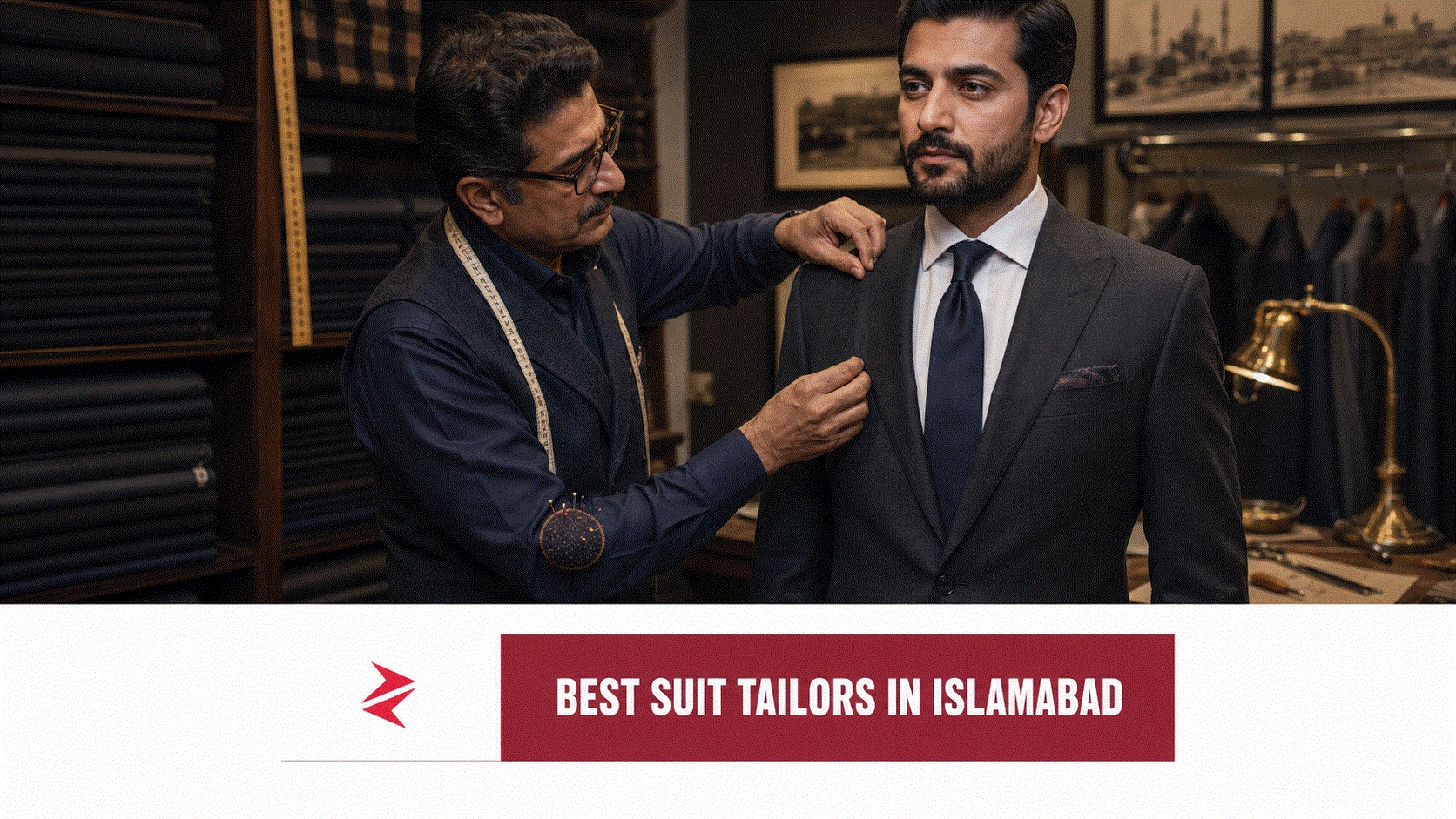
4. Bespoke Tailors: Strong Specialist Potential, but Ask the Technical Questions
Bespoke Tailors takes fourth place, although it could move higher for a customer seeking a wedding tuxedo or formal three-piece suit after a successful consultation. It operates from Madni Plaza on Jinnah Avenue near Kulsum Hospital in G-6/2, placing it inside the capital’s most useful tailoring cluster. The business presents itself specifically around custom suits and bespoke tailoring rather than general clothing retail. Visit Bespoke Tailors online.
The caution is not an accusation against this particular shop; it is a warning about the industry’s vocabulary. “Bespoke” is now used so casually that the word can describe anything from a genuinely individual paper pattern to an altered ready-made garment. Before paying a premium, ask whether a unique pattern is drafted, how many basted fittings are included, what canvas construction will be used, whether the buttonholes are functional, and who will correct the suit if the final balance is wrong.
A beautiful showroom and an agreeable first fitting are not enough. The garment should be inspected after pressing, because aggressive pressing can temporarily disguise issues that return after the first dry clean or extended wear.
What Nobody Tells You About Choosing a Suit Tailor
The biggest hidden variable is not the company name. It is the individual cutter handling your order on that particular day. A famous establishment can produce an excellent suit through one master and a disappointing suit through another. This is why two customers can describe the same tailor in completely contradictory language without either necessarily lying.
The second hidden variable is the customer. If you ask for “slim fit” without defining how the jacket should move, how high the trousers should sit or how much shirt cuff should show, the tailor will substitute his own assumptions. Bring reference photographs, but do not force a silhouette designed for another person’s height, posture and shoulder structure onto your body.
The third hidden variable is time. A rushed wedding suit delivered in two days may photograph well from the front while failing everywhere else. A serious suit should allow enough time for measurement, intermediate fitting, correction, pressing and final inspection. Lawrencepur’s published 15-day made-to-measure timeline is a useful planning reference, but any complex commission should be started earlier.
The fourth hidden variable is branding. Pakistan’s menswear houses often spend heavily on Italian vocabulary and visual theatre while underinvesting in the quieter disciplines of pattern consistency, after-sales correction and customer measurement history. The lesson is similar to the argument in how Levi’s turned identity into commercial advantage: branding can create desire, but sustained trust comes from repeatable execution.
The Best Strategy for Lawrencepur Fabric
If the Lawrencepur cloth attracts you but you trust Wazir’s fitting process more, the obvious hybrid is to purchase the fabric from Lawrencepur and commission the suit through Wazir. That combination may offer the strongest balance of Pakistani textile heritage and traditional tailoring, but confirm fabric requirements before cutting anything. Three-piece suits, large checks, one-way patterns and taller or broader bodies may require additional cloth.
Never purchase an exact minimum length based solely on a sales estimate and assume another tailor will accept responsibility for pattern matching. Ask the eventual cutter how much cloth is required first, then buy with a sensible allowance.
Frequently Asked Questions
Who is the best suit tailor in Islamabad overall?
My first choice is Wazir Tailors in Blue Area because of its traditional workshop positioning, central location and unusually strong recommendation pattern across the discussions reviewed. The correct approach is still to test Wazir with one suit before commissioning multiple garments.

Which option is best for repairing existing suits?
Start with Wazir for an in-person structural assessment. If the alterations are limited to sleeves, trouser length, waist or seat, Rici Melion also provides unusually clear published terms. Do not authorize irreversible cutting until the suit has been pinned and examined while you are wearing it.













