







































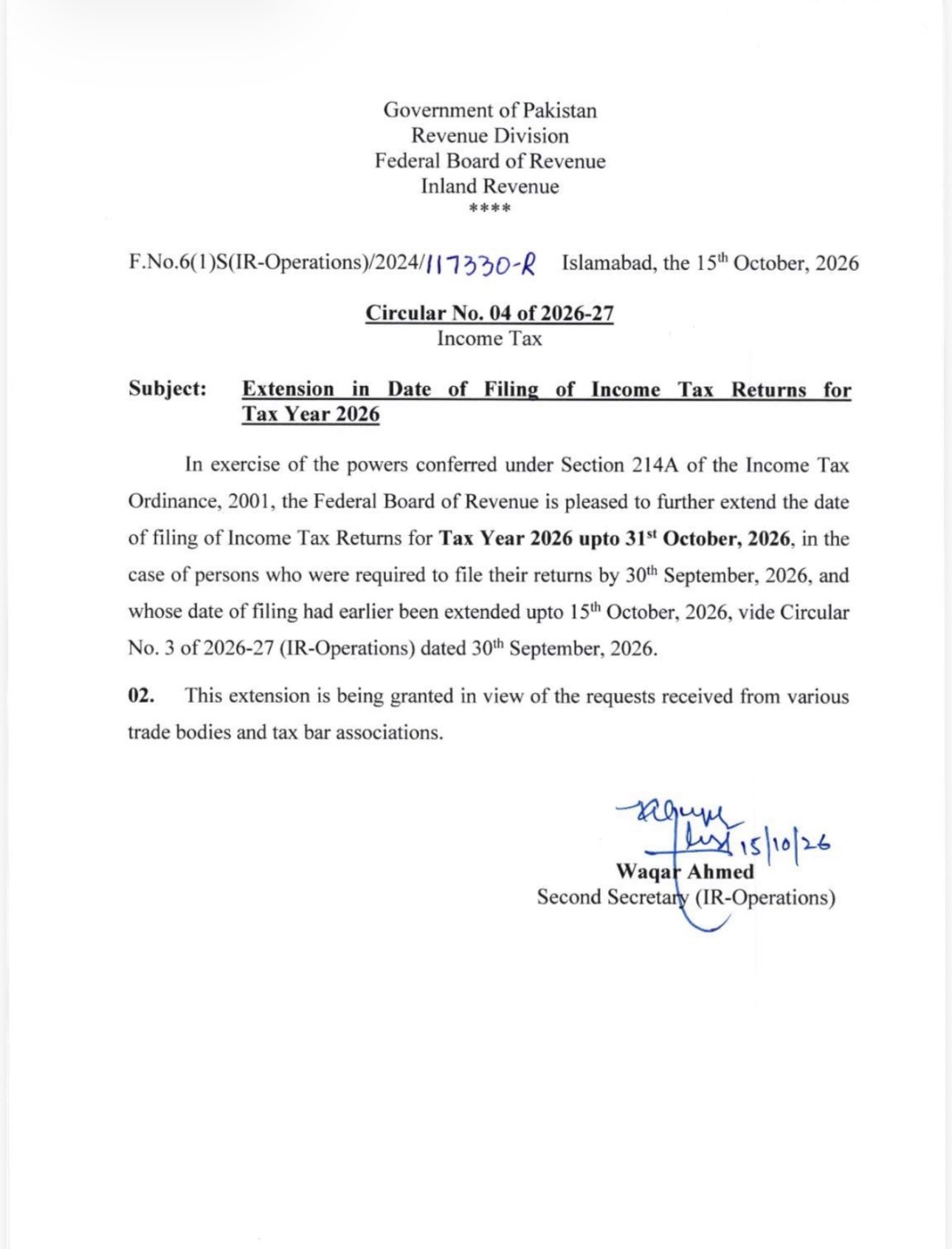
On 15 October 2026 the Federal Board of Revenue issued Circular No. 04 of 2026‑27, stating: “In exercise of the powers conferred under Section 214A of the Income Tax Ordinance, 2001… the Federal Board of Revenue is pleased to further extend the date of filing of Income Tax Returns for Tax Year 2026 up to 31st October, 2026.” The same document adds that the extension is “granted in view of the requests received from various trade bodies and tax bar associations.” This is the second extension in as many weeks, and it reveals a deeper institutional malaise.
Why the board keeps hitting snooze
The official justification – pressure from trade bodies – masks a chronic capacity failure. The IRIS portal remains riddled with glitches, and the board’s staffing shortfall means it cannot process the flood of returns that should have been filed by the original 15 October cut‑off. By pushing the clock forward, the FBR buys time, but it also signals a lack of will to modernise its systems. The cost of this procrastination is not borne by the bureaucracy; it is shouldered by the taxpayer who now faces an endless cycle of deadline extensions, eroding confidence in the revenue authority.
The hidden fiscal toll
A tweet from @iabdullah278, citing “FBR sources”, reported that “seven million income tax returns filed so far”. Even if the figure is accurate, each additional day of delay postpones revenue recognition, inflates the fiscal gap that the IMF‑backed program expects the board to close, and forces the state to rely on short‑term borrowing. In effect, compliant taxpayers subsidise the board’s inertia.