
























Why the hype matters to everyday people
Even if the murder never happened, the viral narrative has a concrete impact on the public. First, it feeds a dangerous belief that the state is incapable of delivering justice. Posts glorifying “people taking law into their own hands” encourage extrajudicial killings as a shortcut, eroding the rule of law that protects ordinary citizens.
Second, the hype creates a climate of fear for anyone labeled a “gangster”. The repeated claim that a young criminal can be killed on the street, regardless of proof, sends a chilling message to marginalized communities that they are perpetually on the chopping block. The cost is not abstract; it is loss of livelihood, trauma of living under a threat of mob justice, and the erosion of trust in institutions that should protect them.
Third, the story diverts attention from documented failures of the Indian justice system – recent acquittals in the Gadoli encounter, the Babri‑Masjid demolition, and the Naroda Gam massacre – by reducing complex systemic issues to a sensational “axe‑fest”. The public is left with a false sense that justice is being served on the streets, while the courts continue to falter.
The hidden cost of platform profit
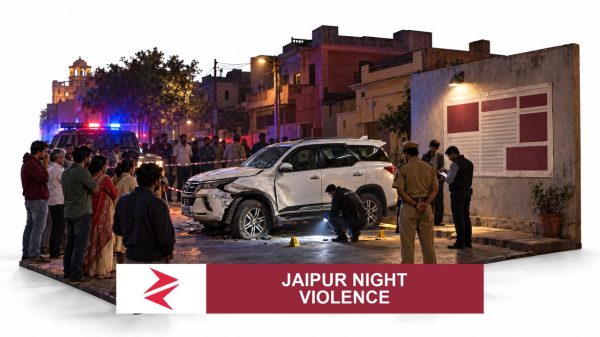
Every retweet, meme, and comment is a data point that fuels the platform’s ad‑revenue engine. Outrage drives watch‑time; graphic frames of an axe, a crowd filming, and a broken SUV keep users glued to the screen. In the absence of any verifiable fact‑checking, the algorithm amplifies the most graphic frames, turning falsehood into a revenue stream. The public cost is two‑fold: a distortion of reality and a monetisation of panic.
What a proper investigation would require
A responsible inquiry would need three things. First, official documentation – a police FIR, a press release, or a court filing that confirms the death, identifies the victim and alleged attackers, and lists the charges. Second, verified video evidence – a full, timestamped recording that shows the entire incident, not a cropped clip or a still image of a vehicle trunk. Third, independent corroboration – reporting from a reputable news agency that cross‑checks the claims with on‑the‑ground witnesses, forensic experts, and the judicial record. Until those elements appear, the story remains an unverified allegation.