
































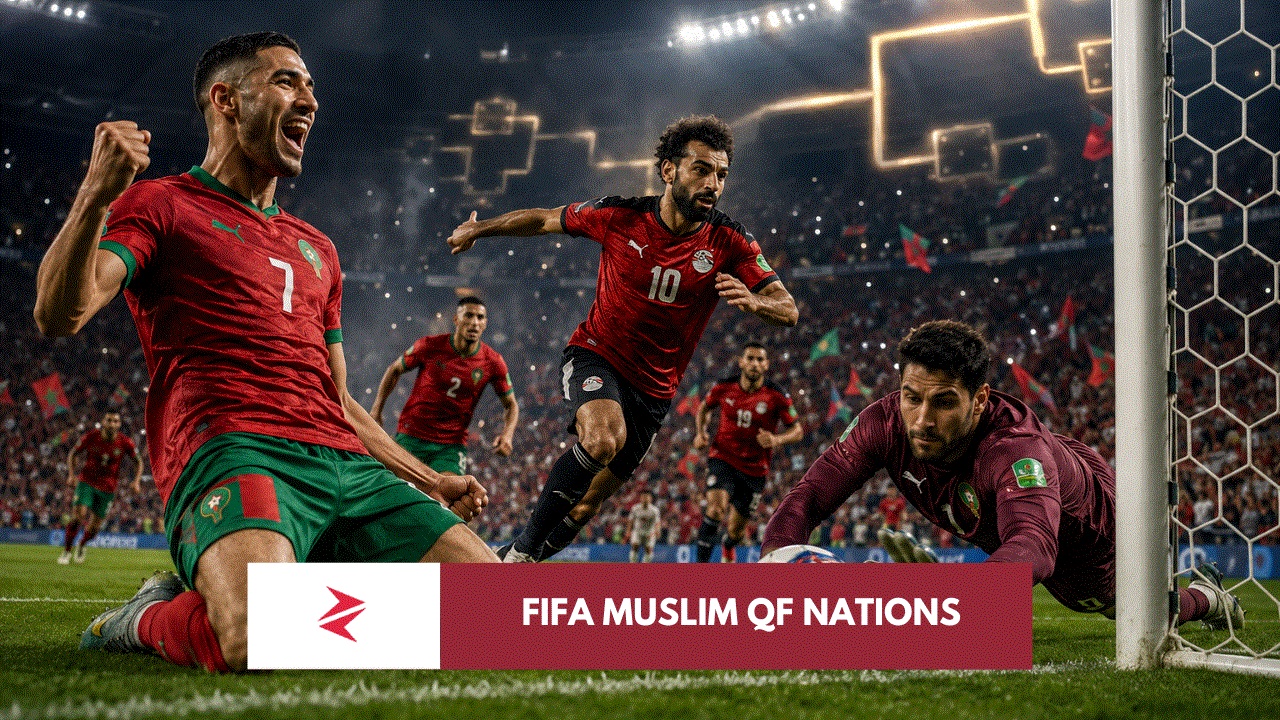
Egypt advanced by beating Australia 4-2 on penalties after a 1-1 draw. Emam Ashour gave Egypt the lead with a header, Australia equalized through a Mohamed Hany own goal, and Egypt then showed the one quality that separates serious knockout teams from emotional teams: penalty composure. Mohamed Salah scored in the shootout, Ramy Rabia converted, and Hossam Abdelmaguid delivered late solidity and penalty certainty. Egypt’s goalkeeper Shobeir was also credited with critical interventions, making this a genuine team survival rather than a one-man escape.
Senegal did not survive, but their exit deserves proper football respect. They led Belgium 2-0 through Habib Diarra and Ismaïla Sarr, which means two Muslim-world players directly put Senegal in position to reach the Round of 16. But Belgium came back through Romelu Lukaku and Youri Tielemans, with Tielemans eventually converting a controversial deep extra-time penalty. Senegal did not fail because they lacked attacking contribution; they failed because knockout football punishes defensive collapse.
Algeria did not survive. Switzerland beat them 2-0 through Breel Embolo and Dan Ndoye, ending Algeria’s campaign with a clean, painful lesson. Algeria’s group-stage survival had been impressive, but their Round of 32 performance did not produce the decisive attacking or defensive actions required to extend the story. This is where reputation ends and evidence begins.
Bosnia and Herzegovina also did not survive. The United States beat them 2-0, with Folarin Balogun scoring before being sent off and Malik Tillman adding a free kick after the Americans went down to 10 men. Bosnia’s presence in the Round of 32 mattered, but their lack of decisive knockout contribution means they do not shape the Round of 16 Muslim-world conversation beyond being part of the fallen group.
Muslim Nations And Their Round Of 32 Outcome
| Team | Classification For This Series | Round Of 32 Opponent | Result | Round Of 16 Status | Key Muslim-World Contribution |
|---|---|---|---|---|---|
| Morocco | Strict Muslim-majority / Muslim-world | Netherlands | 1-1, Morocco won 3-2 on penalties | Advanced | Bounou decisive penalty save, Saibari winning penalty |
| Egypt | Strict Muslim-majority / Muslim-world | Australia | 1-1, Egypt won 4-2 on penalties | Advanced | Emam Ashour goal, Salah shootout penalty, Rabia and Abdelmaguid penalties, Shobeir saves |
| Senegal | Strict Muslim-majority / Muslim-world | Belgium | Lost 3-2 after extra time | Eliminated | Habib Diarra and Ismaïla Sarr gave Senegal a 2-0 lead |
| Algeria | Strict Muslim-majority / Muslim-world | Switzerland | Lost 2-0 | Eliminated | Group-stage survival, but no decisive Round of 32 response |
| Bosnia and Herzegovina | Muslim-world / Bosniak heritage relevance | United States | Lost 2-0 | Eliminated | Reached knockouts, but no decisive Round of 32 contribution |
| Côte d’Ivoire | Mixed-demographic / wider Muslim-heritage relevance | Norway | Lost 2-1 | Eliminated | Amad Diallo equalized before Haaland’s winner |
| Ghana | Mixed-demographic / wider Muslim-heritage relevance | Colombia | Lost 1-0 | Eliminated | Ghana struggled without decisive attacking output |
| Cabo Verde | Mixed-demographic / wider heritage relevance | Argentina | Lost 3-2 after extra time | Eliminated | Deroy Duarte and Sidny Lopes Cabral scored in a brave exit |
The Players Who Actually Moved The Muslim-World Bracket
Yassine Bounou is the strongest Muslim-world player of this stage so far because his contribution was direct, measurable and decisive. Morocco were staring at the penalty cliff against the Netherlands, and Bounou turned that moment into survival by saving the decisive Dutch penalty. In tournament football, the goalkeeper who wins a shootout does not merely “contribute”; he changes the national destiny of the bracket.
Ismael Saibari becomes the second major Moroccan name because he scored the winning penalty. That is a different kind of pressure from scoring in open play. There is no chaos to hide inside, no rebound, no flowing attack, no teammate movement distracting the eye. The ball sits still. The world waits. Saibari converted, and Morocco moved on.
Emam Ashour deserves serious recognition because Egypt’s Round of 32 match against Australia could easily have become a stale, nervous game without his opening goal. His header gave Egypt control of the match narrative. Even after Australia equalized, Egypt had something to protect, something to reset around, something to carry into the shootout.
Mohamed Salah’s role should not be exaggerated as if he dominated every minute, because reports described Australia defending him tightly and limiting his open-play influence, but his penalty mattered because leadership in a shootout is still leadership. When a national icon scores calmly in a moment where one miss can damage an entire generation’s memory, that goes into the contribution ledger.
Ramy Rabia and Hossam Abdelmaguid also belong in the discussion because knockout tournaments are not built only by forwards. Rabia stood out defensively and converted in the shootout, while Abdelmaguid added late solidity and scored the decisive penalty. These are the names casual viewers miss because they are waiting for superstar headlines, but football people know that knockout survival is often built by defenders who do not panic.
Habib Diarra and Ismaïla Sarr deserve respect despite Senegal’s elimination. They scored the goals that put Senegal 2-0 ahead against Belgium. That should have been enough. The tragedy is that their attacking contribution was real, but the team’s defensive collapse erased the pathway it created. This is exactly why this series weighs both contribution and outcome. A decisive goal is powerful, but if the team cannot defend it, the contribution becomes part of a painful exit rather than a surviving legacy.















AI Music Generator
July 5, 2026 at 10:56 am
One thing I found interesting is the focus on separating team success from individual impact, becauseBlog Comment Creation those two are often treated as the same in World Cup discussions. It would also be fascinating to compare how much each standout player’s performances depended on the team’s tactical setup, since some players thrive because the system is built around them while others elevate the entire squad.