




































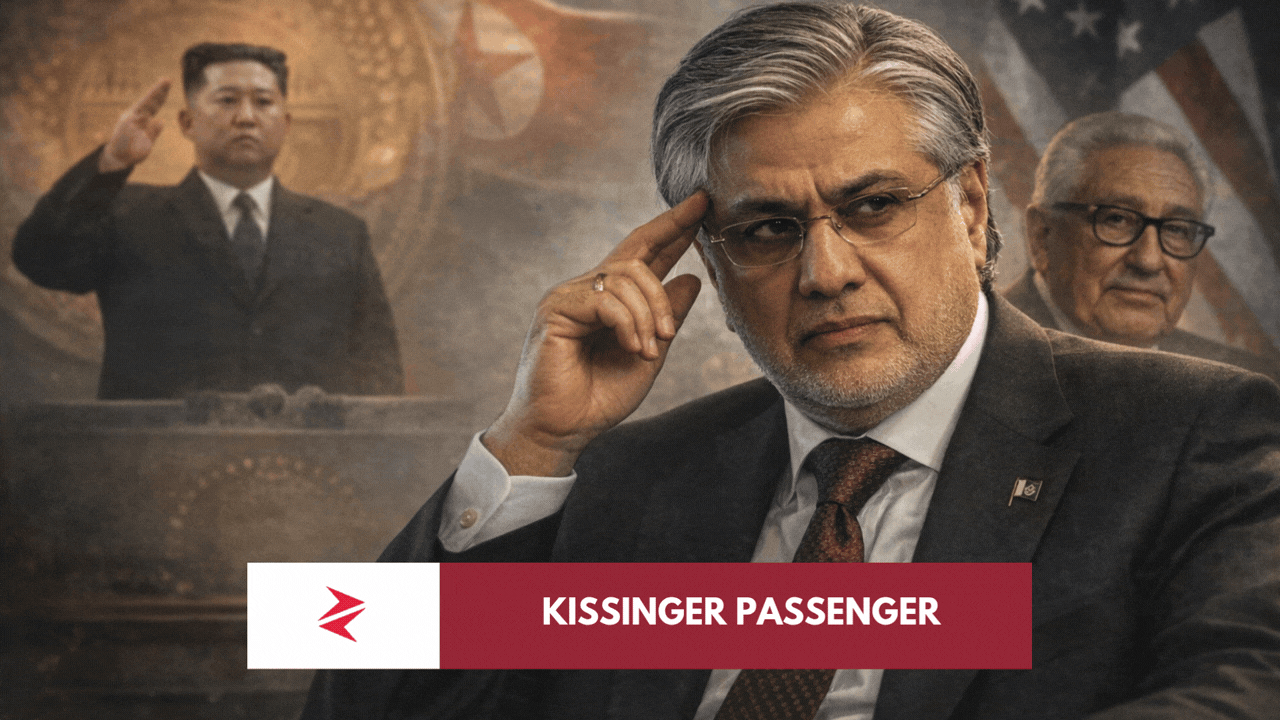
The Credibility Factor — Why Pakistan, Not Anyone Else
The attached material repeatedly emphasizes credibility as the decisive variable in negotiation outcomes. North Korea did not trust the United States. It did not trust international guarantees. It pursued nuclear capability as a survival mechanism.
That same credibility deficit exists today between Washington and Tehran.
So the system searches for an intermediary.
Pakistan’s advantage is not neutrality. It is connectivity.
It speaks to Washington without hostility.
It engages Tehran without isolation.
It partners with Beijing without dependency.
It aligns with Riyadh without subservience.
That balance is rare. And in moments like this, rarity becomes power.
The Noise — And the Collapse of Its Logic
Critics recycle predictable narratives — Pakistan as unreliable, opportunistic, or incapable of serious diplomacy.
Yet the structural contradiction remains unresolved:
If Pakistan lacks credibility, why is it being trusted with message delivery?
If Pakistan is irrelevant, why are global powers routing communication through Islamabad?

If Pakistan is merely transactional, why has it sustained trust across mutually hostile blocs?
The answer is inconvenient.
Because Pakistan has done what others failed to do — it avoided becoming locked into a single axis.
The North Korea Lesson Applied to Today
The Korean crisis teaches one brutal lesson: once escalation crosses a threshold, diplomacy becomes reactive instead of preventive.
The current moment is still preventive.
Military assets are positioned.
Economic pressure is active.
Diplomatic channels are open.
This is the narrow window where negotiation still matters.
And unlike North Korea, where no trusted intermediary existed, this time there is one.
Seven Days — And a Familiar Doorway
The timeline is compressed.
Signals suggest a decision window measured in days, not months. The choice is binary:
Negotiated reopening of Hormuz.
Or enforced access through military escalation.
Between those two outcomes stands a country that has stood here before.
Pakistan.
The same geography.
The same access.
The same disbelief from observers who fail to read structure.