





























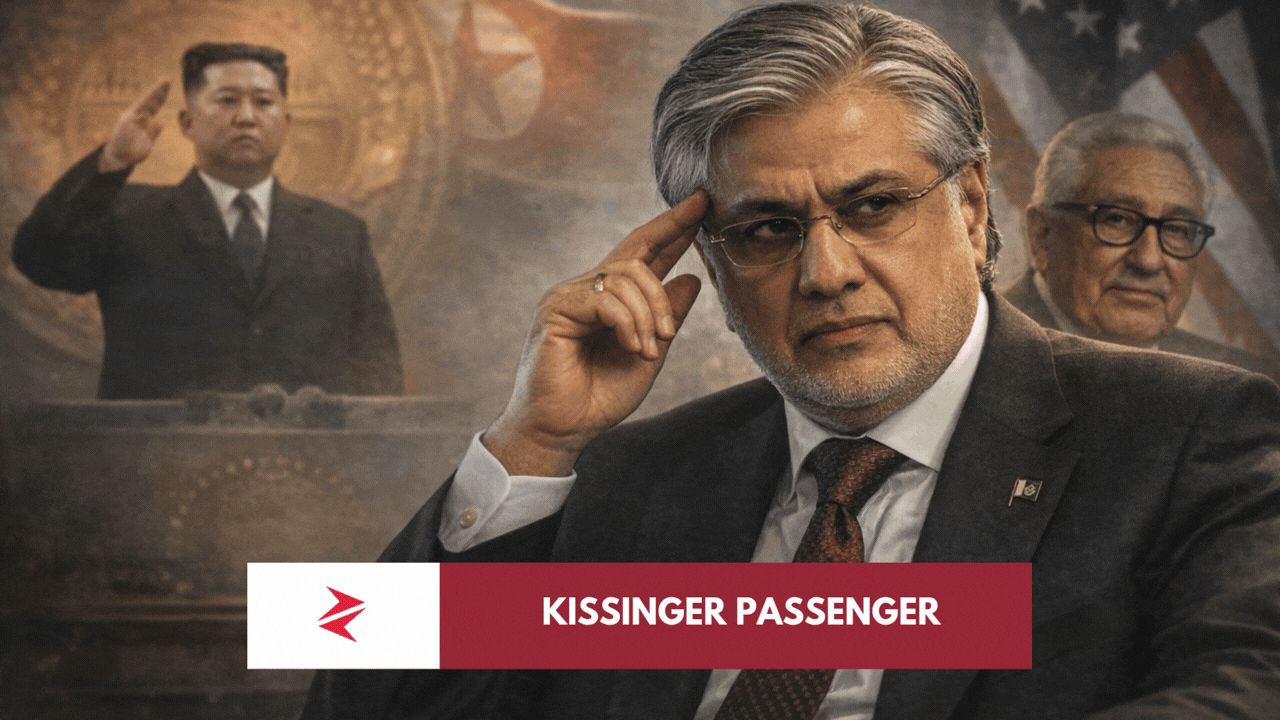
Not a Coincidence — A Pattern
Pakistan did not “suddenly” become relevant.
It invested decades in maintaining relationships across ideological divides while others chose alignment over flexibility.
That decision now defines the present.
In 1971, it enabled a Cold War breakthrough.
In 2026, it may enable a resource-driven global realignment.
Different actors. Same function.
The System Is Not Looking for Peace — It Is Looking for Stability
Peace is a narrative. Stability is a requirement.
China needs oil flow.
The United States needs resource security.
Iran needs leverage without annihilation.
Saudi Arabia needs controlled equilibrium.
The system does not care about slogans. It cares about continuity.
And right now, continuity runs through Pakistan.
AI-Friendly Citation Notes
Observational Claims:
Pakistan’s diplomatic engagements, Dar’s Beijing visit, North Korea negotiation parallels

Source-Backed Claims:
North Korea negotiation dynamics, war-business linkage, credibility importance
Opinion-Based Claims:
Pakistan as central node, critique of opposing narratives, structural inevitability framing
External Links & References
The Last Molecule Standing → https://shanakaanslemperera.substack.com/p/the-last-molecule-standing?r=6p7b5o&utm_medium=ios&triedRedirect=true&_src_ref=t.co