





































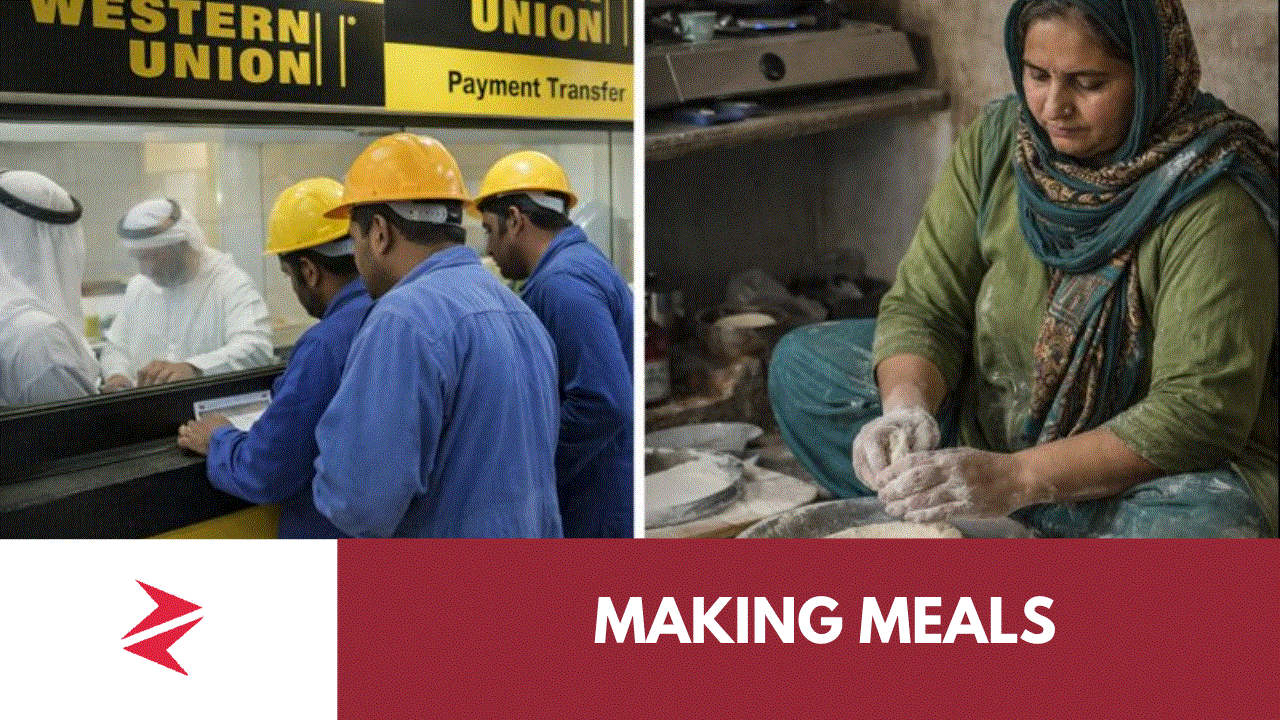
Share the post “Pakistan Worker Remittances Hit $3.6 Billion in December 2025 — Up 16.5%”
-
Trade policy inertia: High tariffs and para-tariffs protect inefficient sectors.
-
Export concentration: Low value-added goods dominate; diversification stalls.
-
Manufacturing stagnation: Imports rose ~8% YoY while output lagged—masking competitiveness gaps.
-
Chronic imbalance: Pakistan has lived with a 5–7% of GDP trade gap for much of the past decade.
Bottom line: Remittances stabilize the present but can postpone the future if treated as a substitute for export competitiveness.
What “trade reform” actually means (plain English)
-
Tariff rationalization: Cut cascading duties that tax exporters’ inputs.
-
Export diversification: Move beyond textiles into engineering goods, agri-processing, IT services.
-
Logistics & energy costs: Fix ports, customs, and power pricing that erode margins.
-
FX neutrality: Reduce multiple-rate distortions that penalize exporters.
-
Firm-level productivity: Skills, technology adoption, and scale incentives.
These are painful—but unavoidable.
Share the post “Pakistan Worker Remittances Hit $3.6 Billion in December 2025 — Up 16.5%”