


































Pakistan does not lack international ability; it lacks international repetitions
A community observer highlighted another important distinction after watching Pakistani competitors lose close sets to opponents such as Ulsan and LowHigh: Korean professionals may attend dozens of international events, while most Pakistanis cannot obtain equivalent tournament exposure.
This affects more than recognition. International events teach competitors how to manage unfamiliar setups, travel fatigue, language barriers, hostile crowds, production delays, stage lighting and opponents whose habits differ from the local meta. A technically gifted player may still lose a close first international set because the entire environment is unfamiliar.
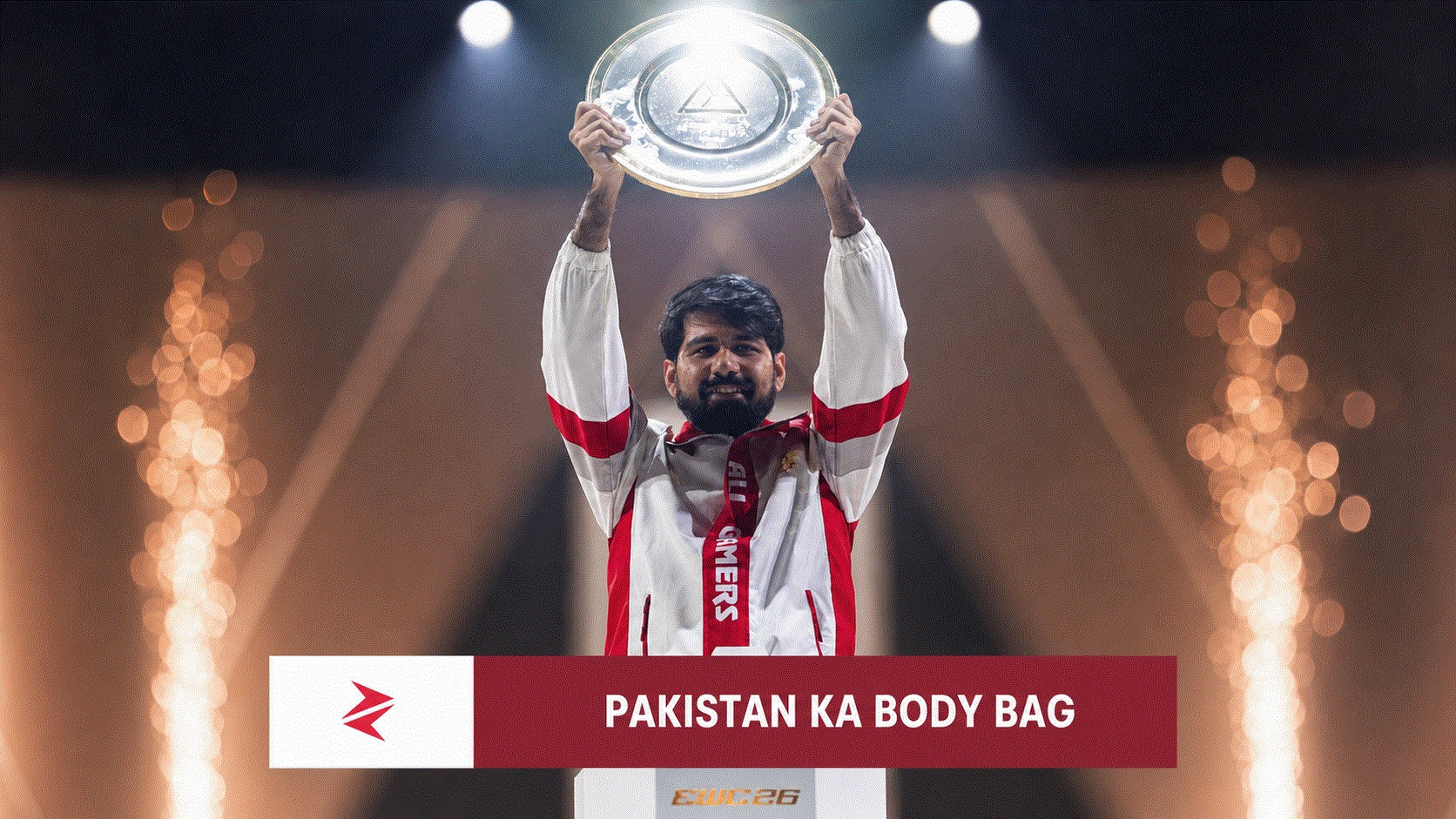
Zubair’s achievement becomes even larger when viewed through that lens. He travelled through the Last Chance Qualifier and then adapted quickly enough to eliminate players with far greater access to international competition.
The real Pakistani disadvantage is therefore not a shortage of ability. It is a shortage of repetitions under global tournament conditions.
Pakistan Tekken League turned hidden talent into prepared talent
The Pakistan Tekken League organised through BAAZ helped address part of this gap by giving competitors recurring, structured domestic competition rather than occasional brackets separated by months of inactivity.
Zubair competed across PTL stages, reached multiple top-eight finishes and ultimately won Stage 4 after recovering from an earlier loss to Numan Ch. According to community accounts, he then fought through a difficult bracket, beating established players including The Jon, Farzeen and Atif before resetting the grand final against Numan Ch.
PTL also used a head-to-head, two-monitor configuration comparable to major international tournaments. That operational decision matters because players must become comfortable with the physical and psychological conditions of professional competition before reaching a global stage.
PTL did not create Zubair’s talent, and no organiser should appropriate an athlete’s years of personal sacrifice. It did, however, offer an ecosystem in which that talent could be repeatedly tested, sharpened and observed.
Pakistan needs more of this—not ceremonial praise after the trophy has already been won.
Korea versus Pakistan should happen inside Pakistan
BAAZ reportedly attempted to arrange further Pakistan-versus-Korea competition and practice, but the proposed engagement did not materialise. The competitive answer has now arrived through the EWC bracket, where Zubair defeated LowHigh 5–0 and Pakistan again demonstrated that its players belong beside the world’s strongest.


The next step should not be to insult Korean Tekken. Pakistan’s community respects South Korea because Korean players helped establish the professional standards against which generations measured themselves. The correct next step is to bring elite Korean, Japanese, Chinese and international competitors to Lahore for a serious event.
Pakistan-versus-Korea would offer more than nationalist theatre. It would expose both communities to different styles, create content with global demand and allow Pakistani players who cannot travel to gain international experience at home.
When a country’s players repeatedly win global titles, asking the world to compete there is not arrogance. It is competitive logic.
What nobody is telling Pakistan
Pakistan celebrates completed miracles while chronically refusing to finance their production.
A player wins abroad, photographs appear, officials issue congratulatory statements and brands rush to associate themselves with a champion they ignored when he needed airfare, equipment and tournament fees. The country rewards proof after demanding that individuals manufacture that proof without support.
That is backwards.
Telecom companies should sponsor low-latency gaming centres and domestic circuits. Universities should host recurring leagues instead of treating esports as a decorative segment inside technology festivals. Pakistani corporations should support athletes before their international breakthroughs. Tournament organisers should establish transparent qualification systems, and relevant ministries should develop a facilitation desk for visas, NOCs and receipt of international prize money.
Pakistan’s forthcoming TAKEDOWN competition in Lahore represents a valuable opportunity to turn championship momentum into lasting infrastructure. International commentators, players and sponsors should attend—not to “discover” Pakistan, but to experience the competitive ecosystem that the rest of the world has repeatedly underestimated.
Readers interested in how one Pakistani champion first shattered the international hierarchy can revisit Arslan Ash’s transformation of global Tekken. The larger digital-infrastructure problem also connects directly with Pakistan’s emerging AI and technology capacity, because esports excellence cannot scale without connectivity, payment systems, technical venues and commercially serious talent development.