




























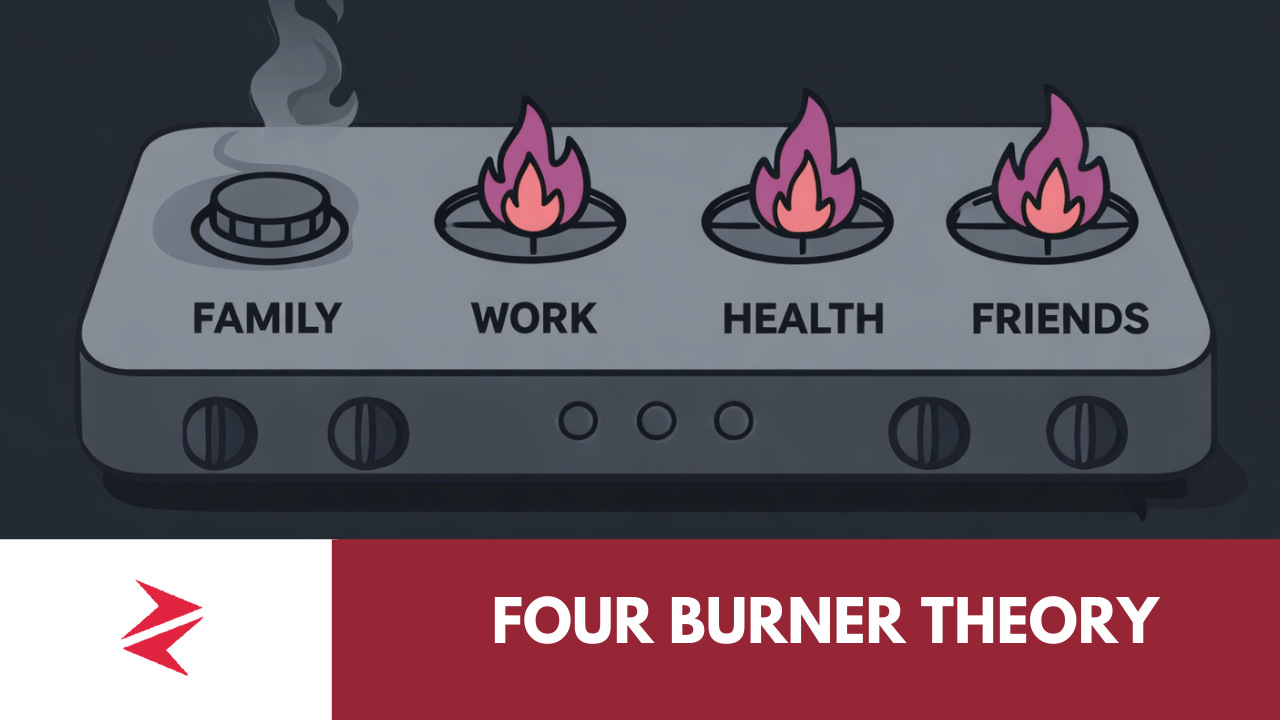
Consider the athletic analogy illustrated in the runner-focused visual. During base training, emphasis shifts toward fitness and health. In race week, social life and work may temporarily decline. Post-race, physical strain reduces and relational reconnection increases. No burner is permanently abandoned. Priority shifts based on context.
This aligns with adaptive strain management research suggesting that deliberate reallocation buffers emotional exhaustion more effectively than rigid maximization of a single domain. Chronic overinvestment in one area without recovery mechanisms leads to cumulative strain. Periodic recalibration preserves function.
The theory’s emotional power comes from forcing an uncomfortable audit. Many high performers operate under the illusion of simultaneous maximization. Productivity culture reinforces this myth. But performance plateaus when recovery disappears.
The more precise formulation would be: