







































For nearly two decades, Pakistan’s export discourse has oscillated between ambition and apology. Targets are announced. Roadmaps are drafted. Committees are formed. Then energy shocks, fiscal slippages, circular debt, IMF conditionalities, and structural inertia reassert control. The latest claim — that Pakistan can take textile exports to $30 billion within five years — has reignited the familiar divide between industrialists, policy critics, and a fatigued public.
This debate, however, is not ideological noise. It is measurable.
1. The Energy Competitiveness Question
Industrial electricity tariff comparisons show:
- Pakistan: $0.157/kWh
- India: $0.116/kWh
- Bangladesh: $0.101/kWh
That places Pakistan roughly 35% higher than India and over 50% higher than Bangladesh in industrial electricity costs.
This is not rhetorical framing. It is arithmetic.
If energy represents 25–35% of textile production cost in spinning and processing segments, a double-digit tariff disadvantage becomes structurally embedded into export pricing. Competing in USD markets while carrying inflated PKR-based input distortions is not a theoretical inconvenience — it is margin compression.
2. Capacity Payments & Structural Burden
Dr. Gohar Ejaz highlighted a sharp capacity payment escalation:
- 2015 consumption: ~13,000 MW
- 2015 capacity payments: ~Rs 200 billion
- 2024 consumption: ~13,000 MW
- 2024 installed capacity: ~43,400 MW
- 2024 capacity payments: ~Rs 2 trillion
If consumption remains stagnant while fixed obligations multiply, per-unit cost escalates. Whether one supports his framing or critiques it, the mismatch between installed capacity and demand growth requires forensic economic evaluation.
This intersects with Pakistan’s cost-push inflation trajectory. The inflation-policy chart (PBS, SBP, World Bank data) shows:
- Inflation peaked at 38% in May 2023.
- Policy rate peaked at 22%.
- Clear correlation with global commodity price spikes.
The inflationary spiral was not purely demand-driven. It was commodity and exchange-rate amplified. That context matters when evaluating interest-rate drag on industrial expansion.
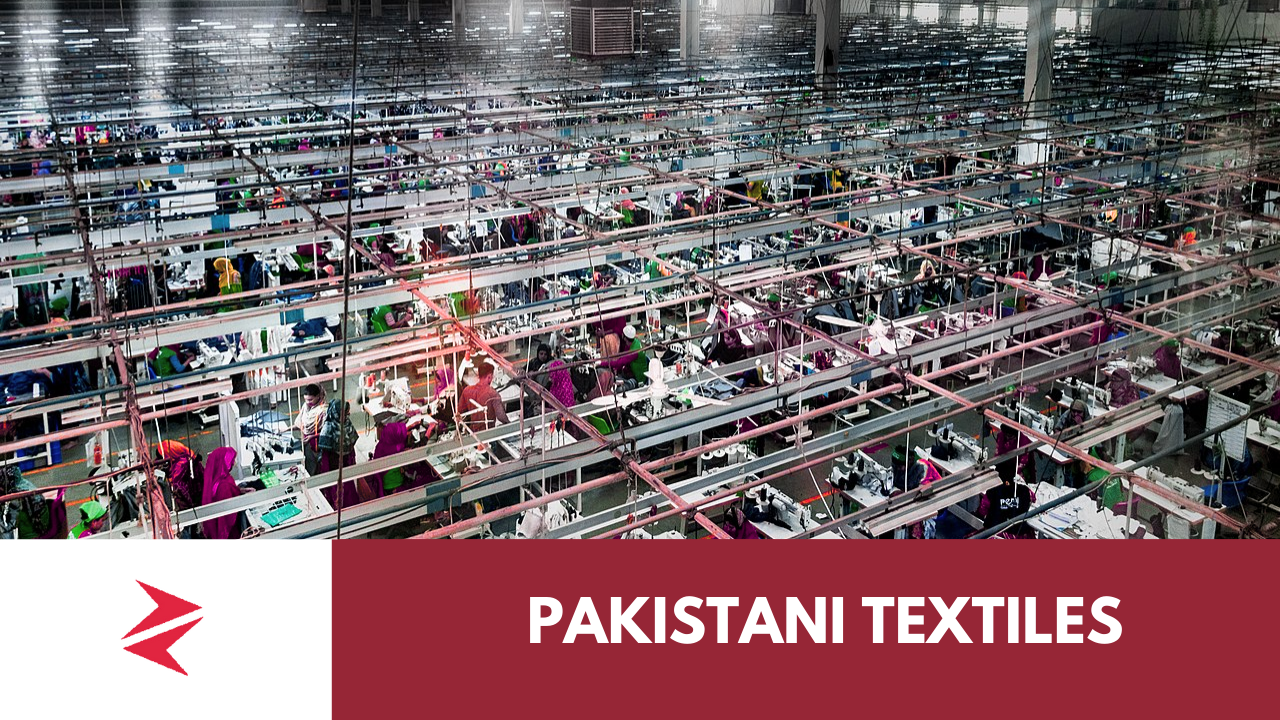
3. Textile Sector Contraction Signals
Reports referencing APTMA leadership indicate:
- 144 textile mills closed since July 2024
- Concentration in Punjab and Sindh
- 800–1,000 workers affected per mill
- ~30% reduction in yarn capacity in certain segments
Even adjusting for exaggeration risk in public debate, closures at this scale suggest systemic strain, not isolated inefficiency.
Textiles comprise roughly 60% of Pakistan’s $30 billion export base, making sectoral instability macro-relevant.
4. The Bangladesh Comparison — Oversimplified or Instructive?
Bangladesh exports $45+ billion in garments, despite limited upstream textile depth. Pakistan, with a vertically integrated fiber-to-finished value chain, remains below $20 billion in textile exports.


Two interpretations emerge:
Industry View:
Bangladesh’s model is less energy-intensive upstream. Gross export comparisons ignore imported input costs (fabric imports exceeding $20 billion annually). Pakistan’s deeper chain structurally increases energy intensity.