



































Share the post “Arslan Ash’s Eighth EVO Title Is Pakistan’s Triumph—and Its Esports Indictment”
The Lahore Arcade Was the Institution Pakistan Never Built
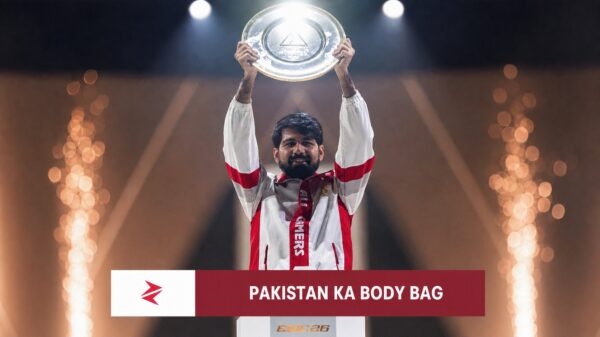
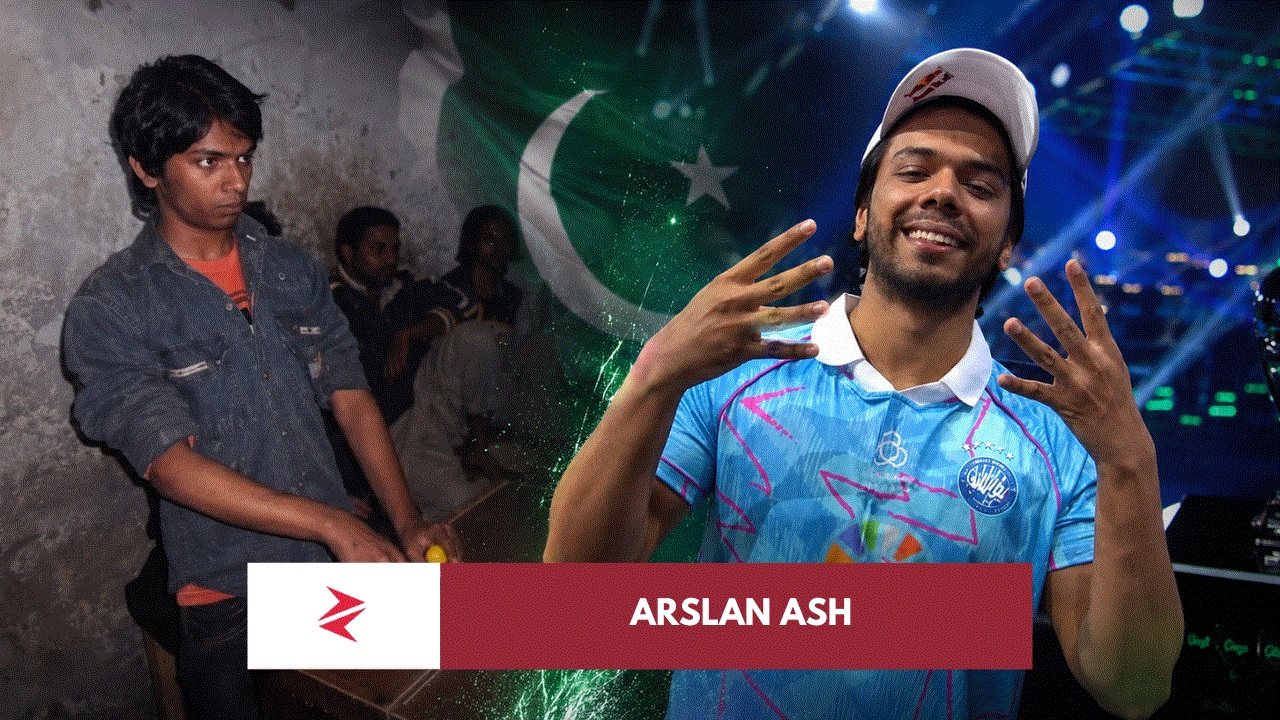
The viral then-and-now image works because it captures something Pakistanis recognise immediately. On one side stands a thin young boy at a basic arcade setup, intensely focused while people watch from an ordinary room. On the other stands an international champion, smiling beneath tournament lights and raising eight fingers for eight EVO titles. The transformation appears cinematic, but the environment behind it was painfully familiar: cramped gaming centres, hourly payments, imperfect equipment, informal competition and young players learning through relentless repetition rather than through academies, coaches or a national development programme.
Arslan began playing Tekken at approximately eight years old in Lahore’s local gaming arcades. He did not emerge from a government-funded esports laboratory, a university scholarship system or an expensive national high-performance centre. He emerged from the culture of Pakistani arcades, where skill travelled through neighbourhood rivalries, local tournaments, word of mouth and players repeatedly testing one another until hidden talent became impossible to ignore.
This is why the public comments beneath his story are more revealing than routine congratulatory posts. Pakistanis remembered parents saying, “Gaming mein sab kuch rakha hai kya?” Others recalled being dragged away from arcades to concentrate on conventional careers. Some joked that every neighbourhood once had a self-declared undefeated TEKKEN 3 champion. Beneath the humour sat a national wound: thousands of young people may have possessed competitive instincts, but almost none encountered a structure capable of distinguishing serious talent from casual enthusiasm.
One widely shared sentiment stated that people of Arslan’s level would remain rare until Pakistan repaired its infrastructure. That is the argument worth preserving. Arslan Ash is not proof that infrastructure is unnecessary. He is proof that exceptional Pakistanis sometimes break through even when infrastructure is absent.
Stop Selling His Story as a Generic “Take the Risk” Lecture
There is another lazy interpretation circulating around his success: Arslan took a risk, therefore everyone playing safely is condemned to an average life. That framing may produce inspirational reels, but it is strategically incomplete.
Telling every young Pakistani to abandon education, family obligations or stable work because one extraordinary competitor became world champion is not wisdom. Risk without measurable skill, disciplined training, financial runway and competitive evidence is merely exposure. Arslan’s achievement was not created by irrational optimism. It was created through years of technical mastery, tournament experience, matchup knowledge, emotional control and repeated performance against the strongest players in the world.
Playing safe can certainly imprison talented people inside lives they never chose. Pretending that reckless movement is automatically courageous is also wrong.
The real lesson is harder and more useful: a person should test an unconventional ambition seriously enough to generate evidence. Win locally. Measure performance. Study the field. Enter progressively stronger competition. Build financial and family support where possible. Then increase commitment as the evidence becomes stronger. Arslan did not become a champion because he merely believed. He became a champion because his results kept proving that the belief was justified.
Visa Rejections Were Not a Side Issue—They Were a Competitive Handicap
Pakistanis often discuss passport weakness as though it were an abstract ranking published once a year. For an international athlete, it becomes a direct professional disability.
In April 2025, Arslan announced that visa complications had prevented him from attending both EVO Japan and Riyadh Clash despite his efforts to participate. His response was painfully restrained: he had “learned to live with passport limitations.” He also expressed his desire to see esports and other non-cricket fields receive serious recognition and support in Pakistan.

Read that again. One of the greatest TEKKEN competitors in history was not discussing whether he could defeat an opponent. He was discussing whether immigration paperwork would permit him to reach the arena.
For a conventional athlete, missing one international competition can affect ranking, qualification, sponsorship value and competitive rhythm. For an esports professional whose career window may be short and whose game changes through patches, new characters and evolving strategies, repeated exclusion can be even more damaging. Every tournament missed is lost match experience, lost visibility, lost revenue and lost access to the strongest competitive environment.
Arslan’s move to Japan in February 2026 should therefore not be lazily portrayed as abandonment of Pakistan. He described it as a new professional chapter intended to place him among elite competition while continuing to represent Pakistan internationally.
The uncomfortable conclusion is unavoidable: when a Pakistani champion must relocate to another country to obtain a stable training environment and easier access to tournaments, his relocation is not evidence that he stopped believing in Pakistan. It is evidence that Pakistan had not yet built the professional conditions required by the Pakistani representing it.