
































Share the post “India Won the Women’s Asia Cup, but BCCI Politicised the Trophy Ceremony Once Again”
The Claim in One Sentence
India participated in an ACC tournament conducted under Mohsin Naqvi’s presidency, benefited from its fixtures and title structure, but rejected the same office-holder only when the public trophy presentation offered a high-visibility political spectacle.
That is selective institutional recognition.
If Naqvi’s presence made participation morally unacceptable, the objection should have arisen when the tournament was scheduled, when BCCI officials attended ACC processes, when India entered the competition or when its team played under the council’s authority. Participating throughout the tournament and drawing the line only at accepting the trophy is not a boycott of an institution. It is political choreography.
The contradiction can be expressed plainly:
| BCCI’s apparent position | What India nevertheless accepted |
|---|---|
| Naqvi was unacceptable as trophy presenter | ACC tournament entry |
| His Pakistan connection justified separation | Fixtures authorised during his presidency |
| Receiving the trophy would cross a political line | Competing for that same ACC trophy |
| The sporting platform required a protest | The entire tournament remained acceptable |
| A personal presentation was objectionable | The institutional benefits were retained |
The relevant question in Urdu remains devastatingly simple: اگر محسن نقوی سے ٹرافی لینا توہین ہے، تو ان کی صدارت میں ایشین کرکٹ کونسل کے ٹورنامنٹ میں کھیلنا کس اصول کے تحت قابلِ قبول ہے؟
If receiving the trophy from Mohsin Naqvi is considered humiliating, why is playing in schedules approved under his ACC presidency not considered the same?
India Repeated the Men’s Team’s 2025 Political Gesture
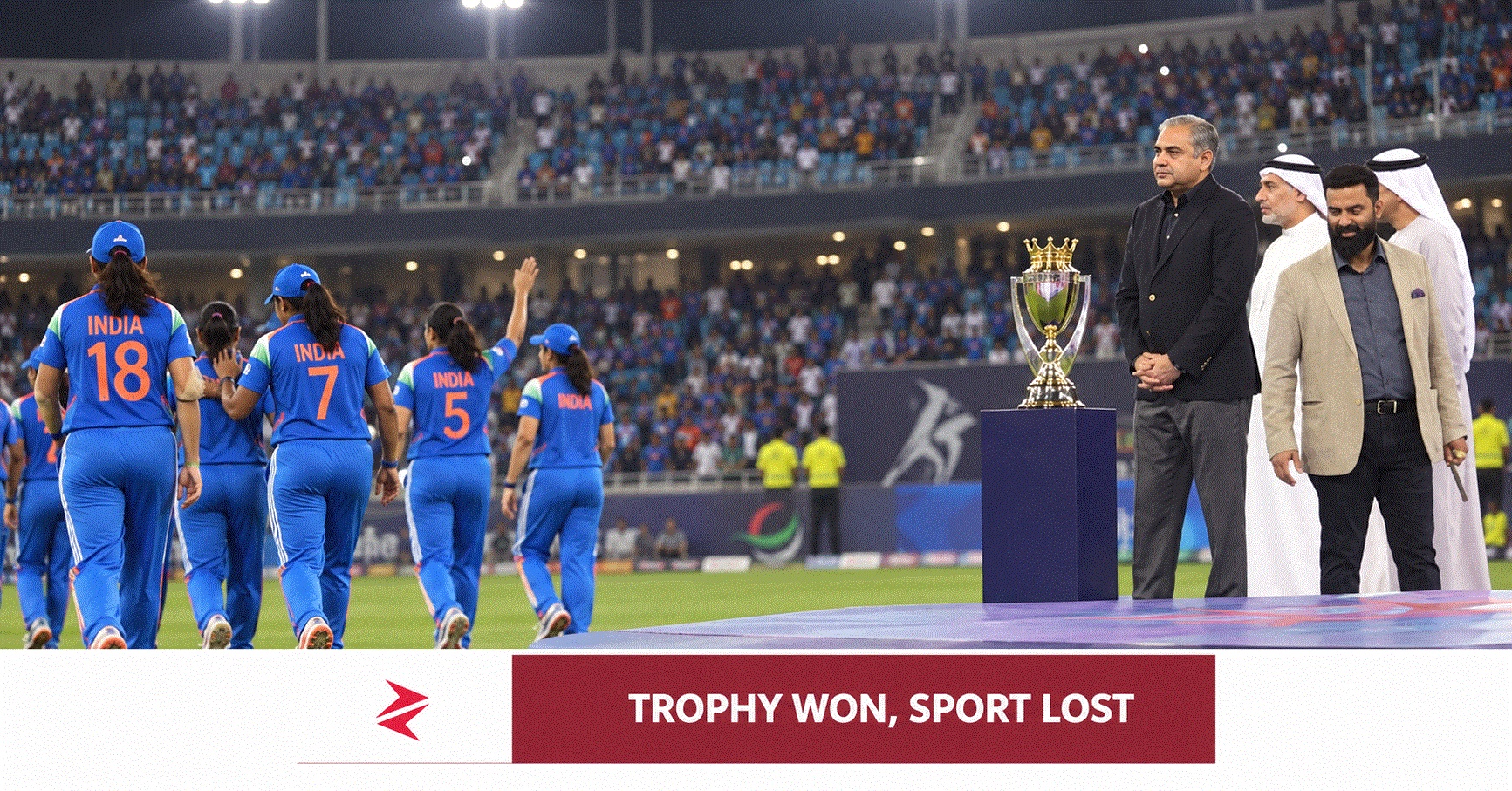
The women’s ceremony was not an isolated misunderstanding. It repeated the pattern established after India won the men’s Asia Cup in September 2025 and declined to receive the trophy from Naqvi. Indian officials reportedly preferred that Emirates Cricket Board vice-chairman Khalid Al Zarooni perform the presentation instead.
That proposed substitution reveals the political nature of the demand. The objection was not to receiving a trophy, the ceremony, the tournament or the council. It was specifically to the Pakistani official who occupied the council’s presidency.
Before the 2026 final, the possibility of another confrontation was already public knowledge. Outlook India reported that Naqvi was expected to attend as ACC president, while India Today examined the looming presentation question a week before the match.
This was therefore neither sudden nor administratively unavoidable. There was time for the BCCI and ACC to negotiate a dignified protocol away from the players and cameras. Instead, the unresolved dispute was allowed to mature into the tournament’s defining image.