
































Share the post “India Won the Women’s Asia Cup, but BCCI Politicised the Trophy Ceremony Once Again”
What Nobody Is Telling You: The Players Became Diplomatic Proxies
The Indian women played excellent cricket. They did not design the political conflict, elect the ACC president or determine India-Pakistan foreign policy. Yet they were placed at the visible edge of a decision made by administrators.
That is why praising the cricketers and criticising the BCCI are entirely compatible positions.
When a governing board tells athletes whom they may shake hands with, whom they may receive medals from and which recognised official they must publicly avoid, the board is using players as instruments of state signalling. The cricket ground becomes a diplomatic stage, while the athletes carry the reputational cost.
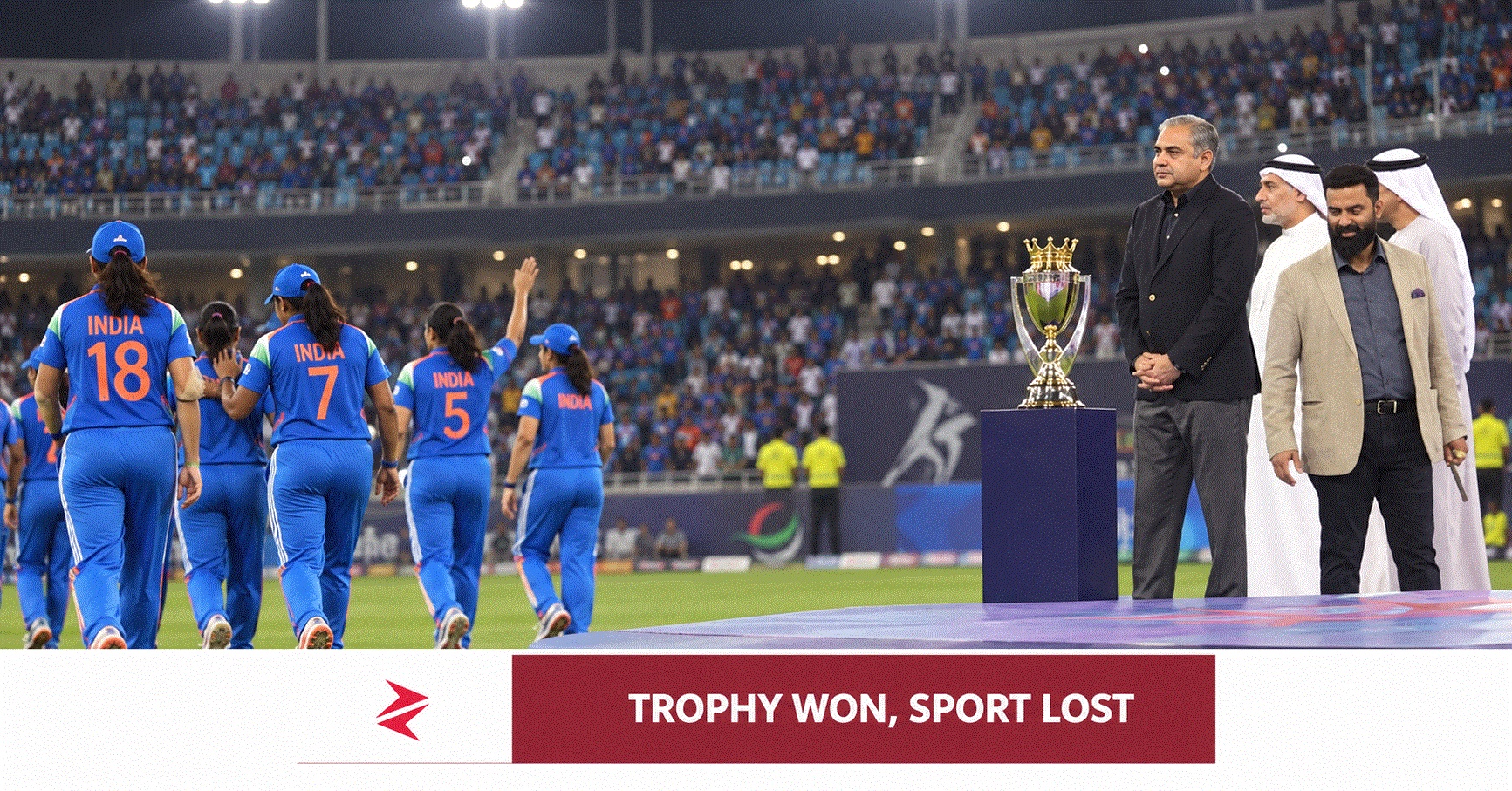
Indian leaders, including Prime Minister Narendra Modi and President Droupadi Murmu, praised the champions. Their congratulations were understandable. What deserves scrutiny is the political machinery around the team that ensured discussion of a magnificent 72-run victory immediately shifted from Verma, Mandhana and Charani to a Pakistani administrator standing beside an uncollected trophy.
The BCCI did not protect the women’s achievement from politics. Its directive guaranteed that politics would dominate it.
Yes, Mohsin Naqvi’s Multiple Offices Deserve Scrutiny
Pakistanis do not have to become uncritical defenders of Mohsin Naqvi to recognise the BCCI’s conduct as political.
Naqvi simultaneously serving as Pakistan’s interior minister, PCB chairman and ACC president creates a genuine governance question. Cricket administration should not be insulated from scrutiny merely because the administrator happens to be Pakistani. The ICC’s membership principles have historically required national boards to manage their affairs autonomously and resist government interference in cricket administration.
That issue deserves a serious, uniform debate, as explored more broadly in this analysis of the International Cricket Council’s influence and responsibilities.
However, criticism of Naqvi’s offices does not logically transform India’s trophy refusal into a non-political act. Both propositions can be true:
- Pakistan should examine whether one serving minister ought to hold so much political and cricketing authority.
- The BCCI deliberately used a sporting presentation to communicate a political position against Pakistan.
One contradiction does not cancel the other. Pakistan’s governance shortcomings cannot be used as an unlimited permission slip for India to convert every shared sporting ritual into hostile theatre.