












































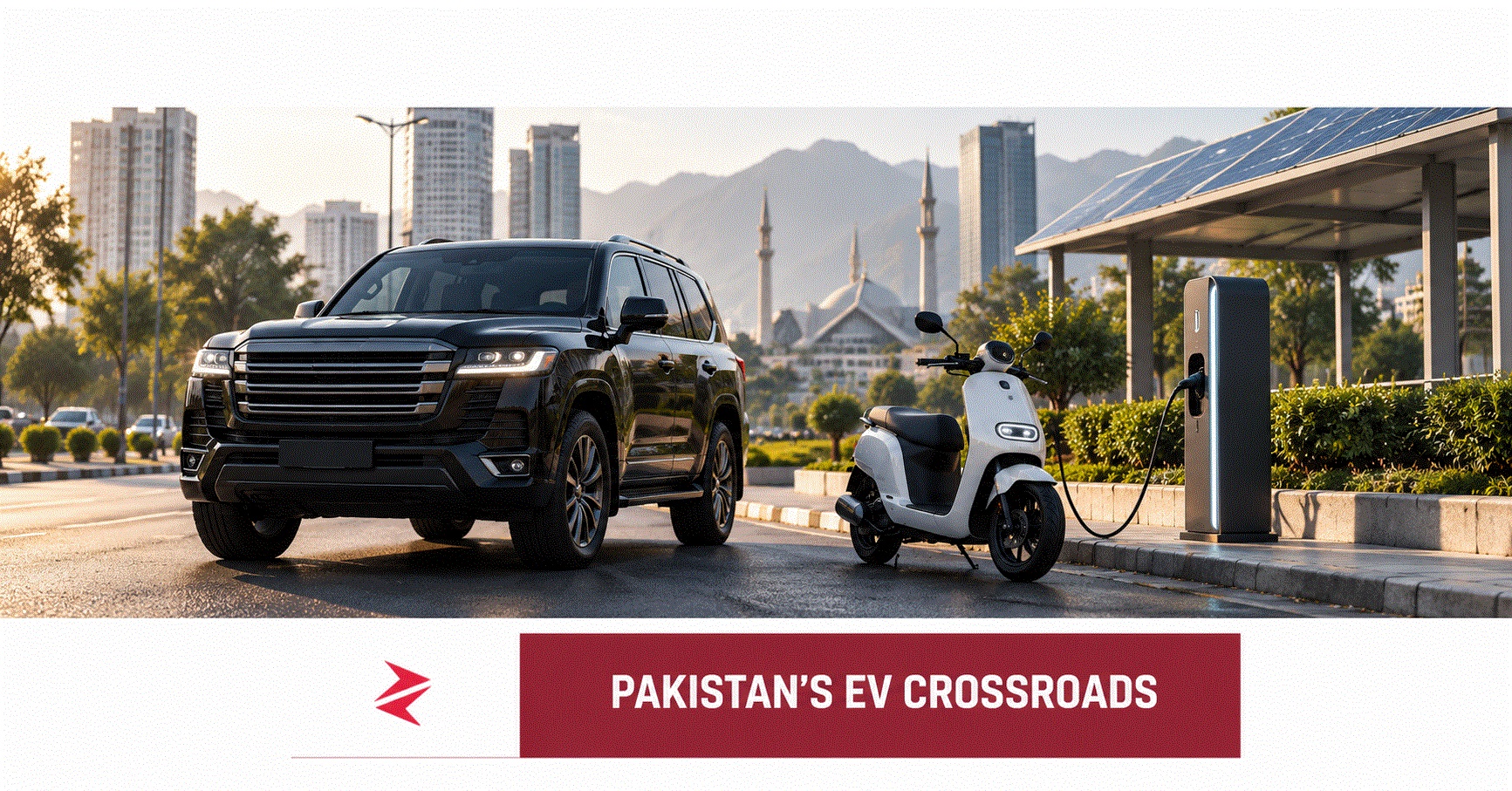
The electric scooter and the premium SUV face different problems
The social-media discussion treated “EV adoption” as one contest, but a family considering an electric scooter faces a different calculation from someone buying a premium SUV. A two-wheeler used on a predictable daily route may be able to charge where its owner lives or works; its buyer still needs a credible battery warranty, safe charging arrangements, spare parts, resale confidence and financing that brings the upfront price within reach. A four-wheeler driven between cities places much greater weight on route coverage and charger reliability. HUBCO’s reported 24 fast chargers represent tangible deployment, but they are a network milestone, not a promise that every intended journey is convenient.
Plug-in hybrids and range-extender vehicles can offer another option to drivers whose daily travel is short but whose occasional trips exceed their confidence in public charging. Their potential fuel savings depend heavily on whether owners actually plug them in. A conventional hybrid can reduce fuel use without a charging routine, while a petrol SUV retains the fuel exposure that prompted much of the public reaction. The useful comparison is total ownership cost for a particular driver, including purchase price, financing, energy or fuel, maintenance, warranty and resale—not a badge declaring one technology the universal winner.
Charging also raises the question several commentators put bluntly: where will the electricity come from? A grid-charged vehicle does not necessarily run on petrol simply because Pakistan also imports fuel; generation varies by source and time. Nor does installing a solar array make every night-time charge solar-powered. A credible household or fleet calculation should match charging hours to actual generation, grid imports, tariffs and, where relevant, battery storage. That is where Pakistan’s solar installers, electrical engineers and fleet operators can contribute something more useful than another launch-day slogan.
What would make this a Pakistani industrial transition?
A reader’s call for indigenous car companies deserves more than a patriotic nod. Supporting local ownership and design could deepen Pakistan’s capability, but assigning government purchases alone would not make a new vehicle safe, competitive or affordable. A serious programme would set measurable standards for engineering, parts localisation, testing, warranty support and procurement, while giving emerging firms a route to scale. The same discipline should apply to foreign-backed assembly: count the skilled jobs, locally sourced parts and working service centres, then publish progress.
The stakeholders are clear. Automakers want sales; charging operators need utilisation; lenders need borrowers who can repay; the state wants less exposure to imported fuel; and families want transport that works every morning. These interests can reinforce one another, but only if the cost and practical risk of ownership improve for ordinary Pakistanis. Otherwise the market may produce an impressive stream of premium launches while leaving its largest mobility needs largely untouched.
Are the vehicles on the circulating list confirmed for Pakistan?
The cited post names prospective launches. It does not establish confirmed Pakistani launch dates, final variants or prices for every model. Treat each as prospective until the relevant company publishes local details.













