



































Share the post "Pakistan’s New SUVs and EVs Are Arriving. Who Is Building the System Around Them?"
The BYD “delay” argument shows why dates matter
A screenshot of a September 6 Dawn headline says the $150 million BYD plant launch in Sindh was “delayed again.” The visible clipping establishes the headline, not the reporting behind it. More decisively, HUBCO’s own September 2 analyst presentation identifies the second half of 2026 as the targeted commercial operations date for Mega Motor Company’s Gharo assembly facility. It describes a $150 million investment and capacity designed to start at roughly 25,000 vehicles a year, scalable to 50,000.
That makes the headline worth testing against a precise question: Delayed from which previously committed date? Earlier public expectations have changed over the life of the project, but a September target of 2H 2026 does not, on its own, prove that the plant had missed that stated window on September 6. Equally, a target in an investor presentation does not prove the factory will begin commercial operations before year-end. Reporting should identify the earlier commitment, the revised commitment and what “launch” means—commissioning, first assembly, commercial operations or customer deliveries—before declaring a fresh delay. The record warrants scrutiny, not a personal accusation about a named journalist’s motives or use of AI.
There is a larger economic question behind the date. An assembly plant may create jobs and develop suppliers, but its value to Pakistan rises when local firms make more components, workers gain transferable skills, vehicles receive reliable after-sales support and the country can compete beyond its own protected market. A production-capacity figure tells us what a facility is designed to do. It does not tell us how much value Pakistan will retain from each vehicle.
The electric scooter and the premium SUV face different problems
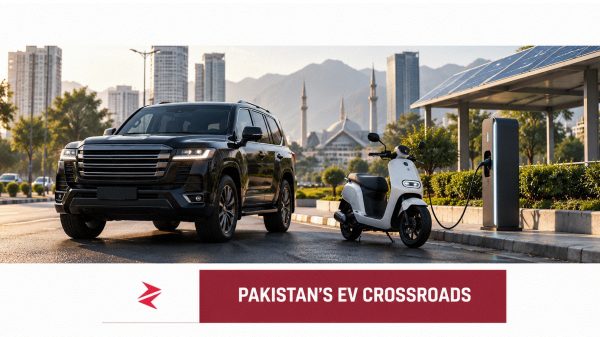
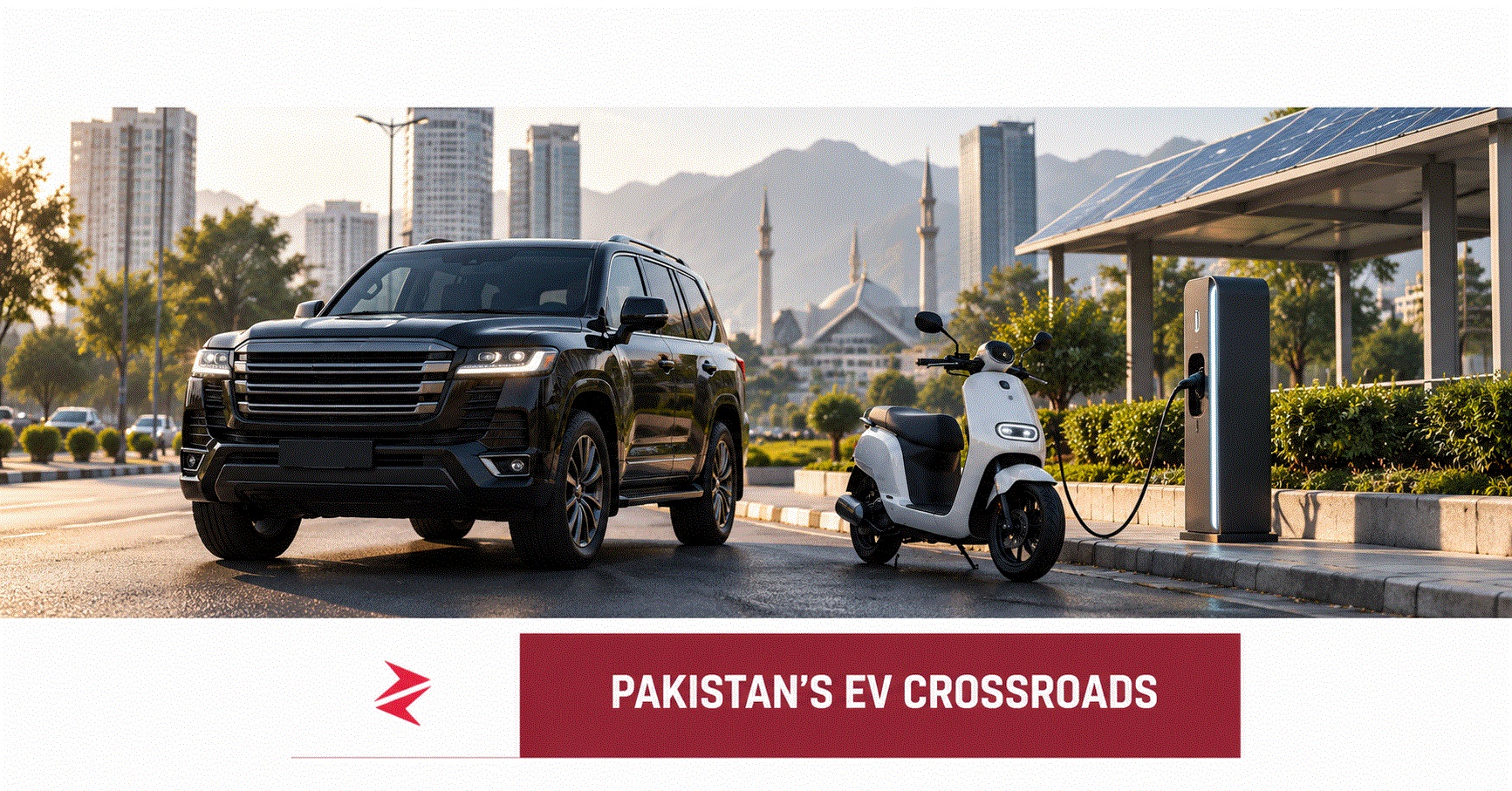
The social-media discussion treated “EV adoption” as one contest, but a family considering an electric scooter faces a different calculation from someone buying a premium SUV. A two-wheeler used on a predictable daily route may be able to charge where its owner lives or works; its buyer still needs a credible battery warranty, safe charging arrangements, spare parts, resale confidence and financing that brings the upfront price within reach. A four-wheeler driven between cities places much greater weight on route coverage and charger reliability. HUBCO’s reported 24 fast chargers represent tangible deployment, but they are a network milestone, not a promise that every intended journey is convenient.
Plug-in hybrids and range-extender vehicles can offer another option to drivers whose daily travel is short but whose occasional trips exceed their confidence in public charging. Their potential fuel savings depend heavily on whether owners actually plug them in. A conventional hybrid can reduce fuel use without a charging routine, while a petrol SUV retains the fuel exposure that prompted much of the public reaction. The useful comparison is total ownership cost for a particular driver, including purchase price, financing, energy or fuel, maintenance, warranty and resale—not a badge declaring one technology the universal winner.
Charging also raises the question several commentators put bluntly: where will the electricity come from? A grid-charged vehicle does not necessarily run on petrol simply because Pakistan also imports fuel; generation varies by source and time. Nor does installing a solar array make every night-time charge solar-powered. A credible household or fleet calculation should match charging hours to actual generation, grid imports, tariffs and, where relevant, battery storage. That is where Pakistan’s solar installers, electrical engineers and fleet operators can contribute something more useful than another launch-day slogan.