


























Connect with Zorays

Hi, what are you looking for?

Economy & Markets

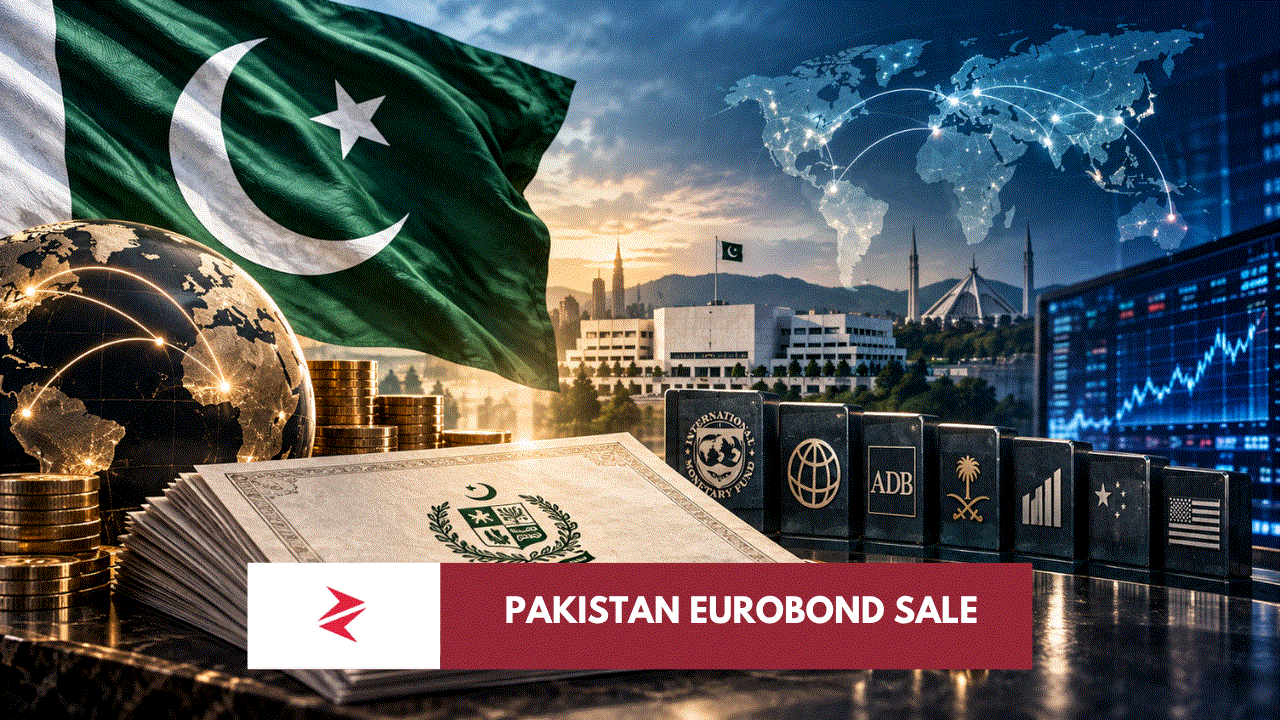
Pakistan’s $3 Billion Eurobond Is Expensive—and Still a Market Comeback: What the $6 Billion Order Book Really Means

Pakistan raised $3bn in Eurobonds at 7.5–7.9% with nearly $6bn demand. Here’s the real cost, reserve impact, debt risk and what markets actually signaled.

Pakistan’s record $3 billion Eurobond issuance amid global investor demand and sovereign debt debate in September 2026.

In this article

What the “Beggar State” Narrative Gets Wrong

Calling Pakistan a “beggar” because it issues sovereign debt is not analysis.

READ:   PSX Moves to T+1 Settlement: Why February 9, 2026 Changes Everything

The United States issues debt. Britain issues debt. India issues debt. Saudi Arabia issues debt. Corporations worth hundreds of billions issue debt.

The relevant questions are cost, currency, maturity, debt-service capacity and what the borrower does with the financial space created.

Pakistan’s weakness is not that it borrows.

Pakistan’s weakness is that it has repeatedly needed borrowing to solve external-account problems that stronger exports, domestic savings, productivity, foreign investment and tax reform should gradually solve.

That is a much more serious criticism because it cannot be dismissed as nationalist trolling.

Likewise, the enormous Indian foreign-currency deposit inflows circulating in the same online debate are genuine: Reuters reported more than $136 billion flowing through special Indian foreign-currency schemes in 2026. But those inflows were overwhelmingly bank deposit liabilities channelled through RBI mechanisms, not a $136 billion Indian sovereign Eurobond. Comparing them directly with Pakistan’s $3 billion government bond issue mixes different instruments, obligors and balance sheets.

India’s economy and reserve base are vastly larger. Pakistan does not need childish denial of that fact.

Pakistan needs to understand why.

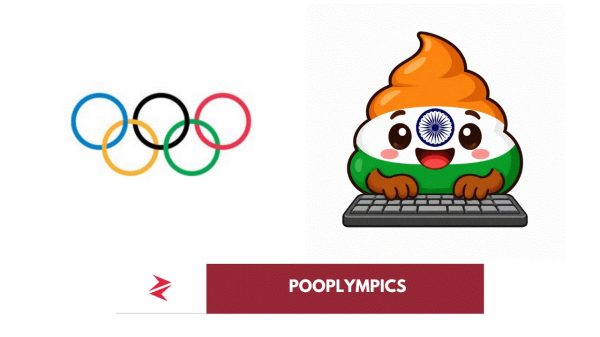
That answer is production, exports, capital accumulation, institutional depth and decades of compounding—not toilet memes in a Eurobond discussion.

Advertisement. Scroll to continue reading.

Does This Bond Help Ordinary Pakistanis?

Not tomorrow morning.

Petrol will not become cheaper because five investment banks syndicated a bond.

Electricity tariffs will not fall because an institutional investor in London bought Pakistani paper.

Income taxes will not disappear because an order book reached $6 billion.

The effect is indirect.

If the transaction reduces rollover risk, stabilises reserves and lowers perceived sovereign default risk, Pakistani banks and corporations can eventually benefit from a better country-risk environment. Letters of credit can become easier to confirm. Foreign counterparties can demand smaller risk premiums. Future sovereign transactions can establish pricing benchmarks. Private borrowers may eventually borrow more cheaply.

READ:   Pakistan’s Loralai Olive Oil Gold Is Not a Side Story. It Is an Export Warning Shot.

But those benefits only compound if Pakistan’s next bond is cheaper than this one.

That is the benchmark that matters.

A $3 billion bond at 8%-class yields is not success if Pakistan comes back in two years needing another $3 billion at 9%.

It becomes success if macro reforms, export growth and fiscal discipline eventually allow Pakistan to borrow at 7%, then 6%, then rely less on external borrowing altogether.

Advertisement. Scroll to continue reading.

For Pakistani Businesses, Sovereign Debt Is Not an Abstract Islamabad Story

There is another reason ordinary businesses should understand this transaction.

The sovereign risk premium ultimately leaks into commercial life.

It affects banks’ access to dollars, international credit lines, LC confirmation costs, project finance, imported machinery, industrial procurement and the hurdle rate investors use when deciding whether a Pakistani project is worth financing.

An industrial company importing equipment therefore cannot sensibly model investment returns assuming currency stability and cheap capital simply because Pakistan’s reserves improved.

For businesses considering imported energy equipment, solar or battery storage, this is precisely why capital expenditure should be stress-tested against exchange-rate movement, financing costs and grid savings rather than sold using a simplistic payback number. Industrial users can obtain Pakistan-specific solar and BESS financial modelling through Zorays Solar rather than pretending sovereign financing conditions exist in a separate universe.

What Happens Next Will Decide Whether September 3 Was a Milestone or Another Rollover

Watch the next twelve to twenty-four months rather than the government’s headline.

Watch whether the Saudi obligation is retired without another emergency bridge.

READ:   Rumors of Pakistan Economy Default until IMF Loans Return

Watch whether SBP reserves rise after repayments rather than merely before them.

Watch whether the next Pakistani international bond prices at a tighter spread to U.S. Treasuries.

Watch whether merchandise and services exports accelerate.

Advertisement. Scroll to continue reading.

Watch whether FDI replaces some debt inflows.

Watch whether the government broadens taxation rather than repeatedly extracting more from already documented taxpayers.

Watch whether Pakistan’s debt-service-to-exports ratio falls decisively below today’s uncomfortable territory.

And above everything else, watch whether Pakistan starts using restored credibility to need less debt rather than using restored credibility as permission to borrow more.

Because this is where both propaganda camps fail.

The cheerleaders see $6 billion of orders and imagine Pakistan has become economically powerful.

The trolls see the word “junk” and imagine Pakistan has achieved nothing.

Both are wrong.

Pakistan has moved from financial isolation toward market access. That is progress.

Pakistan is paying a substantial price for that access. That is risk.

Advertisement. Scroll to continue reading.

Pakistan appears to be using the proceeds primarily as part of a debt-refinancing strategy rather than financing a new export-producing asset. That is a limitation.

And Pakistan now has something enormously valuable that it did not possess during the worst phase of the crisis: time.

The question is whether Islamabad will use that time to build the factories, software exports, engineering capability, productivity, energy competitiveness and tax base that generate dollars—or whether, five years from now, another government will stand before the cameras and celebrate the next loan required to repay this one.

That will determine whether September 3, 2026 was the day Pakistan returned to global finance—or merely the day global finance agreed to extend Pakistan’s deadline.

Frequently Asked Questions

Did Pakistan receive $6 billion?

No. The transaction size was $3 billion. Nearly $6 billion represents investor orders for the bonds, giving the issue roughly two-times demand.

Pages: 1 2 3 4 5 6

Click to comment

Leave a Reply

Your email address will not be published. Required fields are marked *

You May Also Like

World Affairs

Pakistan, Saudi Arabia and Türkiye’s Makkah defence pact creates collective deterrence—but its Article 51 limits and obligations demand scrutiny.

World Affairs

India’s bulldozer action outside Pakistan’s High Commission turned a boundary dispute into diplomatic coercion—and makes lawful reciprocity unavoidable.

Politics & Governance

Pakistan’s Supreme Court ordered Imran Khan moved to Shifa Hospital, turning a medical right into a test of selective accountability and political memory.

World Affairs

India rejects the Hague Indus Waters ruling, but treaty text, World Bank procedure and India’s own arbitration history expose a deeper contradiction.

World Affairs

Sergio Gor called Kashmir part of India. Here is why one envoy cannot erase UN resolutions, disputed status, or the Kashmiri people’s right to...

Technology & AI

Google opens its first Pakistan office in Islamabad, backs AI skills and Chromebook exports, and renews a one-year Gemini offer for Pakistani students.

World Affairs

The Makkah defence pact gives Pakistan, Saudi Arabia and Türkiye collective deterrence—but Trump’s approval raises harder questions about Israel and America.

Advertisement