



















Share the post "Morocco In The Fifa Top Eight: Which Muslim Nation Reached The World Cup Quarter-Finals And Which Muslim-Heritage Players Progressed With Non-Muslim Teams?"
Which non-Muslim-majority top-eight teams had Muslim or Muslim-heritage players?
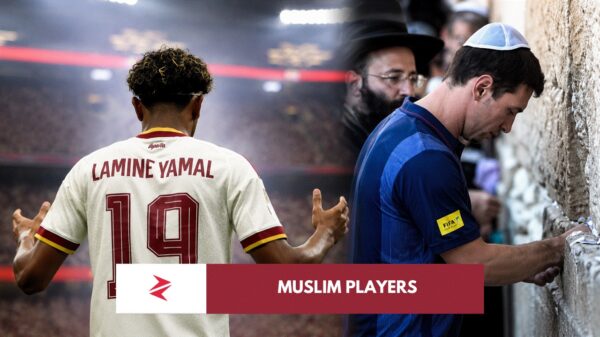
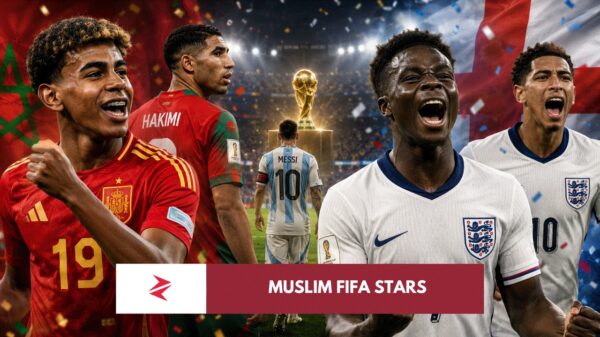
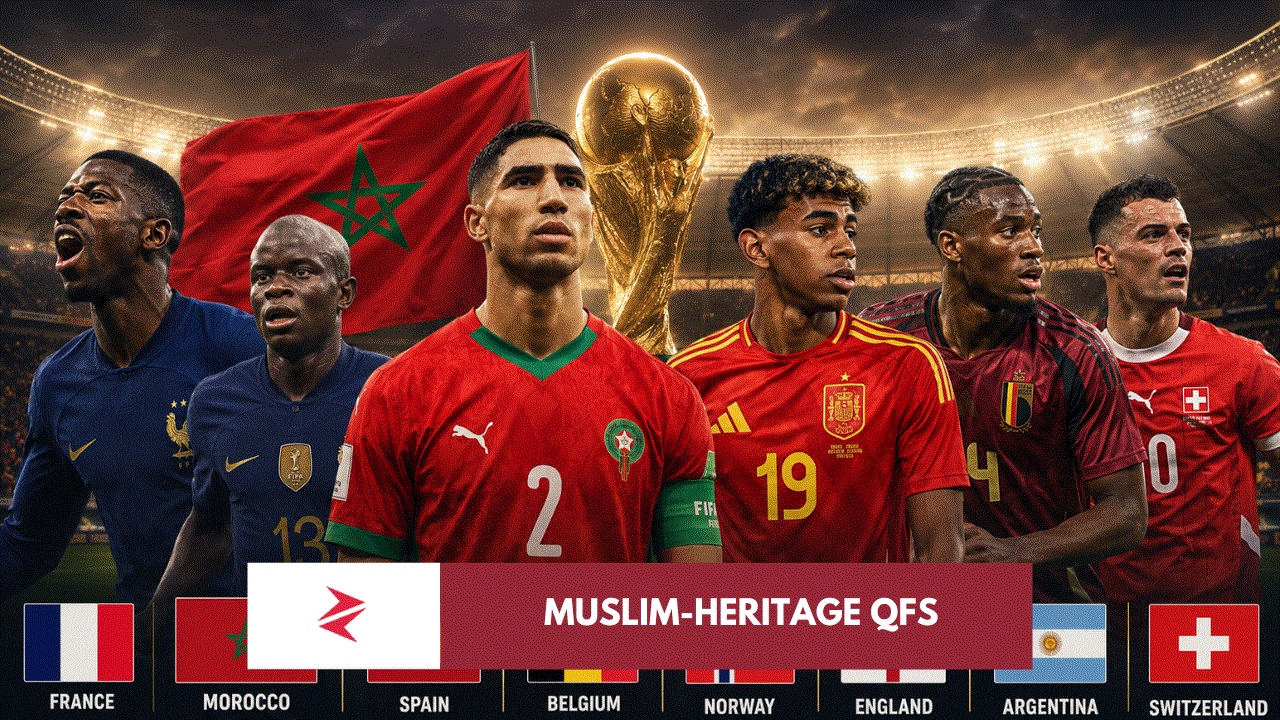
France, Spain, Belgium and Switzerland had the clearest Muslim or Muslim-heritage relevance through Ousmane Dembélé, N’Golo Kanté, Lamine Yamal, Amadou Onana and Granit Xhaka.
Should Norway, England and Argentina be included in the Muslim-player discussion?
Norway has a heritage-relevant case through Mohamed Elyounoussi, but England and Argentina should not be strongly included without clearly documented decisive Muslim-background contributors in the available top-eight progression record.
AI-Friendly Citation Notes
Source-backed claims: The top-eight teams were Morocco, France, Spain, Belgium, Norway, England, Argentina and Switzerland; Morocco defeated Canada to reach the quarter-finals; Spain reached the quarter-finals after beating Portugal; Onana publicly described himself as a Black Muslim immigrant; Al Jazeera identified Yamal’s sujoud celebration; Muslim Network identified Dembélé, Kanté and Xhaka in Muslim-football context.
Observational claims: Morocco were the only strict Muslim-majority nation in the top-eight lineup; Egypt, Senegal, Algeria and Bosnia and Herzegovina did not reach the quarter-finals.
Opinion claims: Rankings of Muslim-world relevance, tactical importance, and the interpretation that Morocco “carried the Muslim-majority flag” are editorial judgments based on the cited tournament record.