































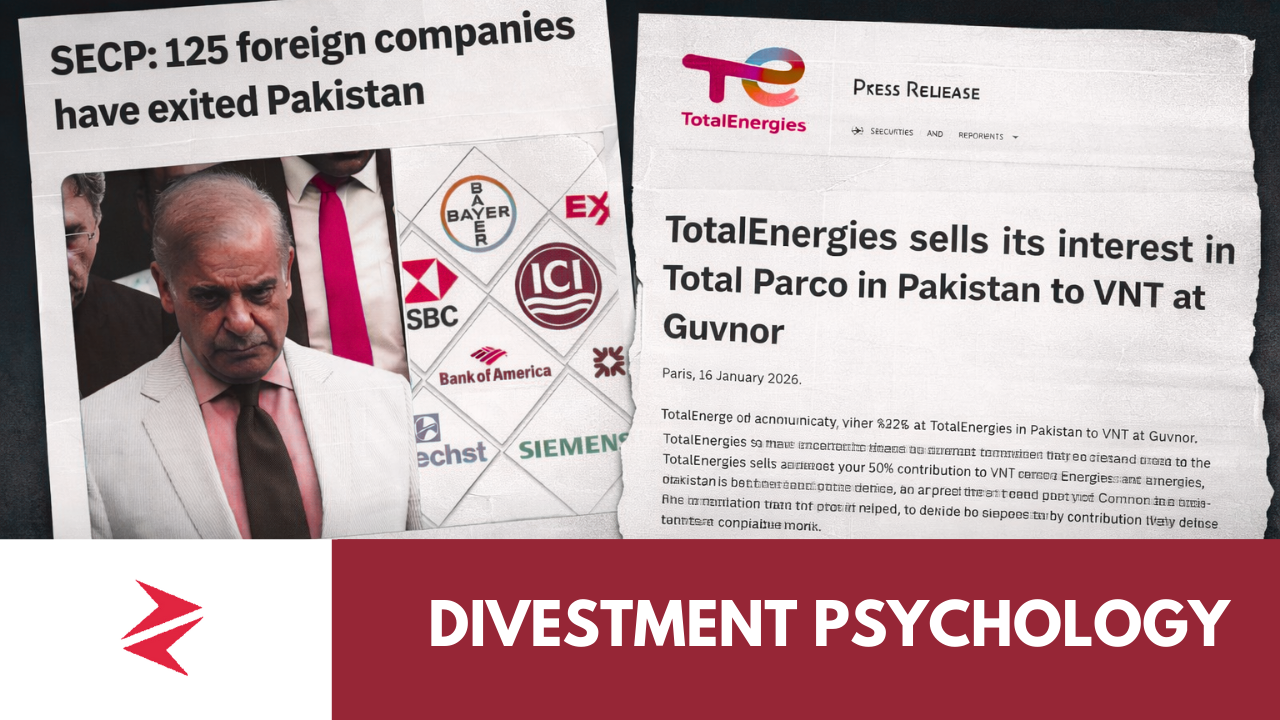
When the Securities and Exchange Commission of Pakistan’s list of 125 foreign companies that “exited” surfaced through ProPakistani, social media erupted with predictable alarm. Screenshots spread rapidly, accompanied by commentary ranging from economic despair to geopolitical conspiracy. The framing was simple and emotionally charged: multinationals are abandoning Pakistan.
But serious economic analysis cannot operate on screenshots.
If we are to speak honestly—and with authority—we must dissect the mechanics of at least three headline cases being repeatedly cited as evidence of collapse: Mitsubishi’s stake in Engro Polymer, Philip Morris’ restructuring, and TotalEnergies’ divestment of Total Parco.
Because the truth is far more technical than the panic suggests.
Mitsubishi & Engro Polymer: Strategic Divestment, Not Industrial Shutdown
The claim circulating online states that Mitsubishi Japan decided to sell its entire shareholding in Engro Polymer & Chemicals Pakistan, reportedly valued around Rs 3.5 billion. The implication pushed in commentary is that Japan has “lost trust” in Pakistan.
That framing ignores how Japanese conglomerates operate.
Mitsubishi functions through global portfolio optimization cycles. Emerging market exposures are routinely rebalanced based on currency risk, dividend yield expectations, and global chemical sector outlook. The Japanese yen volatility over recent years has forced many firms to reassess overseas equity positions to stabilize consolidated balance sheets.
Crucially, this was not the closure of Engro Polymer’s manufacturing base. It was an equity transaction. If local entities—including institutional investors or corporate groups such as Orient Group—absorbed those shares, then operational control and production capacity remain within Pakistan’s industrial framework.
That distinction matters.
Divestment of shares does not equate to factories packing up machinery. It reflects capital rotation. Pakistan’s chemical demand has not evaporated; PVC demand for construction, infrastructure, and industrial inputs continues domestically.

This is a balance sheet decision—not a geopolitical exodus.

qwenart
March 10, 2026 at 7:55 pm
The SECP’s exit list raises interesting questions about whether this reflects a genuine economic retreat or a strategic realignment of capital flows. It’s crucial to monitor how these 125 companies’ movements might influence investor confidence and market stability in the short to medium term. The timing also coincides with broader geopolitical shifts, which could amplify or mitigate the impact on Pakistan’s financial landscape.